About Fremont Trees
What a good quote does differently
The ordinance gets checked before the job is quoted. In Fremont that means establishing whether a tree is protected under Municipal Code Chapter 18.215, whether it is a street tree under Chapter 12.30, and whether the address falls inside the Wildland Urban Interface fire area designated under Chapter 15.65. Most tree quotes in this city skip that step entirely and leave the homeowner holding the consequence.
The consequence is not theoretical. Chapter 18.215.030 defines damage to a protected tree broadly enough to include topping, and defines cutting broadly enough to include pruning and trimming. So a heavy reduction that leaves the tree standing can still land inside the ordinance. Layer California Civil Code section 3346 and Code of Civil Procedure section 733 on top, both of which allow treble damages for wrongful injury to trees, and a cheap unchecked job becomes the most expensive line item on the property.
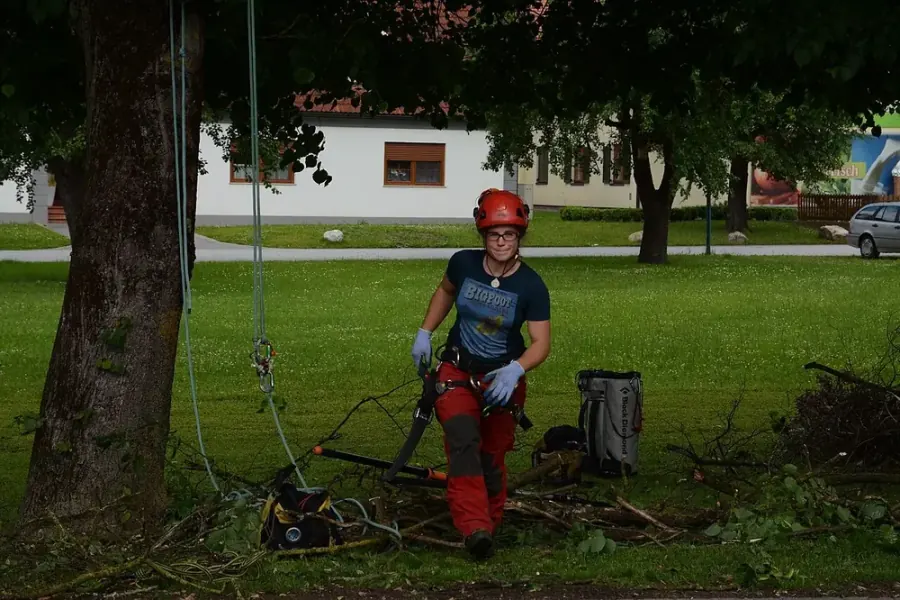
The second difference is that a good quote writes down what is excluded. A quote that lists only what is included leaves every argument about debris, stumps and cleanup for after the crew has gone. A clear one names the disposal, the stump treatment, the permit responsibility and the cleanup standard explicitly, so there is nothing left to interpret when the invoice arrives.
How a job runs, start to finish
Six steps from the first message to the cleared site. The order matters: the ordinance check happens before the figure, not after you have already accepted one.
- 1
You send the details
Use the contact form with the tree species if you know it, a rough height, how close it sits to a structure or wire, and a photo. Photos settle more of the quote than any other single thing you can send.
- 2
The legal status is checked first
Before any figure goes out, establish whether the tree is likely covered by FMC Chapter 18.215 as a protected tree or Chapter 12.30 as a street tree, and whether the address sits inside the Chapter 15.65 fire area. That answer changes the job, so it comes first, not last.
- 3
You get a written scope and figure
The quote names the labour, the access method, what happens to the debris, whether the stump is included, who files any permit, and the cleanup standard. Anything excluded is written as excluded rather than left ambiguous.
- 4
Scheduling follows species and weather
Oak work should be scheduled in the dry season wherever it is not an urgent safety matter, because fresh cuts during wet weather invite infection. Storm damage is urgent. Everything else can be booked to suit you.
- 5
The work follows published standards
Pruning follows ISA Tree Pruning Guidelines, which is also what FMC 12.30.060(b) requires on street trees. No topping and no lion tailing, on any tree, whether or not the ordinance compels it on that particular one.
- 6
The site is left clean and you get the record
Debris is chipped or hauled as agreed, the drop zone is raked, and you keep the written scope alongside any permit paperwork. That record matters at resale and at insurance renewal more often than people expect.
Why the local knowledge matters here
Fremont is five historically separate towns that unified on 23 January 1956, and the tree stock still reflects that. Mission San Jose runs uphill toward Mission Peak and Mount Allison at roughly 2,517 and 2,604 feet, so its jobs are access problems on terraced lots with mature native oaks. Niles sits in the canyon mouth along Alameda Creek where wind loading and a narrow historic street grid dominate. Warm Springs and the Pacific Commons corridor are newer, flatter and full of planted street trees on a shared planting cohort.
Centerville and Irvington carry the legacy of the orchard era, when apricot, fruit and nut orchards covered subdivided Spanish land grants, and the residual trees from that period are now at or past end of service life. Newark and Union City are separate jurisdictions entirely, which changes the paperwork completely. A crew treating all seven the same way is quoting from a template rather than from the site.
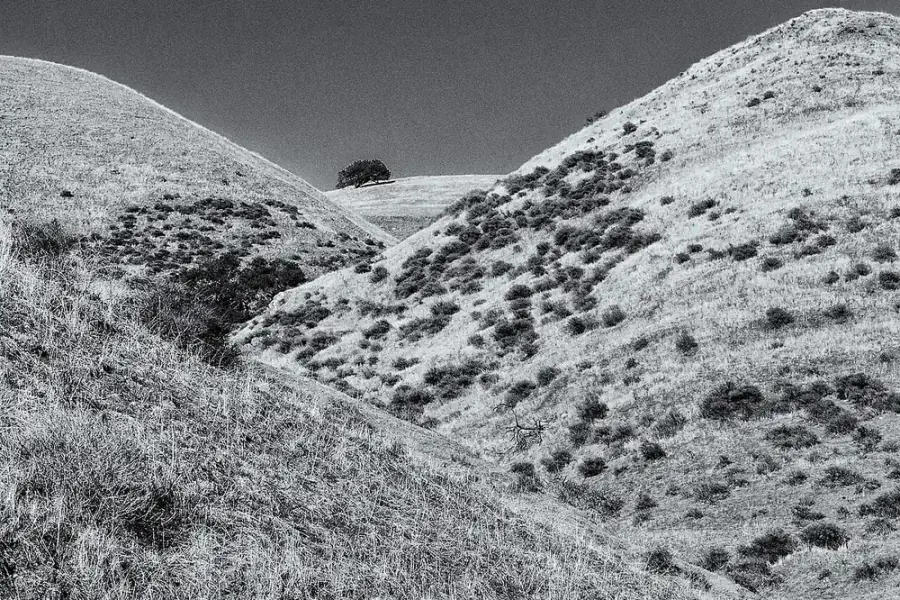
That is why there are seven area pages on this site rather than one with the place name swapped out. Each one carries facts you can verify about that district and describes what actually changes about the work there. The service area page indexes all of them.
Standards worth holding any crew to
Pruning follows ISA Tree Pruning Guidelines on every tree, not only the ones where an ordinance requires it. Fremont Municipal Code 12.30.060(b) compels that standard on street trees and prohibits topping outright, and there is no sound reason to apply a lower standard to the same species standing thirty feet away in a private garden.
No lion tailing. Stripping interior foliage so the greenery sits only at the branch tips looks tidy from the kerb and is fast to perform, which is exactly why it shows up on cheap jobs. It removes the inner leaves feeding the limb, shifts the weight to the end of a now bare lever, and exposes bark to sun. It makes failure more likely, not less.
Palms should not be pruned like broadleaf trees, because a palm is a monocot with no cambium and no secondary growth. It cannot compartmentalise a wound or grow over a cut, it has a single apical meristem, and it has no branch collar. Over-pruning a palm into a narrow crown is permanent injury rather than a style choice, and no amount of time undoes it.
Getting in touch
Send the request form with the tree details and a photo for a free estimate in Fremont and the surrounding Tri-City Area. If a tree is on a structure, a vehicle or a power line, say so in the first line, and keep well clear of anything touching a conductor while you wait.
Questions about hiring tree work
What licence does tree work need in California?
Tree work in California falls under the CSLB C-49 Tree and Palm Contractor classification, defined at 16 CCR section 832.49 and approved by the Office of Administrative Law on 30 March 2022. Ask for the licence number on the quote and verify it yourself on the CSLB site. Any contractor reluctant to hand over a number is telling you something.
What areas does this site cover?
All five founding districts of Fremont, plus the neighbouring cities of Newark and Union City. Those are Mission San Jose, Niles, Warm Springs, Centerville and Irvington, and together with Newark and Union City they form the Tri-City Area of southern Alameda County. There is a separate page for each because the work genuinely differs between a terraced hillside and a flat bayside lot.
Why does this site use a request form?
Because the form carries your photos and details in one message, which is faster than a phone tag loop. If your tree is on a structure, a vehicle or a power line, say so in the first line of the message.
Is the estimate free?
Yes. A written estimate costs nothing and carries no obligation. Where a job is complex enough that a responsible figure cannot be given from photos alone, typically anything needing a crane or rigging over a structure, a good estimator says so plainly rather than quoting blind and revising upward later.
Should a tree ever be topped?
No. Topping is rejected by every arboricultural standard, it is explicitly prohibited on Fremont street trees under FMC 12.30.060(b), and FMC 18.215.030 counts topping as damage to a protected tree. Beyond the rules, it produces weakly attached regrowth that becomes a bigger hazard in three to five years. If a tree is genuinely too large for its position, the honest options are a proper crown reduction or removal.
What if I only want advice, not work?
Ask anyway. Sometimes the right answer is that the tree is fine and needs nothing this year. A crew that tells you a healthy tree needs $2,000 of work is not a crew you want back next season.
How should green waste from a diseased tree be handled?
Diseased material is kept separate and handled so it does not spread the problem to the next property. Alameda County sits inside the regulated area for Phytophthora ramorum, the oomycete that causes sudden oak death, so moving infected oak or bay material casually is how a neighbourhood infection becomes a district one. Tool sanitation between trees is part of the same discipline.
Can a tree that straddles a property line be cut?
Yes, but both owners need to agree first. California Civil Code section 834 makes a line tree common property of the adjoining owners, and Civil Code section 3346 with Code of Civil Procedure section 733 allow treble damages for wrongful injury to a tree. A careful contractor will not cut a boundary tree on one owner's instruction alone, which protects you as much as it protects the neighbour.
Tell us about your tree
Send the details and a photo for a free, no-obligation estimate. Settle the ordinance question before you commit to anything.
- Free written estimate, no obligation
- Check whether your tree is protected before work starts
- Ask any crew for its CSLB license and certificate of insurance
- Mark storm damage as urgent in your request