Emergency tree service in Fremont, CA
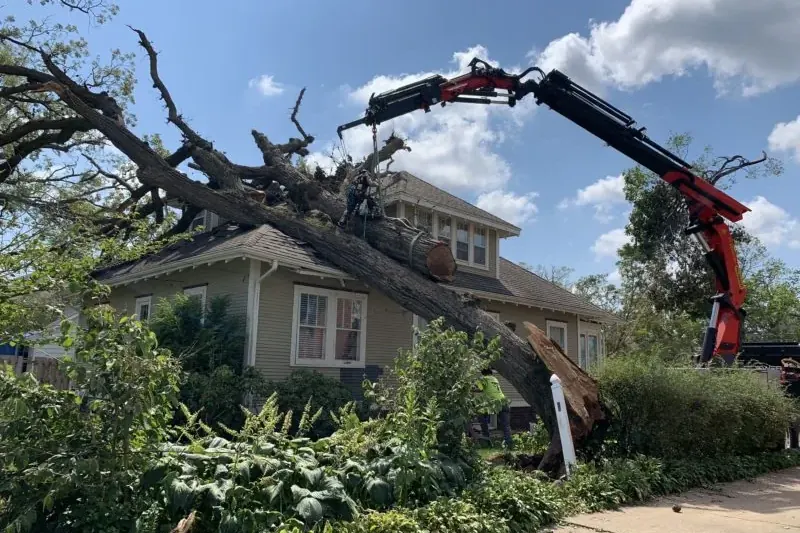
The first ten minutes, in order
Clear the area, treat every wire as live, photograph everything, then call. In that order, and the photographs genuinely matter because the scene stops existing the moment a saw starts.
- Get people and pets away from the tree and stay away. Not just underneath it. A loaded limb moves sideways when it releases.
- Wires. If any part of the tree is touching or close to a line, call the utility and 911. Nobody approaches the tree until they say so.
- Structure. If the tree is on the house, vacate the affected rooms and the rooms directly below them. Do not go onto the roof to look.
- Photograph. Wide shots showing the whole tree and the whole property, then close shots of every point of damage, from several angles.
- Call a tree service, then your insurer. Making the site safe comes first. Authorising full cleanup can wait for the claim conversation.
Limbs in a storm damaged tree carry compression and tension that are invisible from the ground, and a cut in the wrong place releases that load instantly. Chainsaw injuries spike after every storm and this is why. Clearing loose debris already lying on the ground is fine. Cutting anything still attached, still standing, or hung up in another tree is not.
Why Fremont trees fail in February, not in August
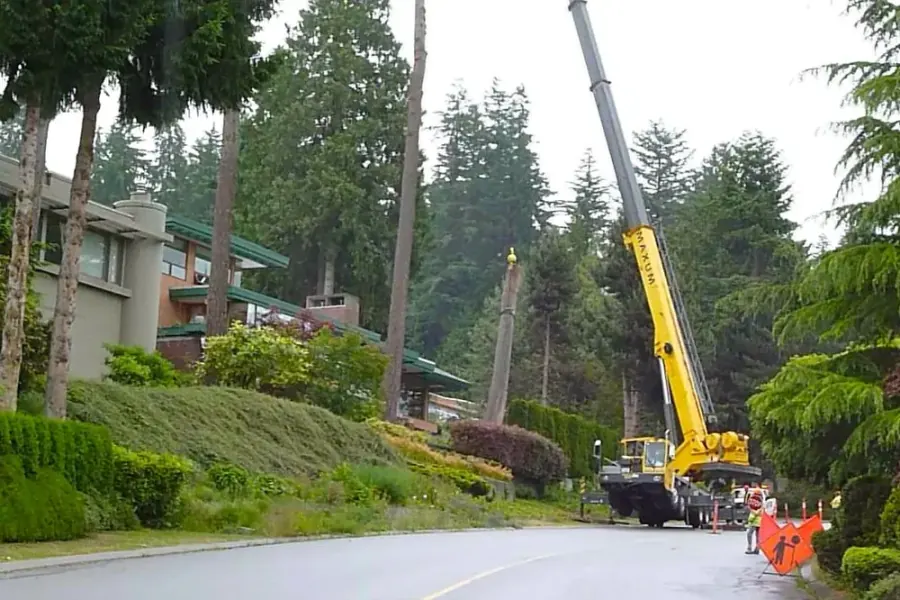
Mature Fremont trees come down in the wet season because saturated soil holds a root plate far less firmly than dry soil, not because of anything that happens to the tree above ground. The same tree that stood through four rainless months goes over in a winter wind event, and homeowners are often surprised because the tree looked fine all summer.
The NOAA 1991 to 2020 climate normals for the station nearest Fremont make the pattern unusually stark. Annual precipitation is 16.00 inches. June through September together deliver 0.33 inches, with a July normal of zero. November through March delivers 13.08 inches, which is 82 percent of the year's rain in five months.
That is a loading case, not a weather statistic. A root plate sitting in waterlogged soil has dramatically reduced anchorage at exactly the time of year the wind arrives. Three things make a given tree a candidate:
- A dense, unthinned crown acting as a sail. This is the case for keeping up with routine crown work rather than leaving a tree for a decade.
- Previous topping. Regrowth from latent buds after topping is attached only to the outer wood. It fails in the third or fourth February, not the summer it was cut.
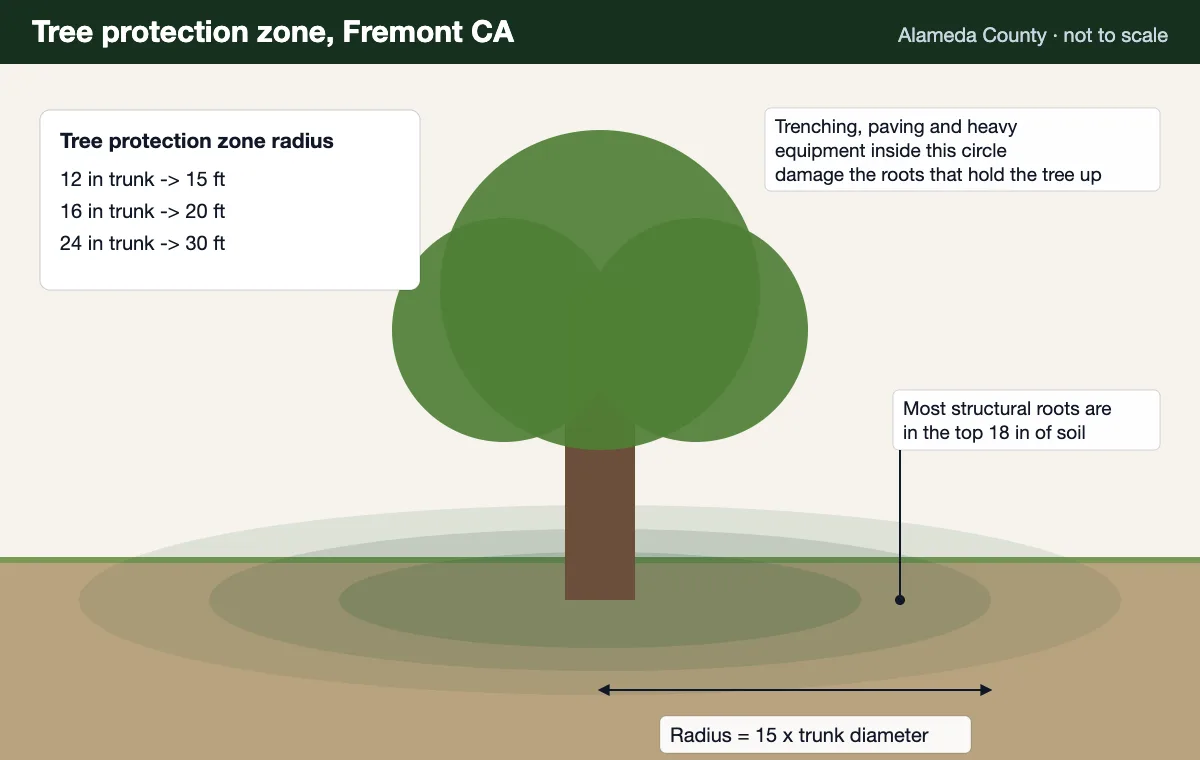
- Root plate damage from trenching, paving or grade changes, often done years earlier and long forgotten.
Power lines: the one situation where a tree crew is not the right call
If a tree is touching or near an energized conductor, the utility comes first and no tree crew should approach until the line is handled. Work near energized lines is a separate qualification regime from general tree service. A company that offers to cut a tree off a live line is telling you something important about how they operate.
The sequence that keeps people alive is simple. Call the utility and 911. Keep everyone well back, including from fences, wet ground and anything metal touching the tree. Wait. Once the utility has cleared or de-energized the line, a tree crew removes the tree and deals with the property damage.
This also applies to trees growing into lines that have not failed yet. Line clearance pruning near conductors is not a job to book with a general tree service, and the right first call is the utility. The same principle sits behind the licence and insurance checks on how to hire a tree service.
What emergency tree work costs, and why the range is so wide
Fixr puts emergency tree removal at $450 to $5,000 nationally, fallen tree removal at $75 to $150, and an emergency or after hours surcharge at $50 to $200 or more, with Bay Area pricing above those national figures. The range is that wide because emergency covers both a limb across a driveway and a crane lift taking a eucalyptus off a roofline.
What actually sets the number on an emergency call:
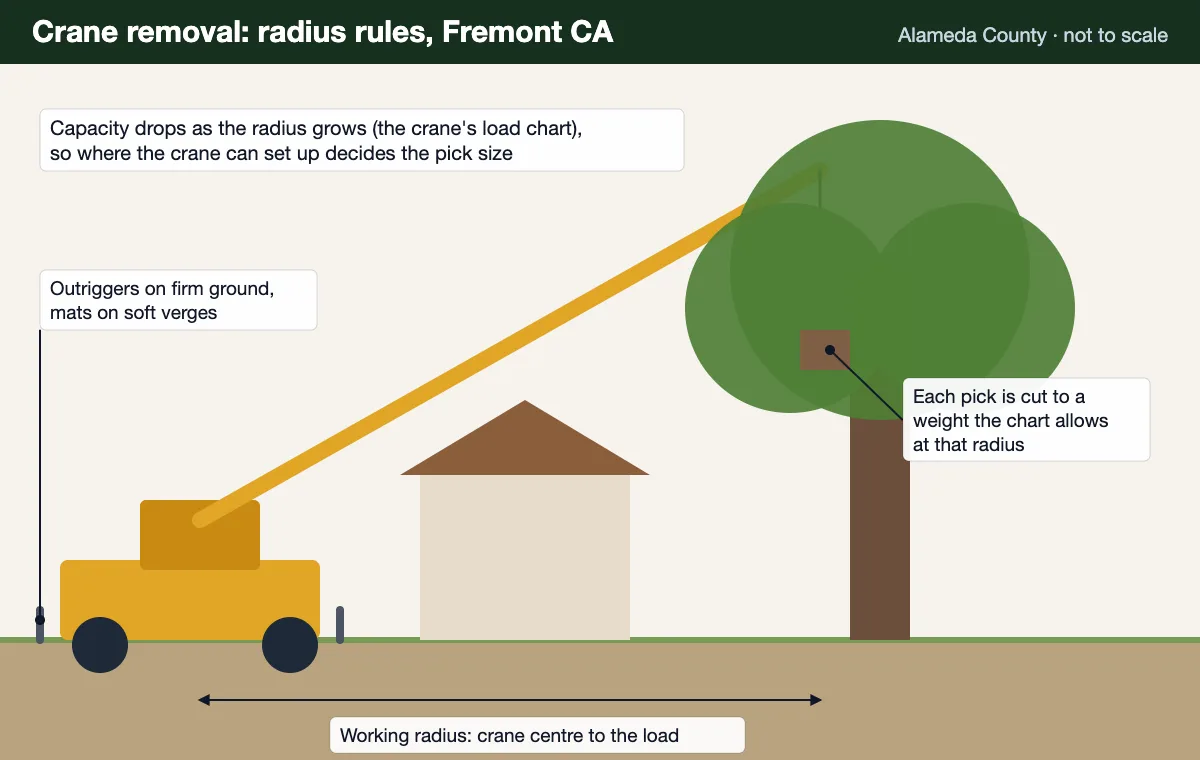
- What it is resting on. A tree on open ground is a felling job. A tree on a house or a vehicle is a rigging or crane job, and Fixr puts crane assisted removal on 80 foot plus trees at $1,500 to $2,500 before the emergency element.
- Species and size. Fixr records eucalyptus removal at $700 to $2,200 and oak at $900 to $2,000, and both are common failure candidates in Fremont.
- Time of day. The after hours premium is real and it is charged because the crew is real.
- Stabilise versus complete. Making the hazard safe and returning to finish in daylight is often both safer and cheaper than doing everything at 2am.
Photograph before cutting. Authorise only what makes the site safe until you have spoken to your insurer. Keep the written arborist assessment. Policies commonly cover removal where a fallen tree damaged a covered structure and commonly do not cover removal of a tree that fell and hit nothing, but your policy decides that, not a rule of thumb. Emergency work to prevent further damage is usually treated separately from cleanup, which is why the two parts should be priced separately.
What happens to the rest of the tree
A tree that has shed a major limb or lifted its root plate on one side is usually not sound afterwards, and the storm cycle that broke it returns every single winter. The emergency call deals with the hazard on the ground. The standing remainder needs a separate, written decision.
Three outcomes, and they are genuinely different jobs:
- Retain and reduce. Where the failure was a single poorly attached limb on an otherwise sound tree, weight reduction and crown cleaning may be the right answer. This is pruning work, not removal.
- Remove. Where the root plate has lifted, where there is significant decay at the failure point, or where the remaining crown is badly unbalanced, removal is the honest recommendation. Be aware that a protected tree still needs the permit conversation even after storm damage.
- Investigate. A tree that failed without an obvious mechanical cause may have a health problem. In Fremont that question often points at the oaks and at Sudden Oak Death, which kills the tree standing and turns it into a structural hazard long before it looks dead.
Whichever way it goes, the stump is its own decision. Grinding versus excavation depends on what you want the ground to do afterwards.
How an emergency call runs
The first three steps are yours and they happen before any crew arrives. Get them right and the rest of it, including the insurance claim, goes far better.
- 1
Get everyone away from the tree and stay away
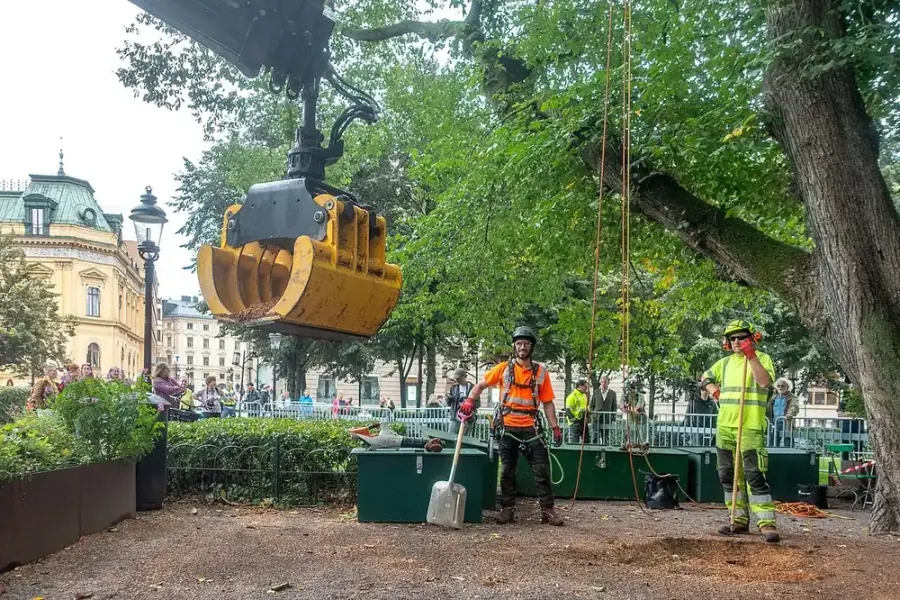
A partially failed tree is still loaded. Limbs under tension move when something shifts, and a trunk resting on a roof can drop further without warning. Clear the area beneath and to the sides, keep children and pets indoors on the far side of the house, and do not move a car that is already under it.
- 2
Treat every wire as live
If any part of the tree is touching or near a power line, stop and call the utility and 911. Do not approach, do not touch the tree, and do not let anyone cut anything. Line clearance near energized conductors is a separate qualification regime and is not a general tree service job. The utility clears the line first, then a tree crew can work.
- 3
Photograph everything before anything moves
Take wide shots showing the whole tree and the property, then close shots of the damage, from several angles, before any cutting starts. This is what your insurer will ask for, and once the crew has cut the tree into sections there is no way to reconstruct it. Note the date and time.
- 4
Report it with the details that size the job
Describe what failed and what it landed on, roughly how big the trunk is, whether the tree is fully down or hung up in another tree, whether there is a vehicle or structure underneath, and whether the street is blocked. That determines whether this is a two person job with a saw or a crane job, and how quickly a crew can realistically respond.
- 5
Make it safe first, tidy it second
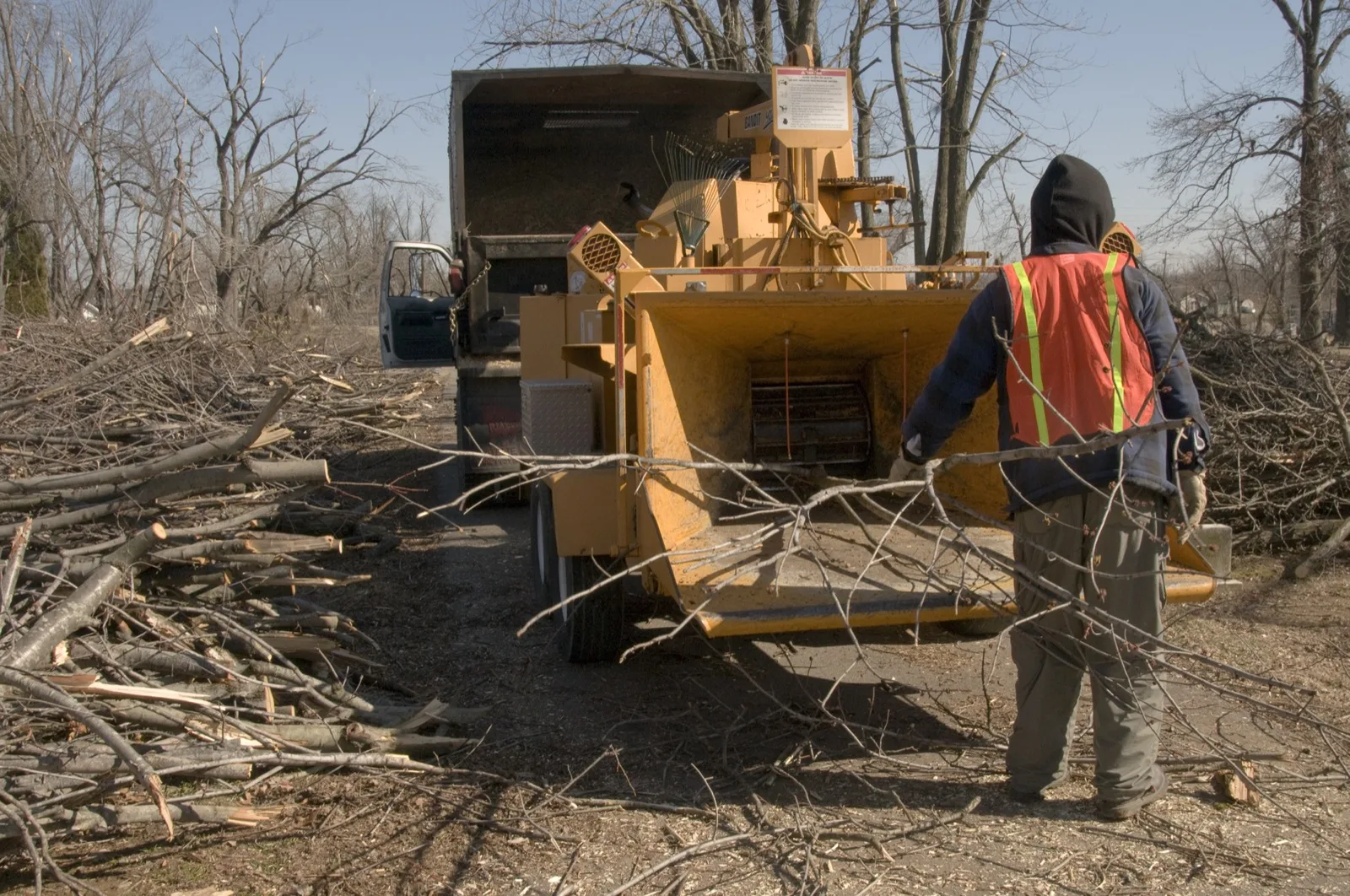
The first pass is about removing the hazard: releasing the tension in loaded limbs in a controlled order, getting weight off a structure, and clearing egress. Full removal, stump work and cleanup follow once nothing is going to move on its own. Emergency work gets priced in those two parts for that reason.
- 6
Document, then deal with the rest of the tree
When the immediate hazard is gone, the remaining tree still needs a decision. A tree that has shed a major limb or lifted its root plate on one side is often no longer sound, and the same storm cycle comes back every winter. Get a written assessment of what is left rather than being left with half a problem.
Storm and emergency questions
What do I do if a tree falls on my house in Fremont?
Get everyone out of the affected part of the house, treat any wire near the tree as live and call the utility and 911 if lines are involved, then photograph everything from multiple angles before anything is cut. Call a tree service and your insurer next. Do not climb onto the roof to inspect it and do not try to move or cut the tree yourself, because a trunk resting on a structure is a loaded object that can drop further when disturbed.
How much does emergency tree removal cost?
Fixr puts emergency tree removal at $450 to $5,000 nationally, with fallen tree removal at $75 to $150 and an emergency or after hours trimming surcharge of $50 to $200 or more, and Bay Area pricing sits above national. The spread is that wide because an emergency call covers everything from clearing a limb off a driveway to a crane lift taking a eucalyptus off a roof at two in the morning.
Does homeowners insurance cover tree removal?
Policies commonly cover removal when a fallen tree has damaged a covered structure, and commonly do not cover removing a tree that simply fell in the yard and hit nothing. Coverage is decided by your specific policy, not by a rule of thumb, so call your insurer before authorising anything beyond making the site safe, and photograph the scene before cutting starts. Emergency work to prevent further damage is usually treated differently from cleanup, which is another reason the two are priced separately.
Why do trees fall in Fremont in winter rather than in summer drought?
Because failure is a soil problem more than a water problem. Fremont takes 82 percent of its annual rainfall between November and March, and saturated soil holds a root plate far less firmly than dry soil does. Add winter wind to a waterlogged root zone and a tree that stood through four rainless months goes over in February.
Is a leaning tree an emergency?
A lean that has changed recently is an emergency, and a lean the tree has always had usually is not. The thing to look at is the ground on the opposite side of the trunk from the lean. Cracked, heaved or mounded soil there means the root plate is lifting and the tree is actively failing, which is a get everyone away and call now situation rather than a schedule an estimate one.
Does emergency tree work happen at night and on weekends?
Genuine hazards often get a response outside business hours, and that carries a premium that Fixr records nationally at $50 to $200 or more on top of the base job. Work at night is also more constrained: a crane lift over a house is not a job to run in the dark if the hazard can be safely stabilised and finished at first light, and a good crew will tell you that rather than charging you for it.
A tree fell on the power line to my house. Who do I call?
Call your electric utility and 911 first, not a tree service. Work near energized conductors is a separate qualification regime from general tree work, and no ordinary tree crew should approach the tree until the utility has confirmed the line is de-energized or cleared. Once the line is handled, a tree service removes the tree.
My neighbor's tree fell into my yard. Who pays?
In California the general position is that a tree belongs to whoever owns the land its trunk stands on under Civil Code 833, but liability for damage when it falls turns on negligence rather than ownership alone, and insurers usually resolve it between themselves. If you had previously put your neighbour on notice in writing that the tree was hazardous, that written record matters a great deal. This is orientation, not legal advice, and a live dispute is a question for a California attorney.
Do I need a permit to remove a storm damaged tree in Fremont?
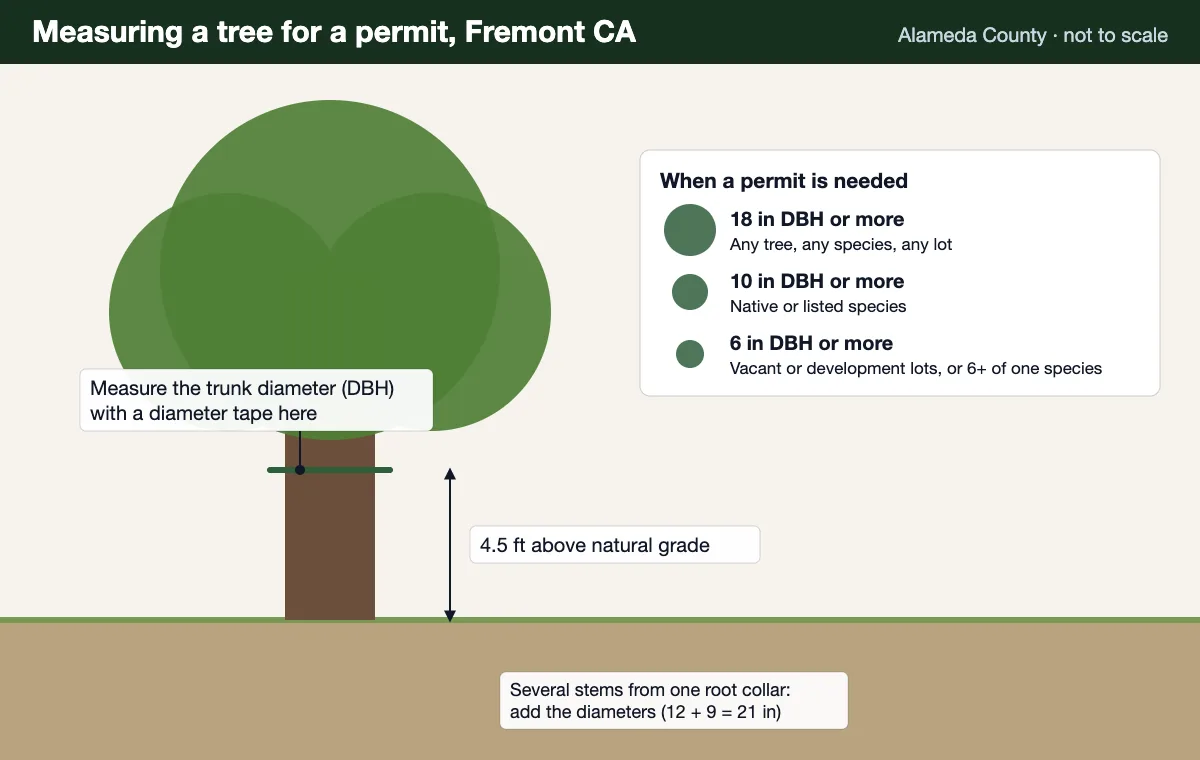
Fremont's tree preservation ordinance provides for emergency situations where a tree presents an immediate hazard, but the safe approach is to document the hazard thoroughly before and during the work rather than assume the exemption applies afterwards. Photograph the failure, keep the arborist's assessment, and contact the City as soon as practical. If the tree is in the public right of way it is the City's tree and their call, not yours.
What is a hung up tree and why is it more dangerous?
A hung up tree is one that has broken or been felled but has not reached the ground, because it is lodged in another tree or against a structure. It is more dangerous than a tree lying on the ground because it is still carrying stored energy, and the release point is unpredictable. This is one of the most common ways people are seriously injured doing their own storm cleanup. Leave it and call.
Can I cut the branches myself to stop further damage?
Not on a failed or partially failed tree. Limbs in a wind thrown or storm damaged tree are under compression and tension in ways that are not visible from the ground, and a saw cut in the wrong place releases that load instantly. Chainsaw injuries spike after storms for exactly this reason. Clearing small loose debris that is already on the ground is fine, cutting anything still attached or loaded is not.
How fast can you get to an emergency in Fremont?
Response depends on what is happening across the city at the time, because storm events generate calls in clusters rather than one at a time. When a front comes through, genuine life safety and structure hazards are triaged ahead of blocked driveways and downed fence sections. Saying clearly what the tree is resting on and whether anyone is displaced is what moves a job up that list.
Related Pages
Say what it landed on
Send photos and say whether the tree is fully down or hung up, whether anything is underneath it, and whether the street is blocked. That is what sizes the crew for the job.
- Free written estimate, no obligation
- Check whether your tree is protected before work starts
- Ask any crew for its CSLB license and certificate of insurance
- Mark storm damage as urgent in your request