Tree Service in Mission San Jose, Fremont CA
What makes Mission San Jose different
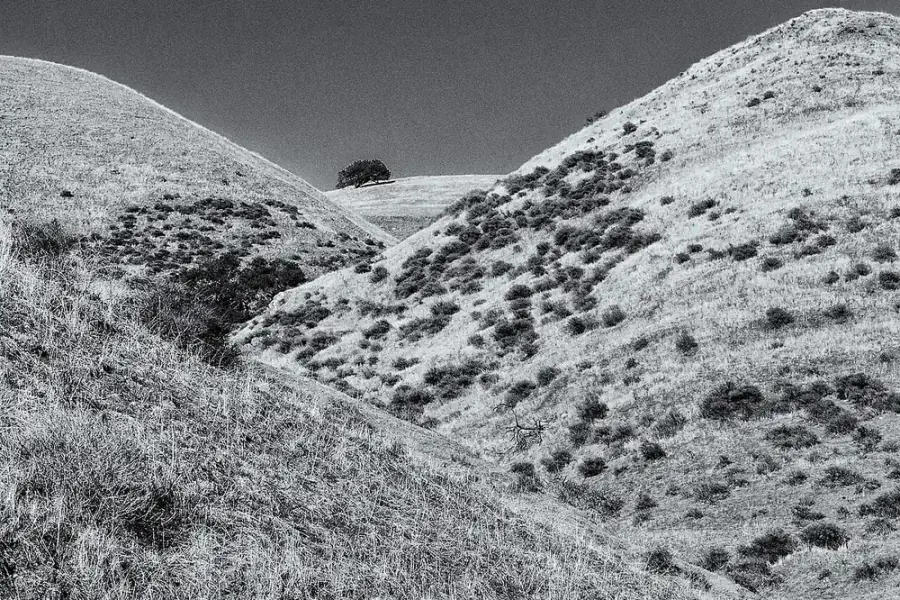
Mission San Jose is the oldest part of Fremont and the district where the terrain, not the tree, usually sets the price. It became part of the city on January 23, 1956, when Mission San Jose, Centerville, Niles, Irvington and Warm Springs unified into one municipality, and it carries the longest continuous settlement history of the five.
The practical consequence for tree work is elevation. Mission San Jose’s hills are higher and steeper than Niles, running up to the Mission Ridge, with Mission Peak and Mount Allison topping out between 2,517 and 2,604 feet. Residential lots on the upper blocks are terraced, often with the rear of the property well below the driveway, and that geometry rules out the equipment that makes tree work cheap.
It is also the district with the highest concentration of mature native canopy. Where post war Fremont was planted, Mission San Jose largely inherited what was already growing, which means bigger trunks, wider crowns and a much higher chance that Fremont Municipal Code Chapter 18.215 applies to your tree.
Mature coast live oak on hillside lots
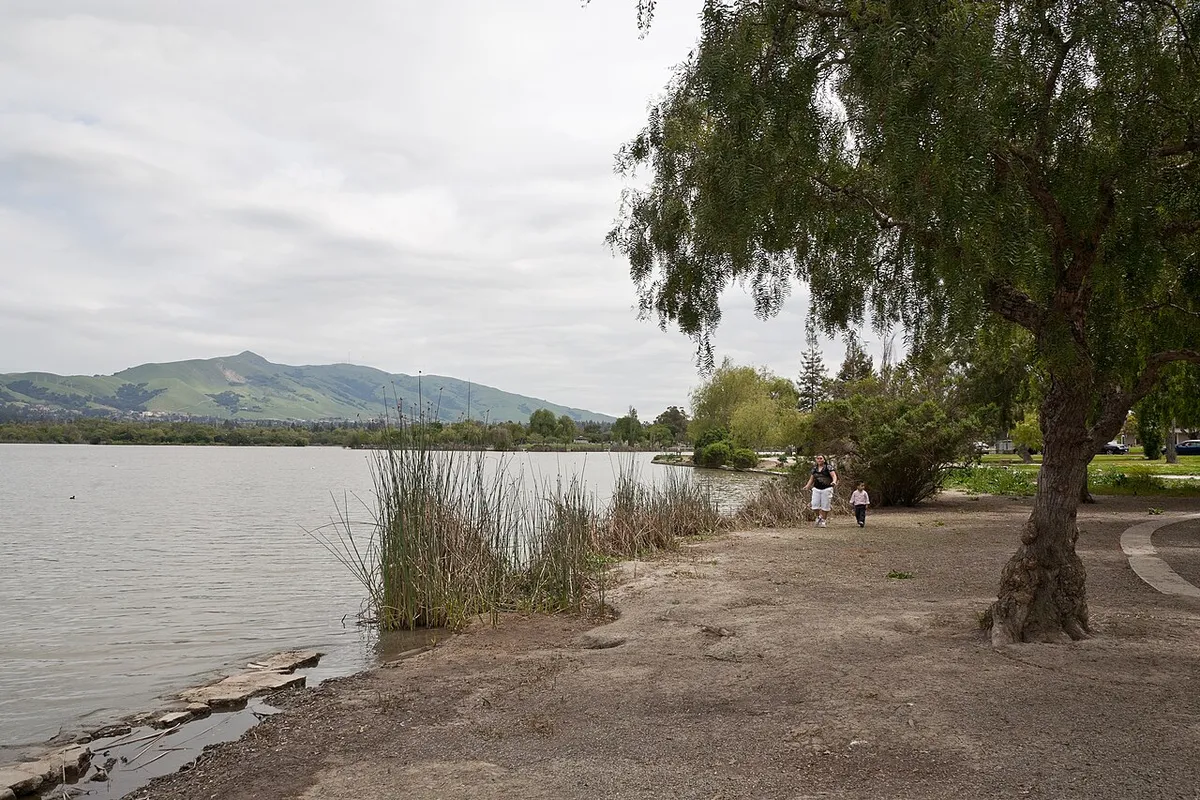
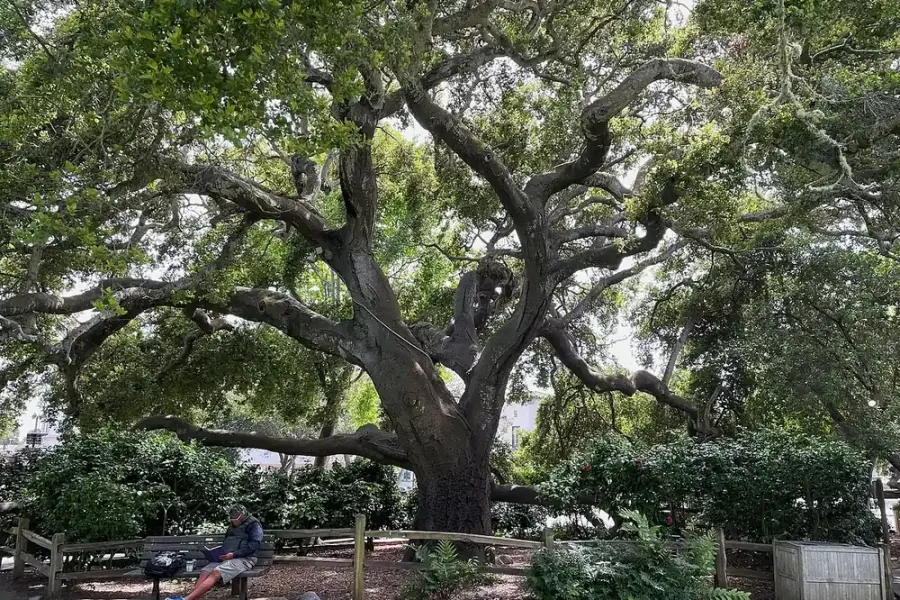
The single most common tree in question in Mission San Jose is a mature coast live oak, and the single most common mistake is summer irrigation. A native oak that has spent decades adapting to Fremont’s rainfall pattern does not want water in July, and a lawn or irrigated bed installed under its canopy is a slow way to lose it.
Fremont’s rainfall is sharply seasonal. NOAA 1991 to 2020 climate normals for the nearest station put annual precipitation at 16.00 inches, with 13.08 inches of that falling November through March, roughly 82 percent of the year’s total, against 0.33 inches across the whole of June through September. Native oaks evolved into that rhythm. Summer soil moisture around the root crown creates exactly the conditions root pathogens need.
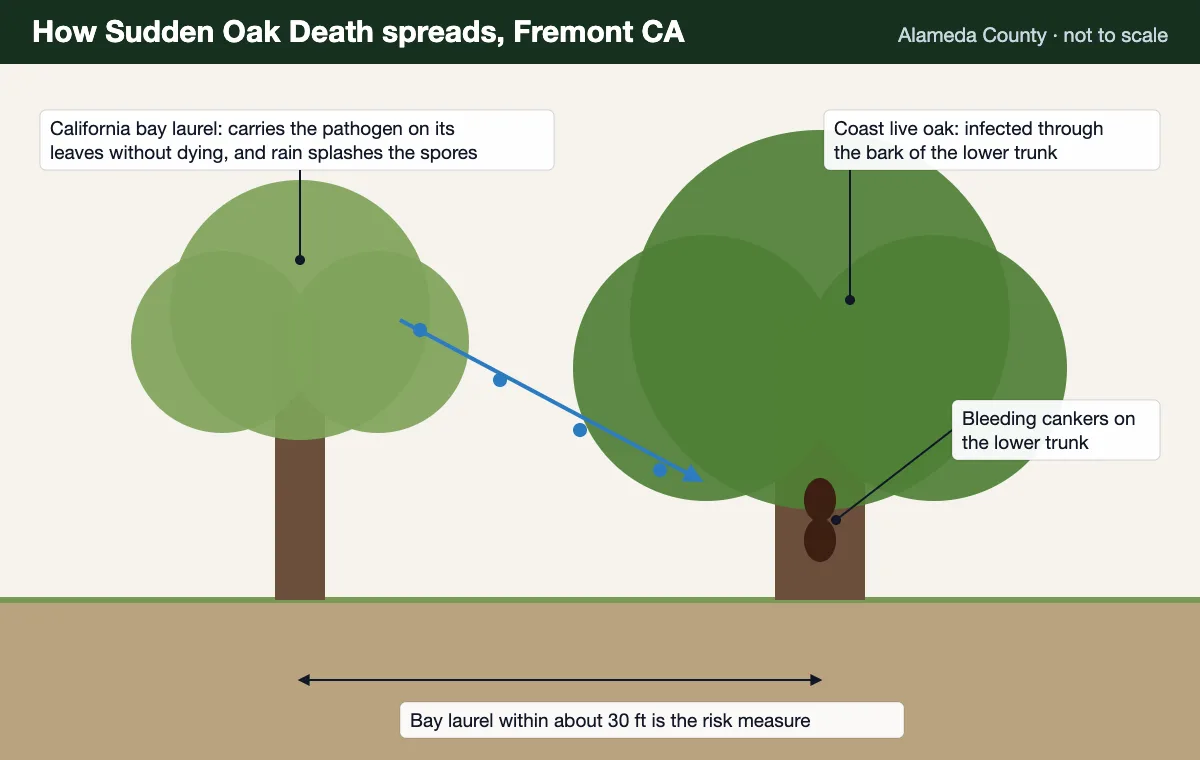
The second issue is pruning timing. Coast live oak is a host of Phytophthora ramorum, the oomycete behind sudden oak death, and Alameda County has known infested sites at Redwood Regional Park, on East Bay Municipal Utility District land, and on a hillside in Castro Valley. Oak pruning belongs in the dry months, which costs you nothing and removes an avoidable risk. Full detail is on the oak tree care and sudden oak death pages.
Access is the price on a terraced lot
On a steep Mission San Jose property, how the wood leaves the site usually costs more than cutting the tree down. A tree a chipper can be parked beside prices at the bottom of its band. The same tree at the back of a terraced lot, twenty feet below the driveway with no gate wide enough for equipment, is a different job entirely.
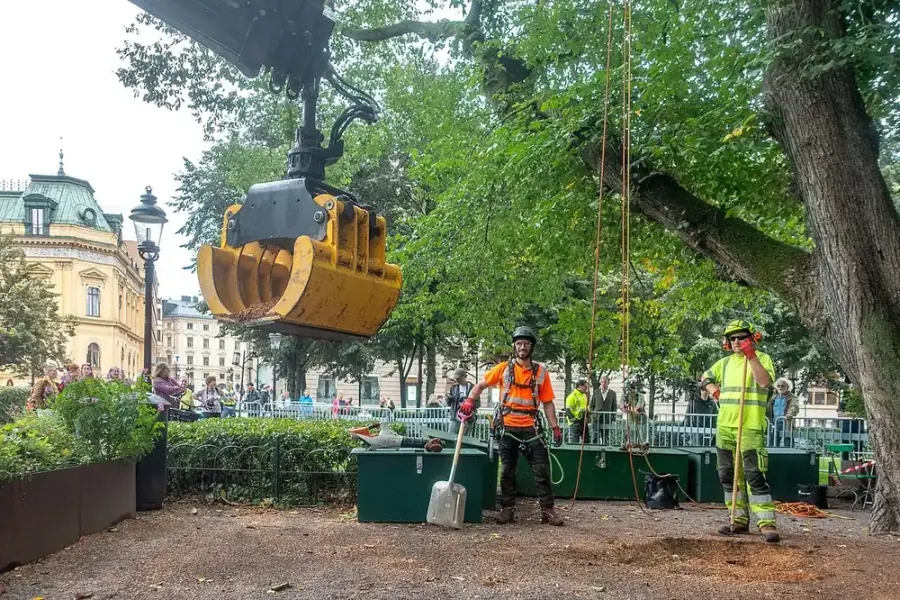
There are three realistic methods, and you should know which one applies before you commit. Ground access with a chipper at the kerb is the cheapest and works on the flatter western blocks. Rope access and manual haul works where the distance is short and the slope is manageable. A crane pick from the street is often the correct answer on the steepest lots, because lifting wood vertically out of a back garden is both safer and faster than dragging it up a slope.
A crane set up in a public street requires an encroachment permit under Fremont Municipal Code Chapter 12.05, and on the narrow hillside streets above Mission Boulevard the set up position has to be planned rather than assumed. See crane tree removal for how the pick is planned and what it costs.
The fire hazard zone runs through the upper blocks
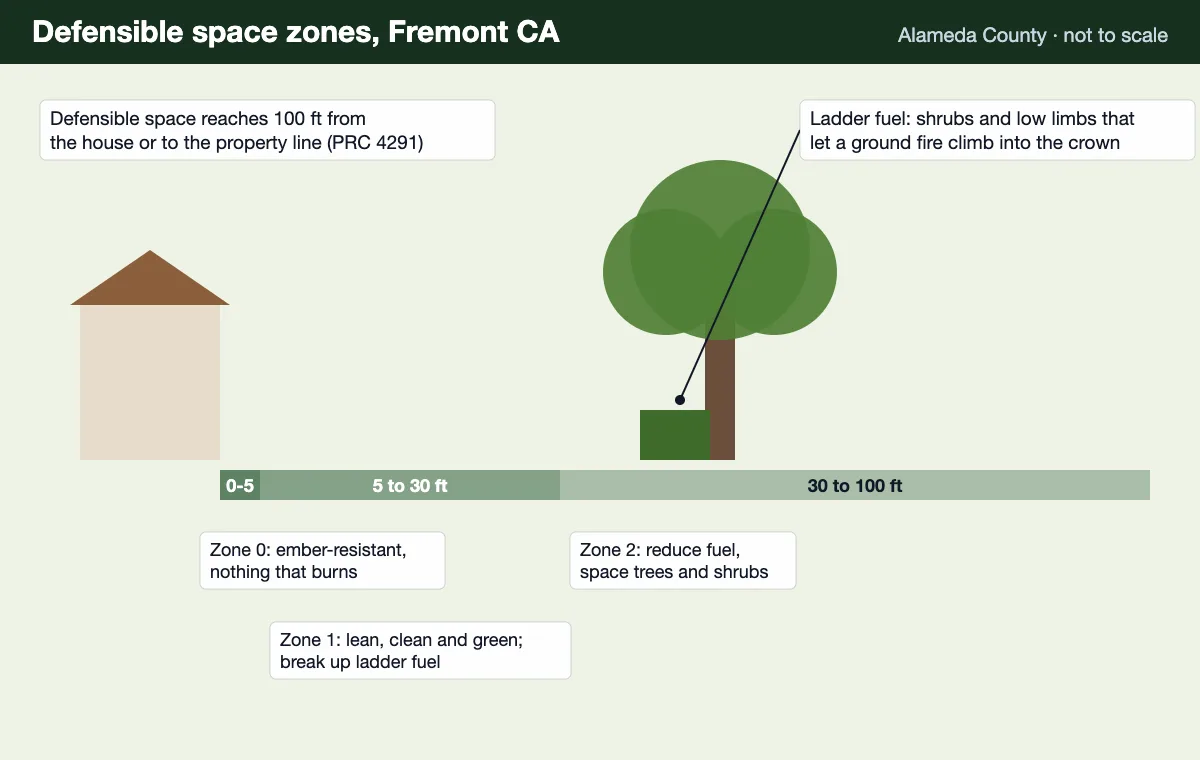
Upper Mission San Jose has substantial overlap with Fremont’s very high fire hazard severity zone, which is concentrated along the eastern hills from Mission Peak south toward the Sunol border. The boundary follows terrain rather than street lines, so two houses on the same road can land on opposite sides of it.
Check your own parcel on the City of Fremont address viewer instead of assuming from your neighbours. If you are inside the zone, California Public Resources Code section 4291 applies at state level and Fremont Municipal Code Chapter 15.65 applies locally. Chapter 15.65 was adopted by Ordinance 10-2025 on July 15, 2025, which makes it one of the newest pieces of the city’s tree and vegetation regulation.
In practice, defensible space work in Mission San Jose is ladder fuel reduction and separation rather than clearance to bare soil. Stripping a hillside down to dirt creates erosion problems in the first heavy November storm and does not meet the intent of the rules anyway.
Winter failures and what to do first
The classic Mission San Jose winter failure is not a broken tree, it is a tree that has stayed intact while the ground underneath it let go. Saturated hillside soil after a heavy storm loses the friction holding a root plate in place, and on a slope the tree simply rotates.
That is a direct consequence of the rainfall pattern. With 82 percent of Fremont’s 16.00 inch annual total landing between November and March, soil goes from bone dry to fully saturated in a matter of weeks, and the trees that fail are usually the ones that spent the dry season with compromised roots nobody could see.
If a tree is leaning on your property, stay away from the uphill side, keep children and vehicles clear, and do not cut anything that is still attached and under load. A partially failed tree on a slope holds enormous stored energy and releases it unpredictably. Call it in and let a crew assess the load path first. See emergency tree service.
How a Mission San Jose job should run
- 1
Note the street and what you can see from it
Mission San Jose lots vary enormously between the flat blocks near Mission Boulevard and the terraced hillside properties climbing toward the Mission Ridge. The street name says immediately whether this is a truck access job or a rope and rigging job, which is most of the quote.
- 2
Check protected tree status before quoting
Mission San Jose has the most mature native canopy in Fremont, which means the highest chance your tree falls under Fremont Municipal Code Chapter 18.215. Confirm status before the quote so you never find out mid job that the work needs a permit.
- 3
Check the fire hazard severity zone layer
The very high fire hazard severity zone runs along Fremont's eastern hills from Mission Peak south toward the Sunol border, which puts a large part of upper Mission San Jose inside or adjacent to it. That changes what clearing work is required and what defensible space rules apply to your parcel.
- 4
Plan access before the cut
On a steep Mission San Jose lot, how the wood gets off the property decides the method. Sometimes that is a chipper at the kerb and a long drag. Sometimes it is a crane pick from the street because the back of the lot is fifteen feet below the driveway. The quote should say which one and why.
- 5
You get a written scope, not a verbal number
The quote names the trees, the cuts, the debris outcome, the access method, and the licence and insurance carried. On a hillside property with a mature oak, a vague number is how disputes start.
- 6
Work to the season, not just the calendar
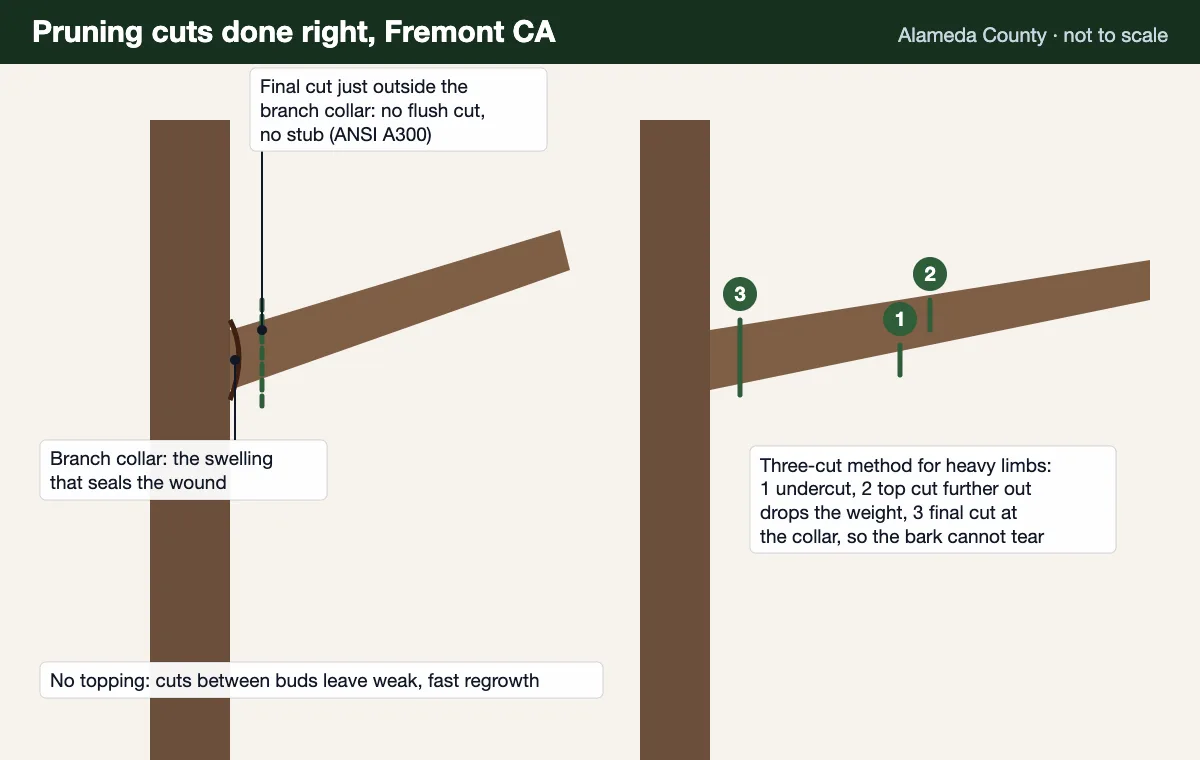
Oak pruning in Mission San Jose is timed into the dry months to reduce Phytophthora ramorum exposure, and hazard work on saturated hillside soil is timed around the winter rains. If your job should wait six weeks, a good crew will say so rather than book it now.
Mission San Jose tree service questions
Do you serve the Mission San Jose district of Fremont?
Yes, Mission San Jose is a core part of the service area and the district where tree work is most often hillside and oak focused. Mission San Jose was one of the five towns that unified into the city of Fremont on January 23, 1956, and it sits at the base of the Mission Ridge where the hills are higher and steeper than anywhere else in the city. Send the address through the form for a free estimate.
Why is tree work more expensive in Mission San Jose than in flatter parts of Fremont?
Access, slope and tree size, in that order. Mission San Jose's hills are the steepest in Fremont, with Mission Peak and Mount Allison rising from 2,517 to 2,604 feet, and terraced hillside lots frequently have no vehicle route to the tree. When a chipper cannot reach the work, every piece of wood is carried, lowered or craned, and the labour hours roughly double. The trees themselves are also older and larger here than in the post war districts.
Is my Mission San Jose property in the fire hazard severity zone?
Check your specific parcel on the City of Fremont's address viewer rather than assuming, because the boundary follows terrain and not street lines. The very high fire hazard severity zone is concentrated along Fremont's eastern hills from Mission Peak south toward the Sunol border, so upper Mission San Jose has substantial overlap while the flatter western blocks generally do not. See the page on the fire hazard severity zone for how to look up your address and what the designation changes.
Are the oaks in Mission San Jose at risk from sudden oak death?
Coast live oak is a confirmed host of Phytophthora ramorum and Alameda County has known infested sites, so the risk is real but it is a county level risk rather than a documented Mission San Jose one. The verified infested sites in Alameda County are Redwood Regional Park, East Bay Municipal Utility District property, and one hillside in Castro Valley. Phytophthora ramorum is an oomycete, a funguslike organism, not a fungus, and there is no cure once a tree is symptomatic. See the sudden oak death page for what to look for.
Do I need a permit to remove a tree in Mission San Jose?
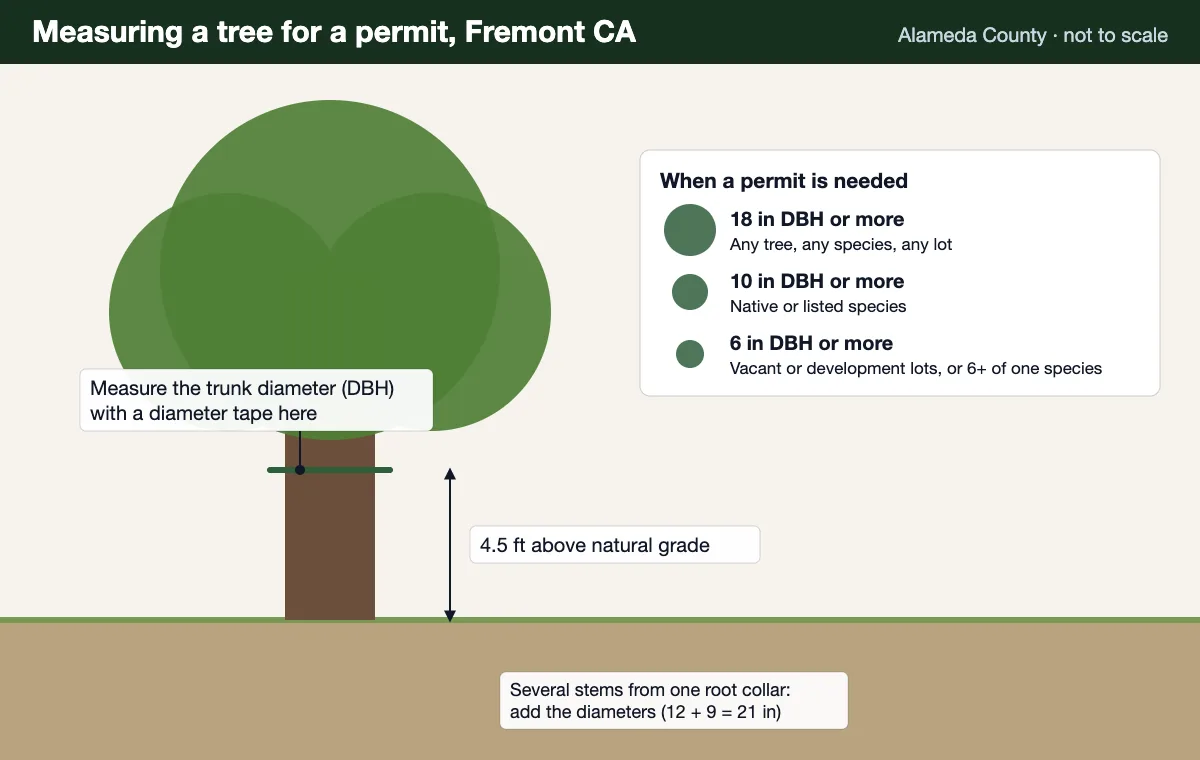
Possibly, and Mission San Jose is the district most likely to trigger one because it has the most mature native canopy in Fremont. Fremont Municipal Code Chapter 18.215 regulates protected trees and section 18.215.030 defines damage to include topping and cutting to include pruning and trimming, so the ordinance reaches routine work and not just removal. Check the status of every tree before it is quoted.
Can a crane reach a hillside property in Mission San Jose?
Often yes, and a crane is frequently the safest option on a steep lot precisely because it lifts wood out rather than dragging it across the slope. What matters is whether there is a street or driveway position with enough clear radius and adequate ground bearing, and whether overhead conductors sit in the swing path. A crane set up in the street needs an encroachment permit under Fremont Municipal Code Chapter 12.05. See the crane tree removal page.
Why should oak pruning in Mission San Jose be done in summer?
Because Phytophthora ramorum spore pressure is highest in the wet season and fresh pruning wounds are entry points. Fremont's rainfall is heavily concentrated: NOAA 1991 to 2020 normals for the nearest station record 13.08 inches falling November through March, which is 82 percent of the 16.00 inch annual total, against 0.33 inches across all of June through September. Timing oak work into that dry window costs nothing and removes a real risk.
What about the historic trees near the Mission itself?
Trees on or immediately around the Mission San Jose site and Ohlone College are not private property and are not ours to touch. The mission was founded in 1797 by Padre Fermin Lasuen at the Ohlone village of Oroysom, the 1809 adobe church was destroyed by the 1868 Hayward fault earthquake, and the reconstruction was dedicated in 1985. Ohlone College sits one block away and serves over 12,000 students. If you have a concern about a tree on public or institutional land, report it rather than book it.
Is defensible space clearing needed in upper Mission San Jose?
Often, yes, especially on the hillside blocks. Defensible space work in Fremont is governed by California Public Resources Code section 4291 at state level and Fremont Municipal Code Chapter 15.65 locally, which was adopted by Ordinance 10-2025 on July 15, 2025. Because the state clearance standards were revised through a 2025 rulemaking, this site points you to CAL FIRE and the Office of the State Fire Marshal for current distances rather than publishing a number that may already be stale.
How quickly can you get to a storm damaged tree in Mission San Jose?
Hillside properties are the urgent case because slope failure makes a leaning tree less predictable. Saturated hillside soil after a heavy November to March storm is the specific Mission San Jose failure mode: the tree has not broken, the ground has let go. Do not approach a leaning tree on a slope and do not cut anything still under load. See the emergency tree service page.
Related Pages
Hillside tree on your mind?
Send the street, the tree and a photo for a free estimate. Settle the access method before anyone comes out.
- Free written estimate, no obligation
- Check whether your tree is protected before work starts
- Ask any crew for its CSLB license and certificate of insurance
- Mark storm damage as urgent in your request