Palm tree removal and trimming in Fremont, CA
Why palm work is a different trade from tree work
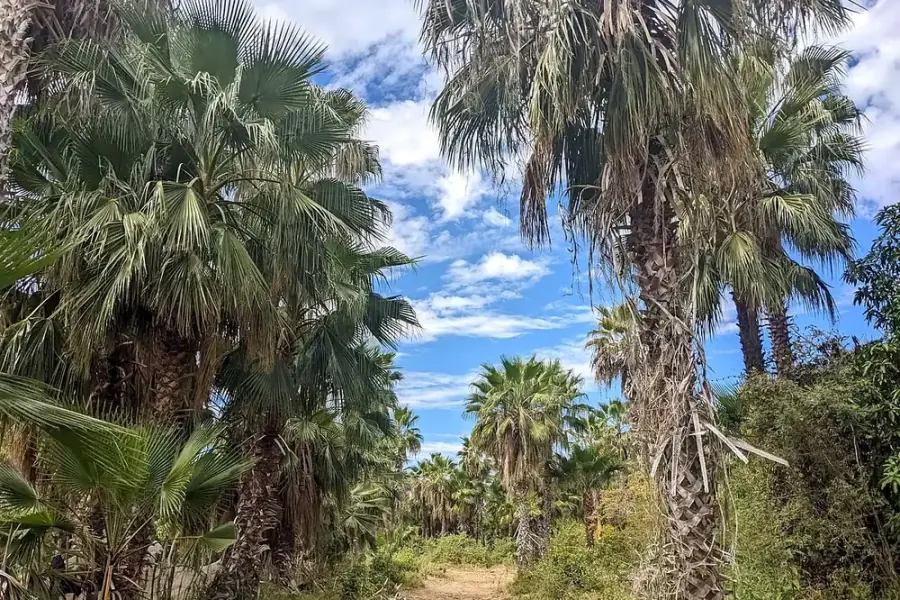
A palm is a monocot, more closely related to grass than to an oak, and four consequences of that follow straight into how the job is priced and performed. This is the reason the California licence class is called Tree and Palm Contractor rather than just Tree Contractor.
No secondary growth
A palm trunk reaches its final diameter when it forms and never thickens. It cannot add wood to strengthen a weak point, and it cannot grow over a wound. Damage to the trunk is permanent for the life of the palm.
One growing point
Everything the palm will ever produce comes from a single bud at the top of the trunk. Destroy it and the palm dies. There is no topping, no crown reduction and no height management of any kind.
No branches to rig from
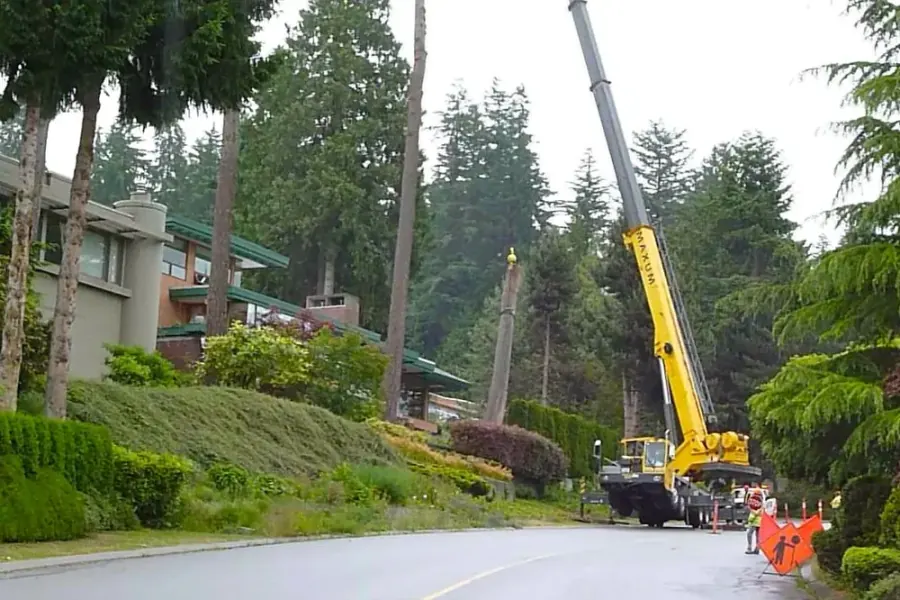
Lateral limbs are what a climbing arborist uses for anchor points and lowering lines. A palm has none, so removals are spikes, a lift, or a crane, with the access route deciding which.
Heavy and fibrous
Palm tissue holds a lot of water, so sections weigh far more than the equivalent length of dry hardwood. The fibre also clogs chippers, so debris generally leaves whole rather than as chip.
The practical upshot is that a crew comfortable with hardwood removal is not automatically the right crew for a sixty foot fan palm, and the questions on how to hire a tree service are worth asking specifically about palm experience.
How much to trim, and the cut that does damage
Take fully brown dead fronds and leave everything still green. That is the whole rule, and it usually means considerably less comes off than the homeowner expected. A palm has a fixed crown fed by a single growing point, so its green fronds are its entire food production and its only protection for that growing point.
The damaging cut is the severe one that strips the crown back to a narrow upright tuft. It is sometimes offered as storm protection or as a way to stretch the interval between visits, and it achieves neither. A palm cut that way has less stored energy, less protection at the bud, and a crown shape that catches wind rather than shedding it, and because a palm cannot grow replacement tissue the effect persists for years.
What is genuinely worth doing on a Fremont palm:
- Dead frond removal. Fully brown fronds only. Safety and appearance, and on a fan palm it stops the shaggy skirt building up.
- Seed and flower stalk removal. Done before the fruit sets, this saves the sticky debris on the driveway and the volunteer seedlings in every bed in the neighbourhood.
- Skinning. Removing persistent dead frond bases to leave a clean trunk. Cosmetic, and it has to be shallow, because cutting into trunk tissue does permanent damage a palm cannot seal.
- Clearance. Fronds off a roofline or out of a walkway. On a hillside lot this overlaps with defensible space work, since a dead frond skirt is a considerable fuel load.
Sterilise the saw: the one disease the contractor can give your palm
Fusarium wilt of Canary Island date palm is fatal, has no cure, and is spread on contaminated pruning equipment, which makes it the one tree disease your contractor is directly capable of transmitting to your palm. It is a well established problem in California landscapes and it moves palm to palm on chainsaw chains.
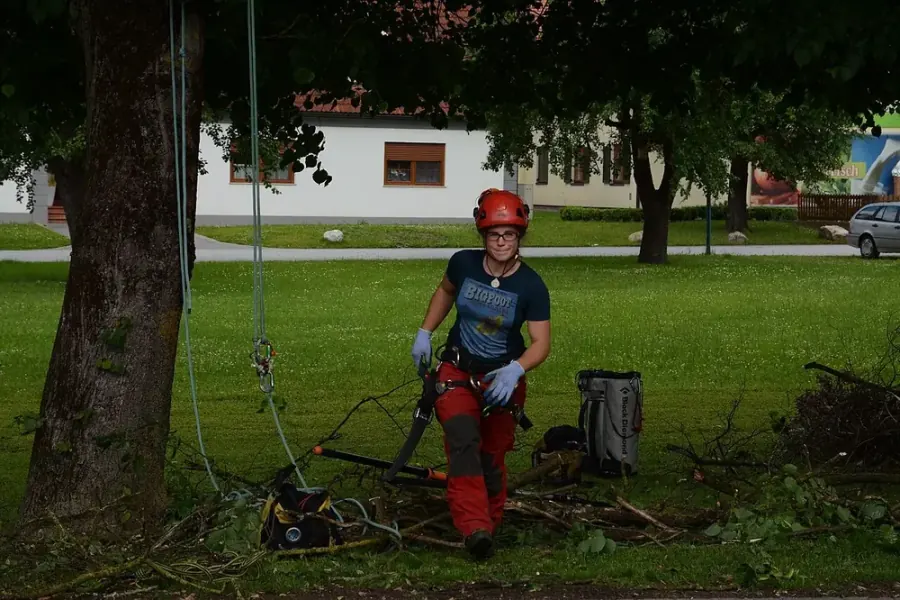
Ask whether chains and bars are cleaned and disinfected between palms. A crew that moves down a row of date palms with one chain and no sterilisation step is a real risk regardless of how good the pruning is. The visible sign of the disease is a one sided frond death, where leaflets on one side of the midrib die while the other side stays green, progressing through the crown.
There is no treatment for an infected palm, which means removal, and removal of a diseased palm carries its own handling questions about where the material goes. The general approach to what can and cannot be treated is on the tree disease treatment page, and the broader Fremont pathogen picture, which for native trees is dominated by Sudden Oak Death, is a separate subject entirely.
How a palm actually comes down
A palm removal is decided by height and access before anything else, because with no branches to rig from the only choices are climbing on spikes, an aerial lift, or a crane. Species matters second, and the three common Fremont candidates behave very differently.
- Mexican fan palm. The tall slender one along California streets. Height is the entire problem. Above roof level over a structure, this becomes a crane job rather than a felling job.
- Canary Island date palm. Shorter but enormously heavy, with a massive crown and spined frond bases that make every part of the work slower. Weight, not height, drives this one.
- Queen palm and similar. Generally the most straightforward, smaller crown, lighter sections, often manageable from a lift.
The trunk comes down to grade and then the root ball is dealt with. A palm root ball is compact and fibrous rather than a wide woody plate, which makes it tough on a grinder but confined, and unlike several ornamental trees a palm will not sucker from what is left. Grinding depth and backfill work the same way as any other stump, and that decision is covered on the stump grinding page.
What palm work costs in Fremont
Palm removal spans roughly $250 to $1,200 nationally by Fixr's figures with LawnStarter putting the average at $725, and Bay Area pricing sits above national. Height is the dominant variable, and the step change happens when the palm gets tall enough over a structure that a crane replaces climbing.
For trimming, Fixr puts palm trimming at $100 to $1,500 and LawnStarter at $100 to $1,330. That enormous spread is not vagueness, it is the difference between four dead fronds off a fifteen foot queen palm from a ladder and a full crown clean plus seed stalk removal on a sixty foot fan palm from a lift.
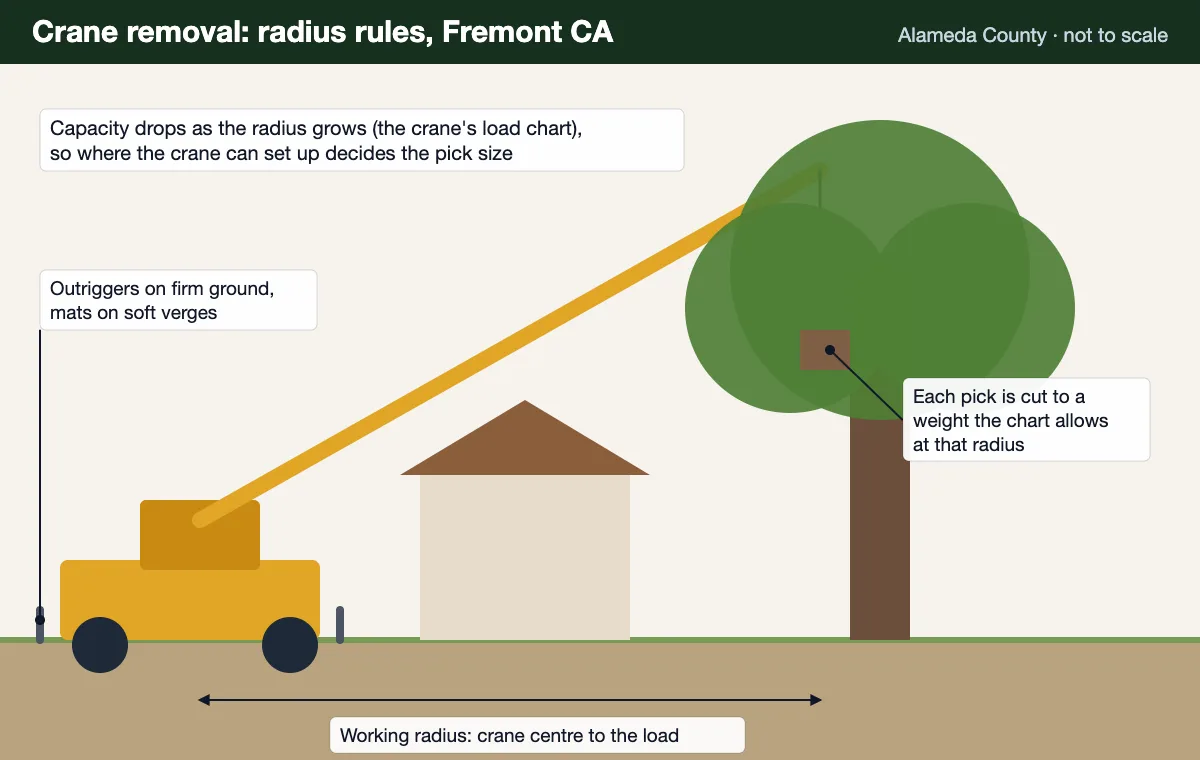
Height to the crown, because it decides climb versus lift versus crane, with Fixr putting crane assisted removal at $1,500 to $2,500 on 80 foot plus trunks. Access, because a lift that cannot reach the palm is not a lift. Debris, because palm does not chip and therefore leaves site whole, which is a different disposal line from a hardwood job. Bay Area labour and insurance run above the national tables in every category, so treat published averages as a floor.
How a Fremont palm job runs
Six steps. The third one, sterilising the saw, is the step most homeowners have never heard of and the one that can decide whether the palm next door survives.
- 1
Identify the palm and measure the real height
Mexican fan palm, Canary Island date palm and queen palm are three completely different jobs at the same address. Fan palms go very tall on a slender trunk, date palms are enormously heavy with spined fronds, and queen palms are comparatively straightforward. Height is measured to the crown, not to the roofline, because a palm that clears the house by thirty feet is a crane conversation.
- 2
Check access and decide climb, lift or crane
A palm has no lateral branches, so there is nothing to rig from and nothing to climb to except the trunk itself. That leaves spikes on a removal, an aerial lift if the machine can reach, or a crane on a tall trunk over a structure. The access route decides the price far more than the palm does.
- 3
Sterilise the saw before it touches the palm
Fusarium wilt of Canary Island date palm is spread on contaminated pruning equipment, and it is fatal with no cure. Chainsaw chains and bars get cleaned and disinfected between palms as standard practice, and a crew that moves from palm to palm with the same chain and no sterilisation step is a genuine risk to your tree.
- 4
Take the crown down in controlled pieces
Fronds come off first to reduce weight and clear the work area, then the crown, then the trunk in sections. Palm mass is deceptive because the tissue holds a great deal of water, so a section that looks manageable on a fan palm is far heavier than the equivalent length of dry hardwood. Sections are lowered rather than dropped wherever there is anything underneath.
- 5
Cut the trunk and deal with the root ball
The trunk comes down to grade, then the root ball is ground or excavated. A palm root ball is a dense fibrous mass rather than a spreading woody plate, which makes it compact but tough. The good news is palms do not sucker from remaining root, so once it is out it stays out.
- 6
Haul the debris, because palm does not chip well
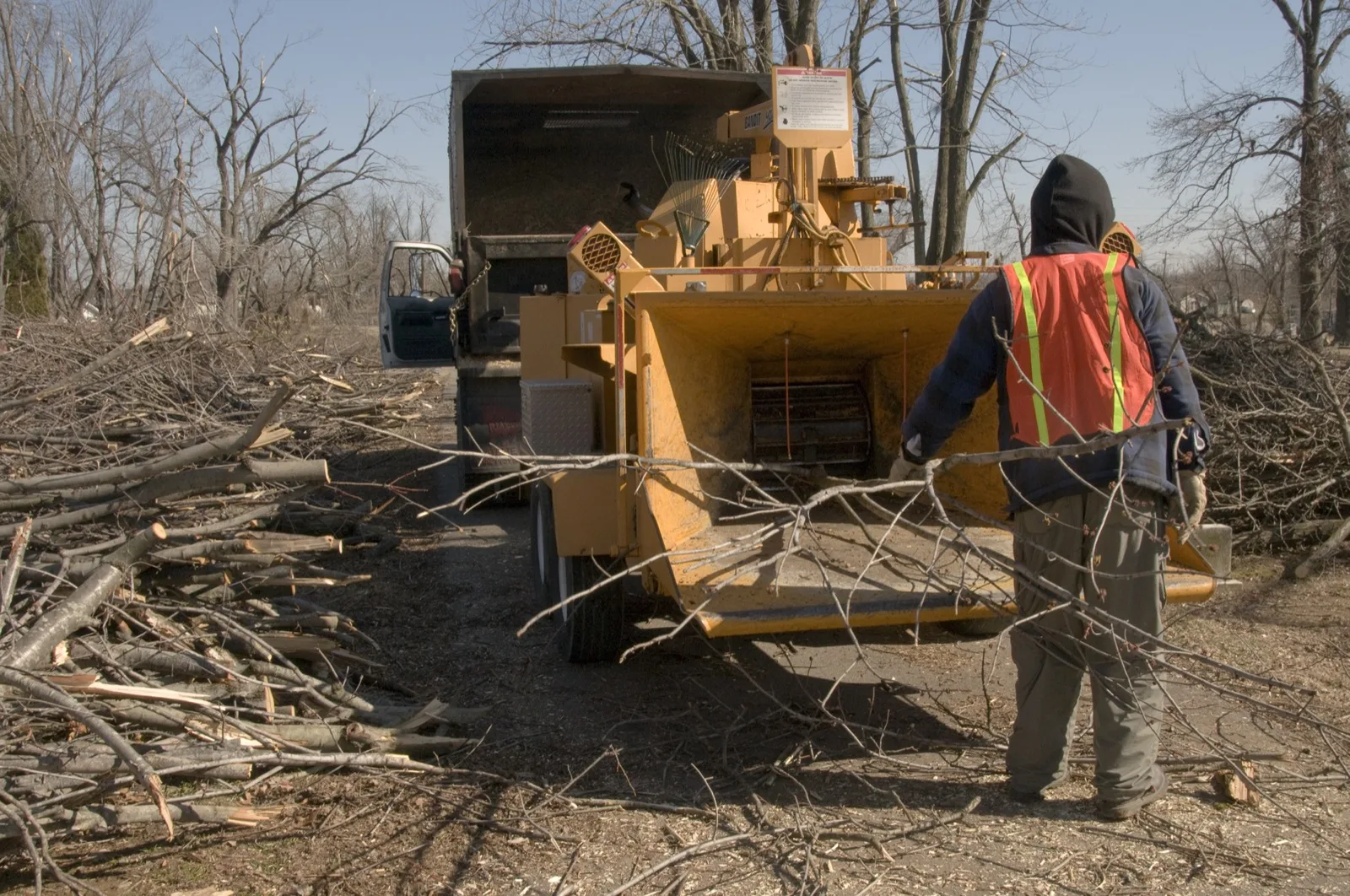
Palm is fibrous rather than woody and it clogs chippers, so it usually goes out whole or cut to length rather than being chipped on site. That changes the disposal line on the estimate compared to a hardwood removal, and it is worth agreeing in writing before the job.
Palm tree questions
How much does palm tree removal cost in Fremont CA?
Fixr puts palm removal at $250 to $1,200 nationally and LawnStarter puts the average at $725, with Bay Area pricing running above those national figures. Height is the dominant driver because a Mexican fan palm at sixty feet is a different machine and a different crew from a fifteen foot queen palm, and a crane assisted removal on an 80 foot plus trunk runs $1,500 to $2,500 by Fixr's figures before anything else is counted.
Is a palm tree actually a tree?
Botanically no, a palm is a monocot and is more closely related to grasses than to an oak. This is not trivia, it changes the whole job. A palm has no cambium and no secondary growth, so its trunk diameter is set when it forms and never increases, it cannot compartmentalise a wound the way a tree does, and it has no branch collar to cut outside of. It also has a single growing point at the top, and destroying that kills the palm outright.
How much should a palm be trimmed?
Take only fully brown dead fronds and leave everything still green, which usually means far less comes off than people expect. A palm has one growing point and a fixed crown, so green fronds are its entire food production, and stripping them to a narrow tuft weakens the palm and leaves it more vulnerable to wind, not less. The severe cut that leaves only a few upright fronds is sometimes sold as storm protection and it does the opposite.
Can a palm be topped or reduced in height?
No. A palm grows from a single growing point at the top of the trunk, so cutting the top off does not reduce the palm, it kills it. There is no equivalent of crown reduction on a palm and no way to make a tall palm shorter. If the height is the problem, the only real options are living with it or removing it.
Why do tall palms need a crane?
Because a palm has no lateral branches to rig from, so on a tall trunk over a structure there is nowhere to attach a lowering line except the trunk itself. A Mexican fan palm can reach heights where climbing on spikes to fell in sections above a roof stops being reasonable, and at that point a crane picks the sections out rather than dropping them. Fixr puts crane assisted removal at $1,500 to $2,500.
Do I need a permit to remove a palm in Fremont?
It depends on whether that specific palm is protected under FMC Chapter 18.215 or sits in the public right of way under FMC Chapter 12.30, and the only reliable way to know is to check before the work is scoped rather than after. Size thresholds and protection criteria are set by the ordinance, not by species alone. If the palm is between your sidewalk and the kerb, treat it as the City's until proven otherwise.
What is palm skinning?
Skinning is removing the persistent dead frond bases from the trunk to leave a clean smooth surface, most commonly done on Mexican fan palms where the old bases otherwise build up into a thick shaggy skirt. It is cosmetic rather than a health measure, and it has to be done carefully because cutting too deep damages the trunk tissue permanently, and a palm cannot heal that damage the way a tree seals a wound.
What is Fusarium wilt and how does it spread?
Fusarium wilt is a fatal fungal disease of Canary Island date palms with no cure, and it is spread on contaminated pruning equipment, which makes it one of the few tree diseases the contractor is directly responsible for transmitting. Chainsaw chains and bars must be cleaned and disinfected between palms. The visible pattern is one sided death of a frond, where leaflets on one side of the midrib die while the other side stays green.
Do palm stumps need grinding?
Yes, but they behave differently from tree stumps. A palm root ball is a dense fibrous mass rather than a broad woody plate, so it is more compact but tougher on the machine, and the price follows diameter in the usual way. The one piece of good news is that palms do not sucker from remaining root, so unlike some ornamental trees there is no regrowth to deal with afterwards.
When is the best time to trim a palm?
Late spring and summer is the usual preference, because a palm is a warm climate plant and its green fronds provide some protection to the growing point through cold weather. In Fremont, the dry months are also the practical window for the same reason they are for other trees: less moisture means less opportunity for pathogens to enter through a fresh cut.
Are the seed pods and fruit a problem?
They are a nuisance and sometimes a real one. Palm flower and fruit stalks drop heavy sticky debris onto driveways, cars and paths, and fan palm seed germinates readily enough that volunteer seedlings appear in beds and gutters across the neighbourhood. Removing the stalks before the fruit sets is routine work and it is much cheaper than dealing with what comes down afterwards.
Can I cut down my own palm?
A short palm on open ground with nothing underneath is within reach of a competent homeowner with the right saw. A tall one is not, and palms are more dangerous than they look for two reasons: the tissue is heavy with water so sections weigh far more than they appear to, and there are no branches to slow or catch anything on the way down. Anything over roof height, anything near a structure, and anything near a wire is a contractor job.
Related Pages
Note the palm's height and what is under it
A photo from far enough back to get the whole palm plus the house in frame answers most of the pricing questions at once, because height and access are what set the number.
- Free written estimate, no obligation
- Check whether your tree is protected before work starts
- Ask any crew for its CSLB license and certificate of insurance
- Mark storm damage as urgent in your request