Tree Service in Warm Springs, Fremont CA
What makes Warm Springs different
Warm Springs is the newest built environment among Fremont’s five founding districts, and its canopy reflects that. It takes its name from the springs located there, sits on the former Rancho Agua Caliente, and its post office opened as Harrisburgh in 1865 before changing its name to Warm Springs in 1885. It joined the unified city of Fremont on January 23, 1956.
What happened since is the part that matters for trees. Warm Springs has attracted the headquarters of high tech companies including Lam Research, Corsair, Lexar and Nielsen Norman Group, hosts the Pacific Commons regional shopping center alongside blue collar industry, and gained the Warm Springs and South Fremont BART station, which opened for service on March 25, 2017.
Development at that scale brings planted landscaping with it. The result is a district where a large share of the trees went into the ground within living memory, street tree plantings are dense and deliberate, and the most useful arborist work is preventative rather than reactive.
Young trees: structural pruning is the whole game
The highest value tree work you can buy in Warm Springs is structural pruning on a tree under twenty years old, because every defect you remove now is a defect that cannot fail on your house later. The economics are not close. A competing leader removed with hand pruners today is the same defect that, at maturity, is a six inch limb over a roof requiring rigging.
Three things get fixed at this stage. A single dominant leader is established so the tree does not grow two competing trunks that split apart in a wind event. Included bark unions, where bark is trapped between two rising stems instead of wood knitting them together, are removed before they become structural. And the eventual branch heights are set, so the tree ends up with clearance over the driveway without ever needing a large cut.
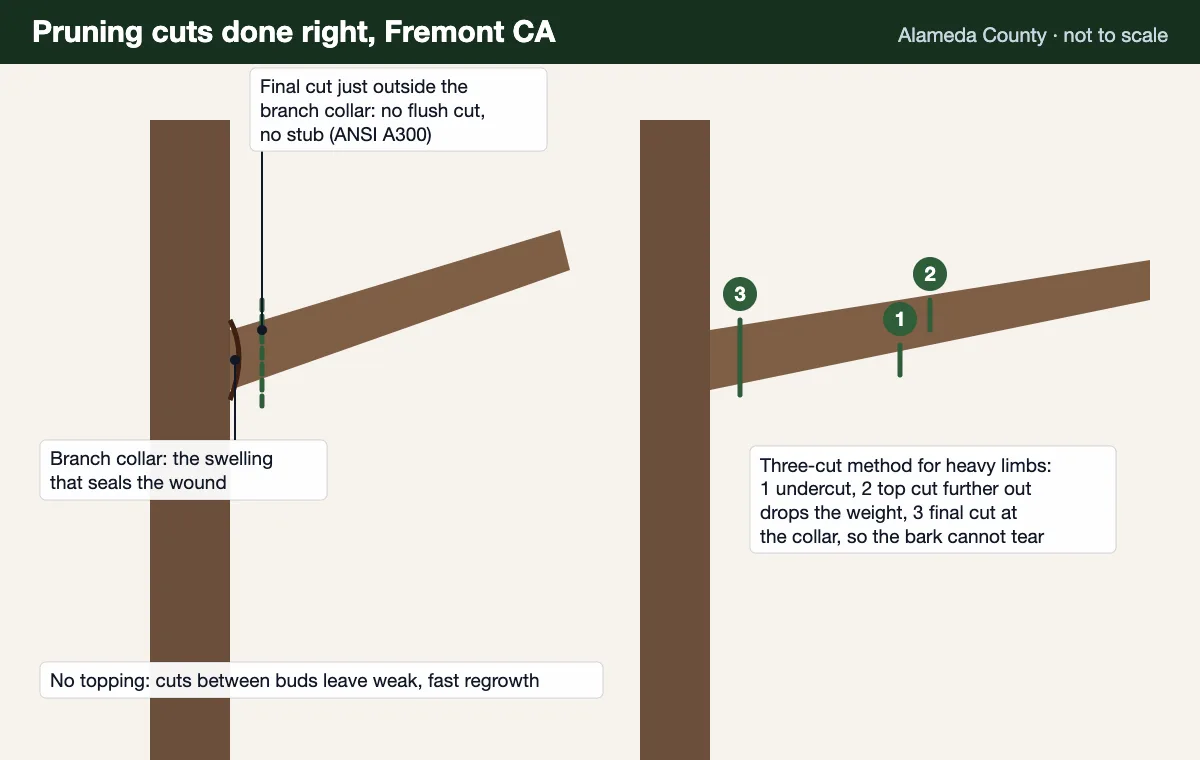
What structural pruning is not is topping. Fremont Municipal Code section 18.215.030 defines damage to include topping, and section 12.30.060(b) prohibits it outright on street trees while pointing to the ISA Tree Pruning Guidelines. A crew that responds to a young tree by cutting the top off is creating the exact weak attachment that structural pruning exists to prevent. See tree trimming in Fremont.
Dense street tree plantings and who owns them
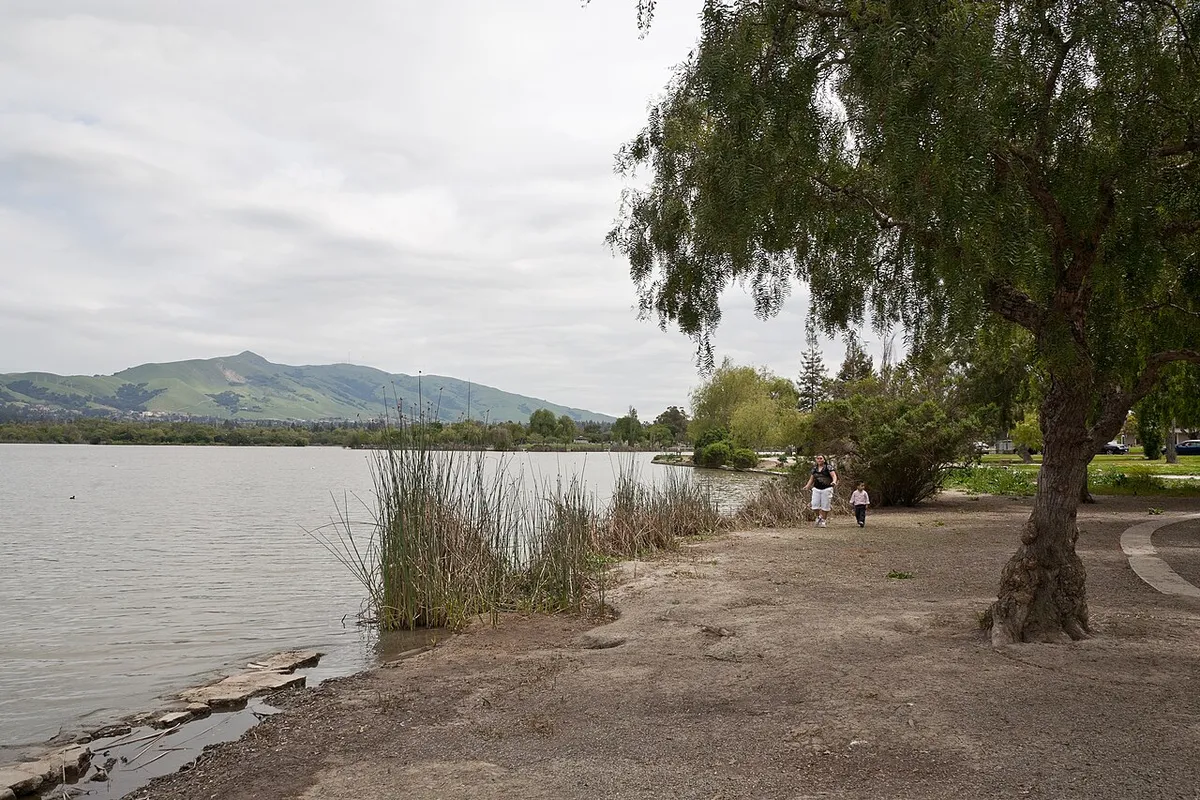
Warm Springs has more street trees per block than the older districts because its subdivisions were designed with planting schemes rather than accumulating trees over a century. That makes the ownership question live in a way it rarely is in Centerville or Irvington.
Fremont Municipal Code Chapter 12.30 governs street trees. Section 12.30.050 requires a permit and a certified arborist for the work. Section 12.30.060(b) prohibits topping and references the ISA Tree Pruning Guidelines. Section 12.30.070 requires the stump of a removed street tree to be ground to 24 inches below grade or removed entirely, which is far deeper than a standard residential grind.
Beyond the code, California Code of Civil Procedure section 733 makes unauthorised cutting expensive in its own right: it applies expressly to trees “on the street or highway in front of any person’s house” and provides for treble damages. Mowing a City street tree back because it was in your way is not a small mistake. See neighbor tree law in California.
Watering a young tree in a dry summer district
Young trees in Warm Springs need summer irrigation, which is the exact opposite of the advice we give for mature native oaks a few miles east. Both pieces of advice are correct and the difference is root development.
Fremont’s rainfall is sharply seasonal. NOAA 1991 to 2020 climate normals for the nearest station put annual precipitation at 16.00 inches, with 13.08 inches falling November through March, about 82 percent of the year, and only 0.33 inches across the whole of June through September. A mature coast live oak has spent decades building a root system adapted to that pattern. A five year old planted tree has not.
The method that works is deep and infrequent rather than shallow and daily. A long slow soak that wets the full root zone encourages roots downward. A daily sprinkler cycle wets the top two inches, keeps the root crown damp, and produces a shallow rooted tree that is both drought vulnerable and more likely to fail in wind. For mature natives, see oak tree care, where the summer answer flips.
Roots, hardscape and newer subdivisions
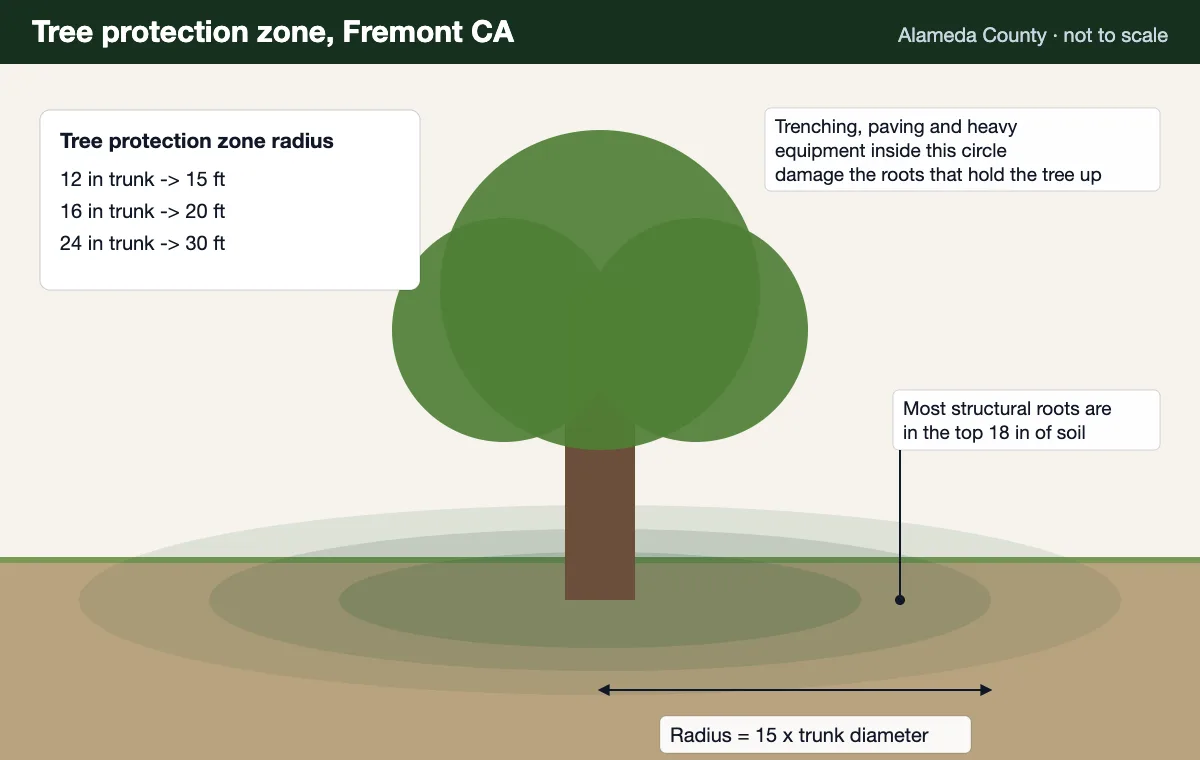
A common removal request in Warm Springs is a tree lifting a driveway, path or patio poured close to its planting pit, and removal is not automatically the right answer. Where the species was appropriate and the conflict is localised, root pruning combined with modifying the hardscape sometimes keeps a tree worth keeping.
Where the species was simply wrong for the space, which happens when a large forest tree goes into a four foot verge, removal and replanting with a species sized to the site is the honest recommendation. A good arborist says which case yours is rather than defaulting to the larger invoice, and if the tree is in the right of way the decision is not yours to make alone.
How a Warm Springs job should run
- 1
Note the tree's rough age and planting position
Warm Springs canopy is largely planted rather than inherited, which means many of the trees here are under thirty years old. Whether a tree went in with the subdivision or was planted by the City in the verge changes both the correct pruning and who is allowed to do it.
- 2
Check whether it is a street tree
Warm Springs has dense street tree plantings from newer development, and those trees fall under Fremont Municipal Code Chapter 12.30 rather than under you. Section 12.30.050 requires a permit and a certified arborist, so confirm the boundary before anything in the verge is quoted.
- 3
Look at structure, not just clearance
On a young tree the most valuable work is structural: establishing a single dominant leader, removing included bark unions before they become failure points, and setting the eventual branch heights. That work is cheap now and impossible later. A good arborist says so even when you only asked for clearance.
- 4
Plan around driveways, utilities and new hardscape
Newer subdivisions have shallow utilities, irrigation, and hardscape poured close to planting pits. Before any stump or root work, call 811 and note any irrigation you know about, because a grinder finding a poly line is a repair nobody wants.
- 5
You get a written scope with the debris outcome stated
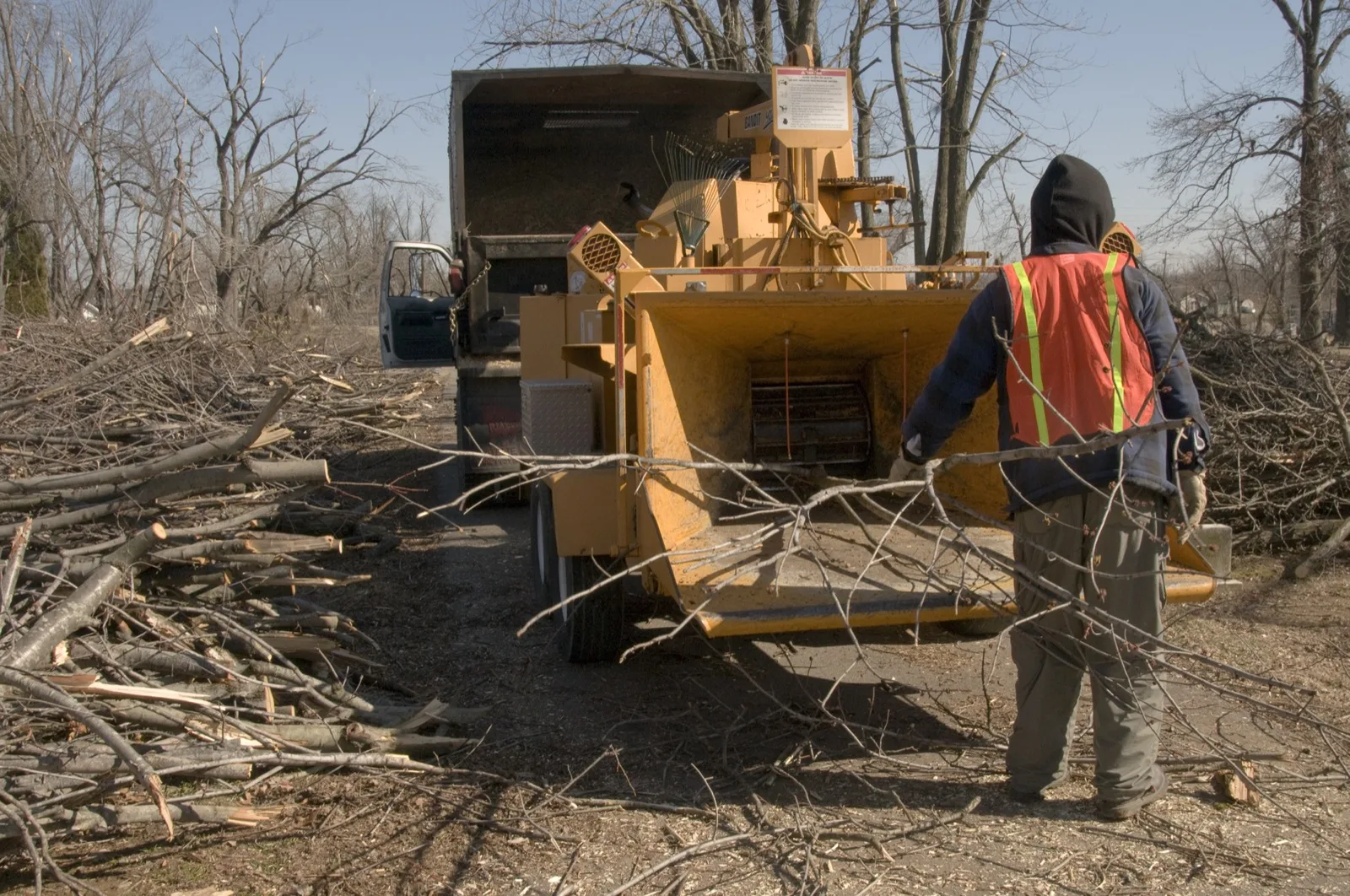
The quote names the trees, the cuts, the debris outcome, and the licence and insurance carried. On a small young tree job the debris line can be a meaningful share of the price, so it goes in writing rather than being assumed.
- 6
Schedule into the right season
Structural pruning on young trees is best done in the dormant or early dry season rather than in the middle of a growth flush. If your job would be better in six weeks, wait, because pruning at the wrong time on a young tree costs you years of growth.
Warm Springs tree service questions
Do you serve the Warm Springs district of Fremont?
Yes, Warm Springs is a core part of the service area and the district where most tree work is on younger planted trees rather than mature natives. Warm Springs was one of the five towns that unified into the city of Fremont on January 23, 1956, and it has since become the city's main tech and transit growth area. Send the address through the form for a free estimate.
Why are the trees in Warm Springs younger than elsewhere in Fremont?
Because most of the district's residential and commercial fabric was built or rebuilt recently, and its canopy was planted with it rather than inherited. Warm Springs now hosts the headquarters of high tech companies including Lam Research, Corsair, Lexar and Nielsen Norman Group, alongside the Pacific Commons regional shopping center, and the Warm Springs and South Fremont BART station opened for service on March 25, 2017. Development of that scale brings new landscaping with it, so the canopy here is decades younger than in Centerville or Mission San Jose.
What is structural pruning and why does my young tree need it?
Structural pruning shapes a young tree so it does not become a hazard at maturity, and it is the highest value tree work you will ever buy. On a tree under twenty years old, removing a competing leader or a narrow included bark union takes one cut with hand tools. On the same tree at forty years old, that union is a six inch limb over your roof that needs rigging, and it may already have started to split. The work is cheap now and expensive or impossible later.
Are the street trees in Warm Springs mine to prune?
No, street trees in the public right of way are governed by Fremont Municipal Code Chapter 12.30 regardless of who waters them. Section 12.30.050 requires a permit and a certified arborist for street tree work, and section 12.30.060(b) prohibits topping and references the ISA Tree Pruning Guidelines. Warm Springs has dense street tree plantings from newer subdivisions, so the chance your tree is in fact the City's is higher here than in the older districts. See the street trees page for how to check the boundary.
What is Fremont's 50/50 street tree program?
It is the City's cost sharing arrangement for street trees, established under Fremont Municipal Code Chapter 12.30, and it is most relevant in newer districts where planting is still ongoing. Because program terms and eligibility change, confirm the current details with the City of Fremont directly rather than relying on a third party summary. First establish whether your tree is in the right of way, which is the question that determines whether the program is even in scope.
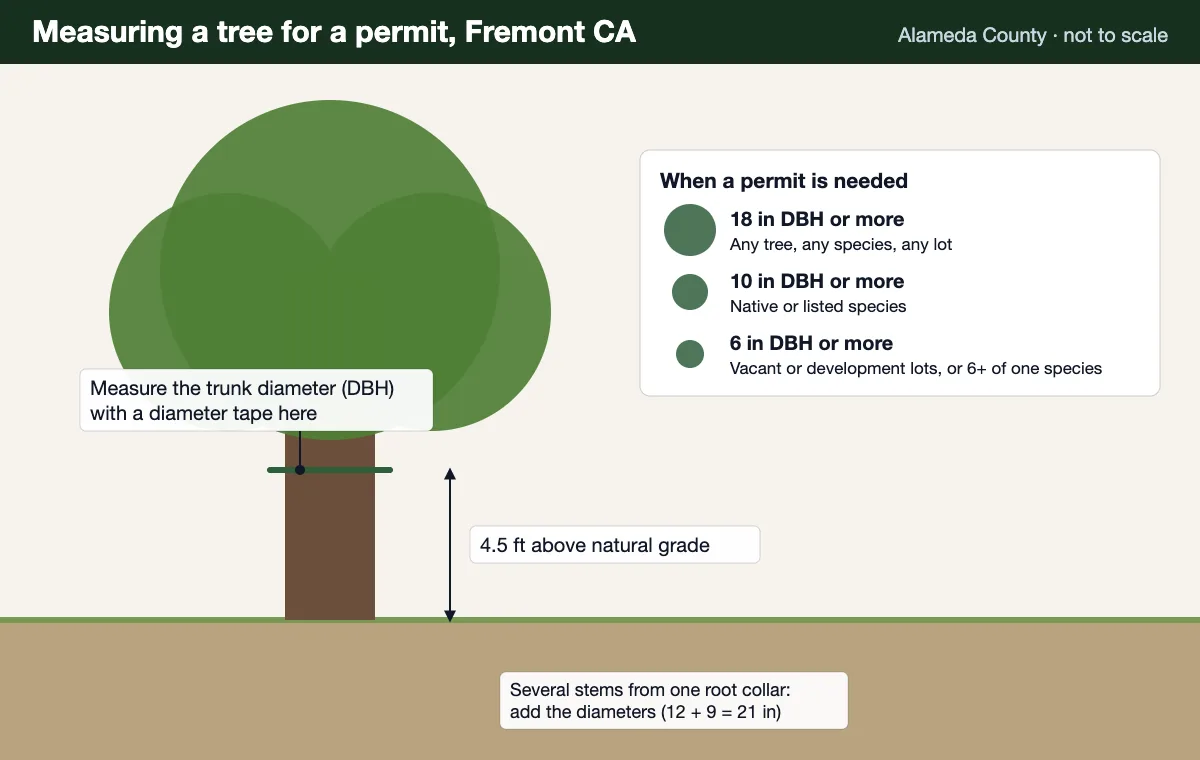
Do I still need a permit for a young tree in Warm Springs?
Possibly, because Fremont Municipal Code Chapter 18.215 protects trees by criteria rather than by district. Section 18.215.030 defines damage to include topping and cutting to include pruning and trimming, so the ordinance reaches routine maintenance and not just removal. A younger tree is less likely to meet the protected threshold than a mature oak in Mission San Jose, but less likely is not the same as exempt. Check before anything is quoted.
Is Warm Springs in the fire hazard severity zone?
Generally no, because Fremont's very high fire hazard severity zone is concentrated along the eastern hills from Mission Peak south toward the Sunol border, and Warm Springs sits on the flatter western side of the city. Check your specific parcel on the City's address viewer anyway, since the boundary follows terrain rather than street lines and properties on the eastern edge of the district sit closer to the band. See the fire hazard severity zone page.
Should I water a young tree in summer in Warm Springs?
Yes, and this is the one case where the answer is the opposite of the advice we give for mature native oaks. A newly planted or young tree has not developed the root system to survive Fremont's dry season unaided. NOAA 1991 to 2020 normals for the nearest station record just 0.33 inches of rain across June through September, against 16.00 inches annually, so anything young needs deep infrequent irrigation through summer. Mature coast live oaks need the opposite, which is why the same street can need two completely different watering regimes.
Should a tree that is lifting new hardscape be removed?
Not always. It is a common problem in newer subdivisions, but removal is not always the right answer. Where a tree was planted too close to a driveway or a path, root pruning plus hardscape modification sometimes saves a tree worth keeping. Where the species was simply wrong for the space, removal and replanting with an appropriate species is the honest recommendation. A good arborist tells you which case yours is rather than defaulting to the bigger invoice.
How much does stump grinding cost in Warm Springs?
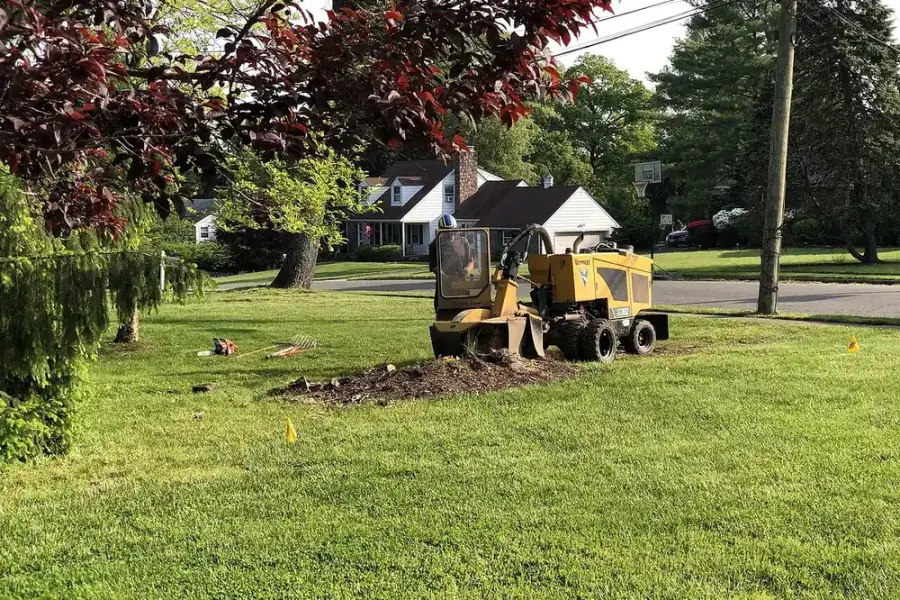
Published national stump grinding ranges run $131 to $438 with a $272 average (LawnStarter) and $100 to $500 per stump (Fixr), built from a $2 to $5 per diameter inch rate, and Bay Area pricing sits above both. Younger trees mean smaller stumps here, which often puts a Warm Springs job at or near the minimum charge of around $100. If you have several stumps, bundle them, because additional stumps on the same visit run $37 to $70 against a first stump around $123. See the stump grinding cost page.
Related Pages
Young tree, right cuts, once
Send a photo and the rough planting date for a free estimate on whether it needs structural work now.
- Free written estimate, no obligation
- Check whether your tree is protected before work starts
- Ask any crew for its CSLB license and certificate of insurance
- Mark storm damage as urgent in your request