Defensible space clearing in Fremont, CA

What the law actually says, and where to get the numbers
Two things govern defensible space in Fremont: California Public Resources Code section 4291, which requires it in designated zones, and FMC Chapter 15.65, which is how Fremont adopted and extended the zone map in July 2025. The specific clearance distances sit with the state fire authority and have been revised, so this page deliberately does not print a number.
"This chapter is intended to comply with the requirements of Cal. Gov't Code §§ 51175 through 51189, and Cal. Pub. Res. Code § 4291(a), which require the city to adopt, by ordinance, the fire hazard severity zones designated by the California Department of Forestry and Fire Protection (CAL FIRE), which consist of very high, high, and moderate designations, subject to the city's authority to designate areas as very high fire hazard zones not otherwise designated by CAL FIRE."
Under FMC 15.65.030Fremont adopted CAL FIRE's 2025 recommended zones. Under FMC 15.65.040(a)the City designated additional very high fire hazard severity zones beyond the State Fire Marshal's, noting these areas were previously approved by the city council on December 4, 2007 under Ordinance 33-2007. Under 15.65.040(b) the boundaries are those on the map labelled City of Fremont, Local Responsibility Area, Fire Hazard Severity Zones, dated June 26, 2025.
For the operative clearance requirements, go to the Office of the State Fire Marshal or CAL FIRE and to the Fremont Fire Department's own wildfire preparedness guidance. Any contractor quoting you a specific distance from memory is quoting a number that may have changed. The zone question itself is covered in full on the fire hazard severity zone page.
Ladder fuel: the work that changes the outcome
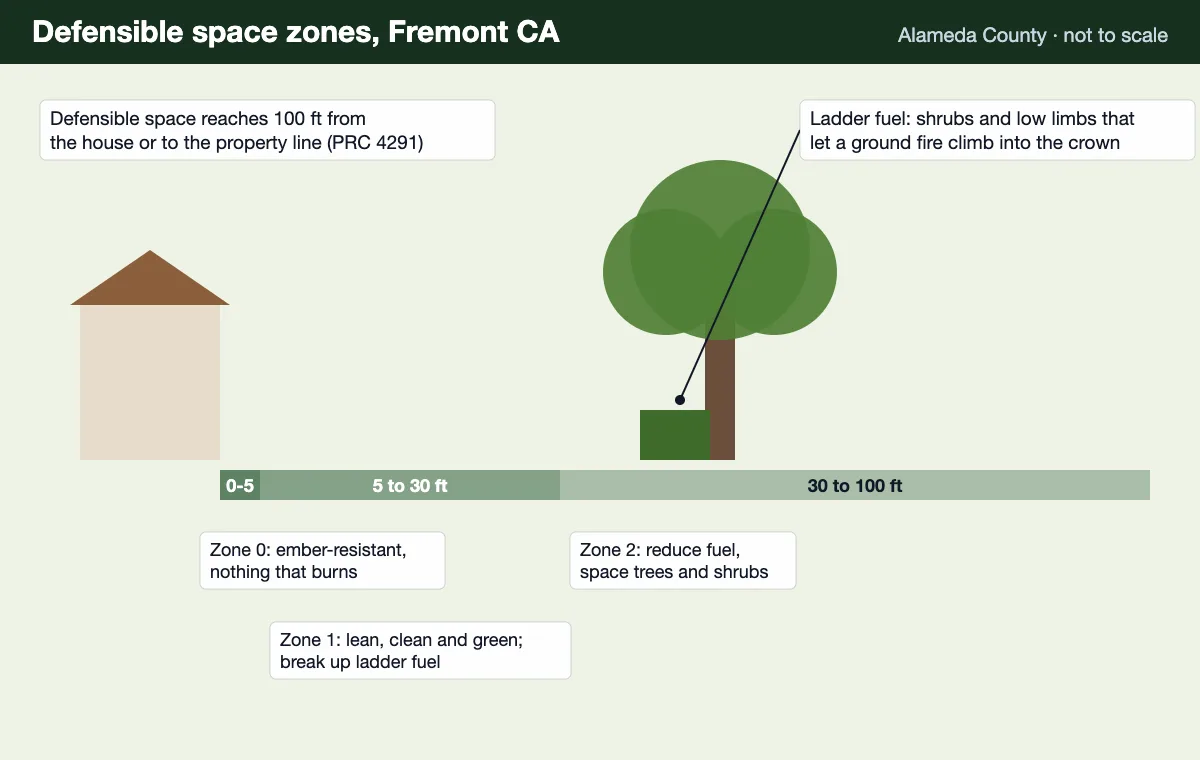
Separating the shrub layer from the tree canopy is the single highest value action on most Fremont hillside lots, because a fire that gets into the crowns behaves completely differently from one moving through grass. Surface fire is survivable for a mature oak and for a well prepared structure. Crown fire is not.
A ladder is anything that carries flame upward continuously: shrubs growing directly beneath a tree, low limbs reaching down toward them, a vine climbing a trunk, accumulated dead material in the shrub layer. Breaking the continuity means either raising the crown, removing or reducing what is beneath it, or both.
What that looks like as actual work on a Fremont property:
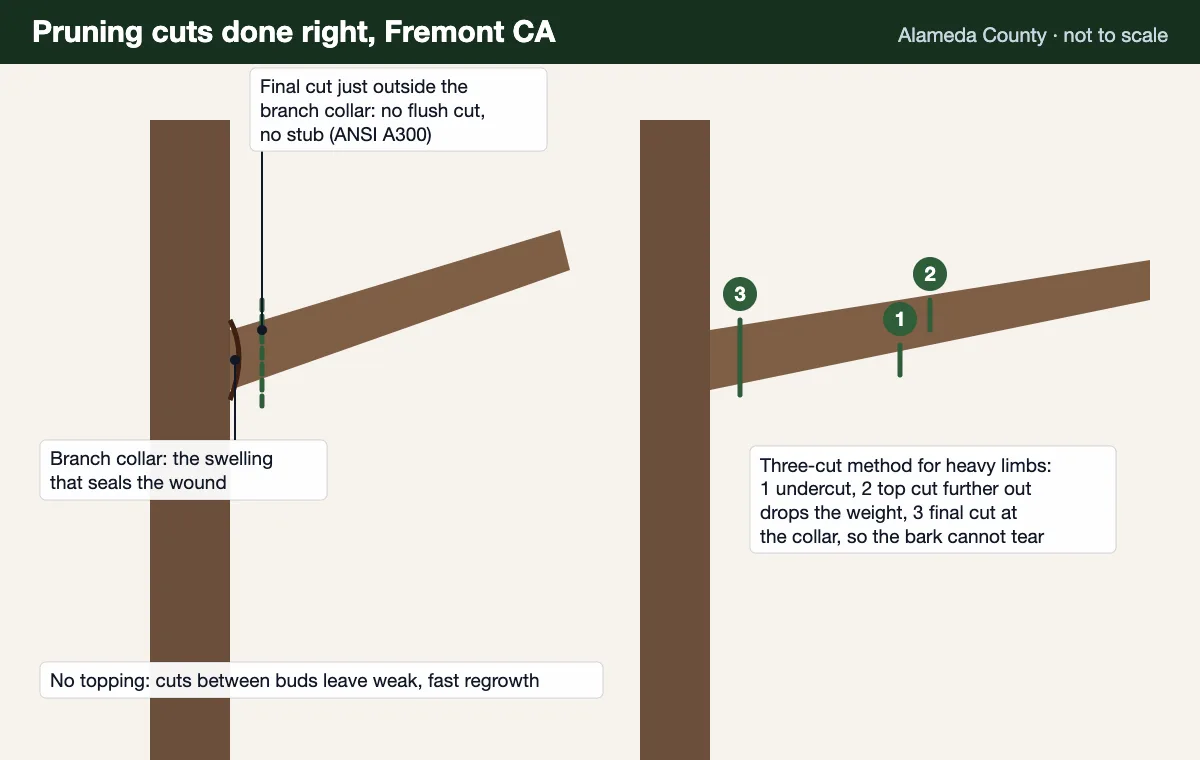
- Crown raising. Removing lower limbs to lift the bottom of the canopy away from surface fuels. Standard pruning work, done to ISA standard, and it improves the tree rather than damaging it.
- Deadwood removal. Dead limbs inside a live crown are fine dry fuel held in exactly the wrong place. Crown cleaning removes them and nothing living comes off.
- Shrub layer reduction. Thinning and spacing rather than clearing to bare soil, because bare soil on a Fremont hillside erodes in the winter rains.
- Standing dead trees. These come out. A dead tree is the most ignitable thing on the lot and the least stable, which makes it both a fire and a structural hazard.
Clearance at the building beats clearance at the fence line
If you can only afford one part of the job, do the part closest to the house. Limbs over the roof, limbs touching walls and dead material in gutters and roof valleys matter more than anything at the far end of the lot. Ember ignition on and around the structure is a primary loss mechanism in wildland urban interface fires, and that is a tree work problem as much as a building one.
The structure clearance checklist on a Fremont hillside property:
- Canopy over the roof. Get it off. This is crown raising and clearance pruning and it also stops the roof staying permanently damp and debris covered.
- Limbs against walls, eaves and windows. Direct flame contact paths.
- Accumulated litter in gutters and valleys. Fine, dry, elevated and ember receptive. It builds up continuously wherever there is canopy above.
- Dead frond skirts on palms. A large volume of fine dry fuel held at roof height or above. See palm work.
- Vegetation against fences that run into the house. A wooden fence is a fuse leading somewhere you care about.
Stripping a Fremont hillside to bare ground trades a fire problem for an erosion problem, because the same slopes take 82 percent of their annual rain between November and March. Defensible space is about breaking continuity and removing dead material, not about eliminating vegetation. Well spaced mature trees with raised crowns and a managed understorey are part of a defensible landscape, not an obstacle to one.
The protected tree question does not disappear
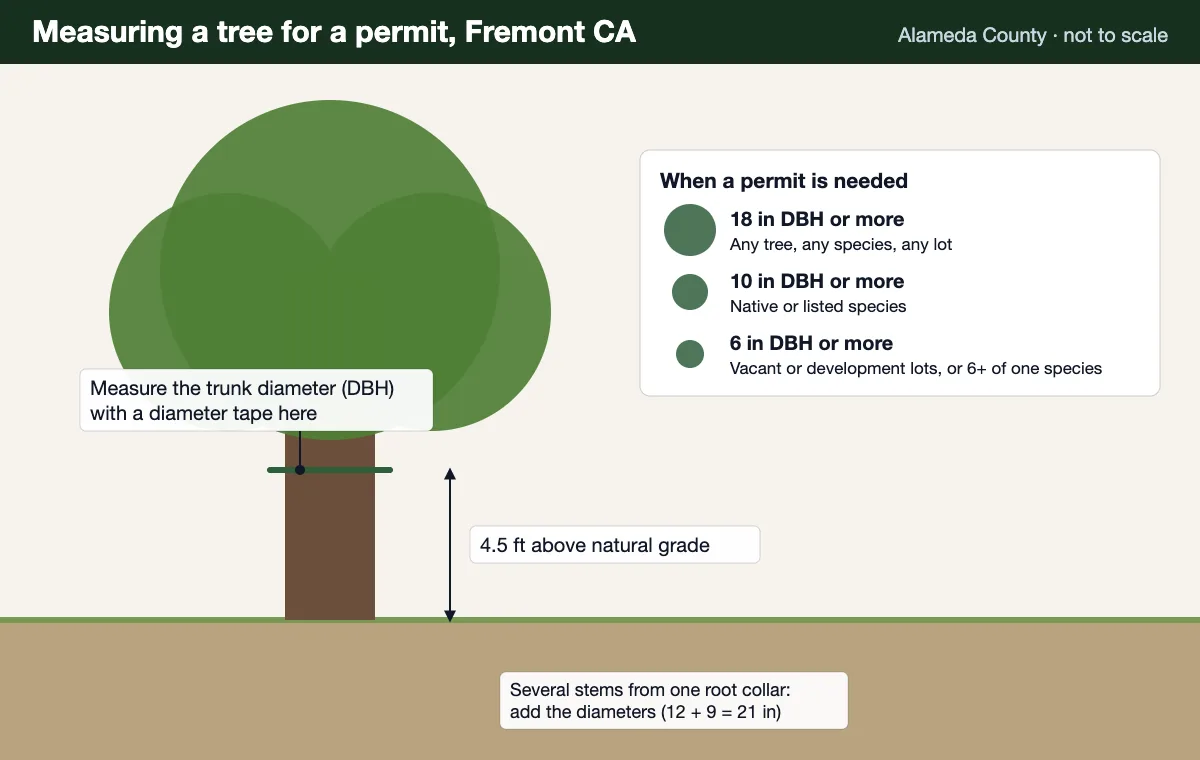
Fire risk does not automatically override Fremont's tree preservation ordinance, so if a tree is protected under FMC Chapter 18.215 the permit question still applies even when the motivation is defensible space. This trips people up because the two ordinances pull in different directions and nobody tells homeowners they both exist.
In practice the conflict is smaller than it sounds, because the great majority of genuine defensible space objectives are achieved through pruning, deadwood removal and shrub layer work rather than felling healthy trees. Crown raising a protected oak to break ladder fuel continuity is clearance work, not removal.
The two things to be careful about. First, FMC 18.215.030 defines damage to include topping and defines cutting to include pruning and trimming, so aggressive fire clearance on a protected tree is still regulated work. Second, where removal genuinely is the answer, document the fire justification properly and go through the permit pathway rather than relying on an assumption that fire risk exempts you. Details on what counts as protected are on the protected trees page.
When to do it, and what the documentation is for
Do the work late winter through spring, so it is finished before the annual grasses cure and the fire season builds. Fremont's NOAA normals show 13.08 inches of rain from November through March, 82 percent of the annual total, and then 0.33 inches across June through September with a July normal of zero. The fuel bed is green in March and fully cured by July.
Working in the green season is better in three ways: the vegetation is easier and safer to handle, the equipment ignition risk is far lower, and the job is complete before the period when it matters. Booking fire clearance in August is booking it a season late.
Every job leaves you with a written record: what was done, where, on what dates, with photographs. That record is useful in three separate conversations. A fire department inspection, where you can show what has been addressed. An insurer, because carriers writing in California wildland urban interface areas increasingly ask about vegetation management and some ask for evidence. And a sale, where a buyer's inspector asks the same questions. Ask your insurer what they want to see before the work is scoped rather than afterwards.
How a Fremont defensible space job runs
Six steps. The first two are about establishing what actually applies to your parcel, because a great deal of what is published about defensible space online is out of date.
- 1
Confirm whether your parcel is actually in a designated zone
Fremont adopted CAL FIRE's 2025 recommended fire hazard severity zones under FMC 15.65.030 and added its own very high zones under 15.65.040. The boundaries are set out on the official map dated June 26, 2025, held on file with the city clerk and posted on the fire department website. Check your address against the City's own viewer rather than a third party site.
- 2
Get the current clearance requirements from the source
The defensible space specifications under Cal. Pub. Res. Code section 4291 have been through a rulemaking cycle and the operative detail sits with the state fire authority, not with a contractor's memory. The work should follow the current published requirements and the Fremont Fire Department's own guidance, and a good contractor will show you where the numbers came from.
- 3
Walk the property outward from the structure
Defensible space is organised by distance from the building, so the walk starts at the walls and works out. The immediate area around the structure, the area beyond it, and the outer extent each get a different treatment intensity. Note what is fuel, what is a ladder into the canopy, and what is simply landscape.
- 4
Break the vertical continuity first
The highest value single action on a Fremont hillside lot is separating surface fuels from the tree canopy. Shrubs growing directly under a tree are a ladder, and a fire that reaches the crown behaves completely differently from one moving through grass. Crown raising on the trees and removal or reduction of the shrubs beneath them is where the work starts.
- 5
Clear the structure itself
Limbs over the roof, limbs against the walls, and accumulated dead material in gutters and roof valleys. Getting the canopy off the building matters more than almost anything further out, and it is also ordinary tree work that improves the building in other ways. On palms this includes the dead frond skirt, which is a substantial fuel load sitting well above ground.
- 6
Remove the dead material and document what was done
Standing dead trees, dead limbs in live trees, and accumulated dead brush all come out and leave site rather than being piled at the back of the lot. Ask for a written record of the work with dates and photographs, which is what you want in hand for an insurer, a buyer, or a fire department inspection.
Defensible space questions
What does PRC 4291 defensible space require?
California Public Resources Code section 4291 requires property owners in designated fire hazard zones to maintain defensible space around structures, organised as bands of decreasing intensity moving outward from the building. The specific clearance distances and treatment rules are set by the state fire authority and have been through a rulemaking cycle, so confirm the current requirements with the Office of the State Fire Marshal or CAL FIRE rather than relying on a figure from a contractor or a blog.
Is my property in Fremont's Very High Fire Hazard Severity Zone?
Check your address against the City of Fremont's own map, which is the map labelled City of Fremont, Local Responsibility Area, Fire Hazard Severity Zones and dated June 26, 2025 under FMC 15.65.040(b). An official copy is kept with the city clerk, posted on the fire department website and available at the fire department's administrative offices. The designated areas are concentrated along Fremont's eastern hills from Mission Peak south toward the Sunol border, with the Niles Canyon corridor in the affected band.
When did Fremont adopt its wildland urban interface ordinance?
Fremont adopted FMC Chapter 15.65, the wildland urban interface fire area ordinance, by Ordinance 10-2025 on July 15, 2025. It adopts CAL FIRE's 2025 recommended fire hazard severity zones under Government Code section 51178 and additionally designates areas the City had already approved as very high fire hazard severity zones on December 4, 2007 under Ordinance 33-2007. It is a recent ordinance and most Fremont homeowners have not heard of it.
What is ladder fuel and why does it matter more than clearing grass?
Ladder fuel is vegetation that carries fire vertically from the ground into the tree canopy, typically shrubs and low limbs growing under trees. It matters more than surface grass because a fire that reaches the crown behaves completely differently, moving faster, throwing embers further and becoming far harder to stop. Breaking that vertical continuity is the highest value single action on most Fremont hillside lots.
Do I have to remove my trees for defensible space?
Generally no, and removing trees wholesale is usually the wrong approach. Defensible space is about arranging and maintaining vegetation rather than eliminating it, and mature well spaced trees with raised crowns and no ladder fuel beneath them can be part of a defensible landscape. The work is usually crown raising, deadwood removal, structure clearance and removal of the shrub layer beneath, not felling healthy trees.
Can I remove a protected tree because of fire risk?
Fire risk does not automatically override Fremont's tree preservation ordinance, so if the tree is protected under FMC Chapter 18.215 the permit question still applies. The practical route is to scope the clearance work first, because the great majority of genuine defensible space objectives are achievable through pruning and shrub removal rather than tree removal. Where removal really is necessary, document the fire justification and go through the permit pathway.
When is the best time to do fire clearance work in Fremont?
Late winter through spring, so the work is finished before annual grasses cure and the fire season builds. Fremont receives 82 percent of its annual rainfall between November and March and effectively none between June and September, so the fuel bed is green and low risk in the early part of the year and fully cured by midsummer. Working in the green season also means the debris is easier to handle and the equipment risk is lower.
Does defensible space work include the roof and gutters?
Tree related clearance around the structure does, and it is among the highest value work on the list. Limbs over the roof, limbs touching walls, and dead material accumulating in gutters and roof valleys are all in scope for a tree crew. Ember ignition on a roof is a primary loss mechanism in wildland urban interface fires, which is why clearance at the building often matters more than clearing at the far end of the lot.
Does a dead frond skirt on a palm count as fuel?
Yes, and it is a significant one because it sits well above ground level. A Mexican fan palm carrying years of accumulated dead fronds holds a large volume of fine dry fuel elevated to roof height or above, which is exactly the combination that makes ember ignition likely. Removing the dead fronds is routine palm work and it is one of the more straightforward fire risk reductions available on a hillside lot.
What happens to the brush that gets cleared?
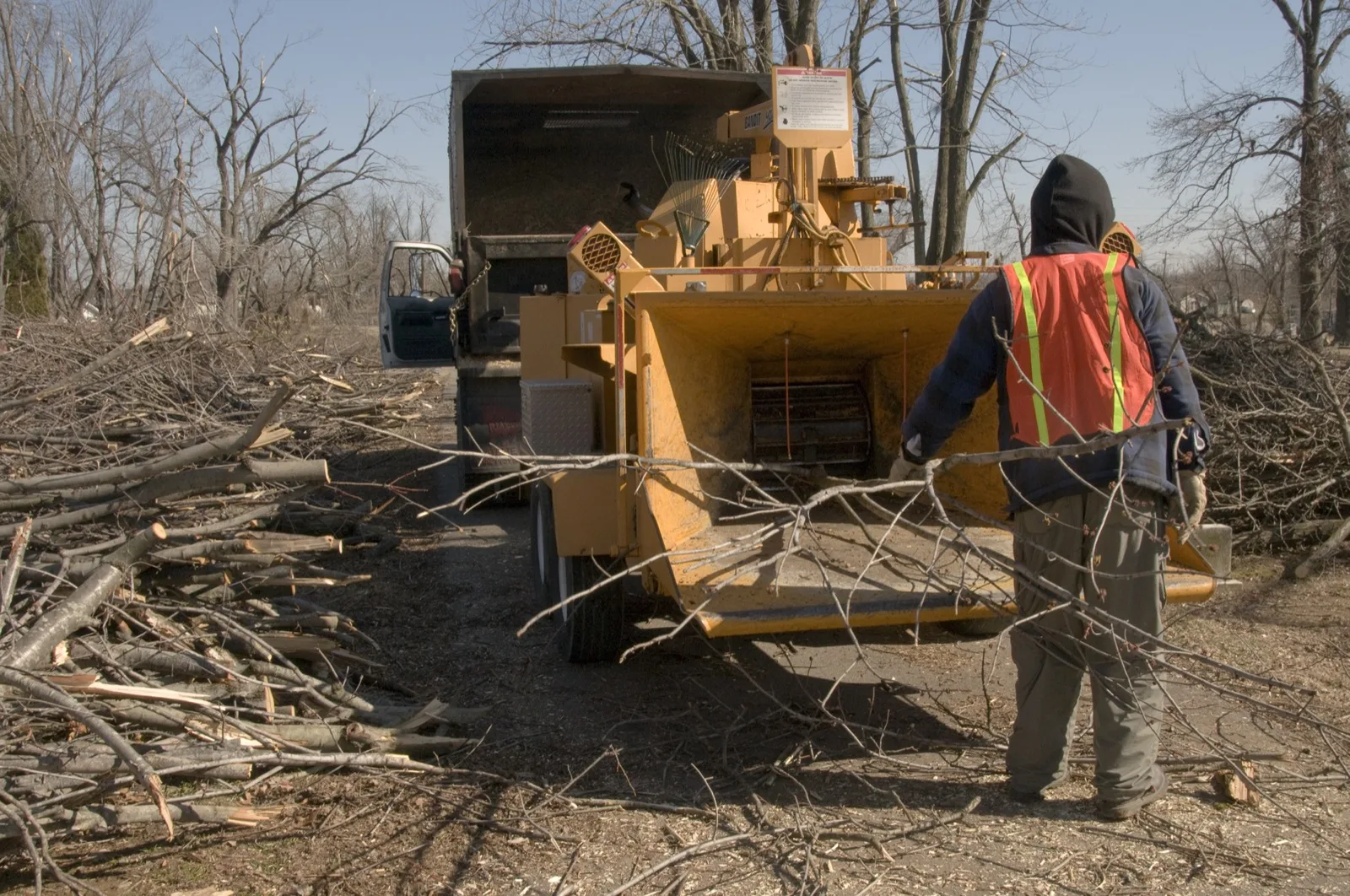
It leaves the property, which is not always what homeowners expect. Brush piled at the back of the lot has not been removed from the fire environment, it has simply been consolidated into a more concentrated fuel bed. Material is chipped on site where the chipper can reach and the chip is either removed or spread appropriately, or it goes out whole where chipping is not practical, and that decision belongs in the written estimate.
Will this satisfy a fire department inspection?
The work is scoped against the current published requirements and the Fremont Fire Department's own guidance, and you get a written record with dates and photographs, but the inspection outcome is the fire department's call and not something any contractor can guarantee. Where an inspector has already issued a notice, bring it to the walk through so the work is scoped directly against what it lists.
Does defensible space work affect my home insurance?
It can matter a great deal, because insurers writing in California wildland urban interface areas increasingly ask about vegetation management around the structure, and some ask for documentation. That is one of the reasons the work is documented with dated photographs. What any particular insurer does with that is between you and them, so ask your carrier what they want to see before the work is scoped rather than after.
Related Pages
Bring the inspection notice if you have one
If the fire department has already listed items, the scope should match that list. If not, send photos of the house from all four sides plus the slope above it for a free estimate.
- Free written estimate, no obligation
- Check whether your tree is protected before work starts
- Ask any crew for its CSLB license and certificate of insurance
- Mark storm damage as urgent in your request