Tree disease diagnosis and treatment in Fremont, CA
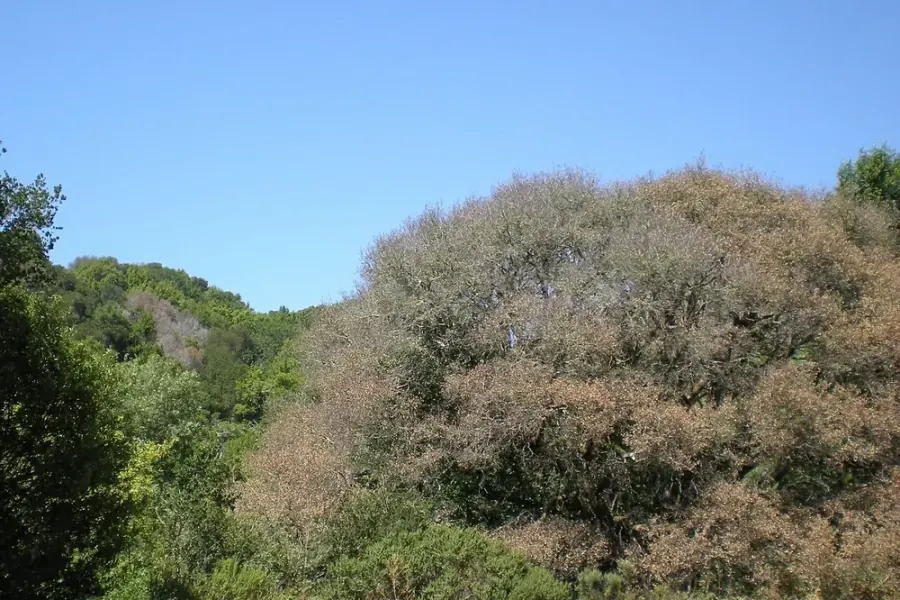
The uncomfortable answer: it is probably the site, not a pathogen
In Fremont, root zone damage causes more tree decline than every pathogen combined, and the single biggest contributor is summer water around trees that evolved without it. This matters commercially as well as arboriculturally, because a treatment sold against the wrong cause is money spent on a tree that carries on declining.
The list, roughly in order of how often it turns out to be the answer:
- Summer irrigation at the root collar of a native oak. The leading single cause. Covered in full on oak tree care.
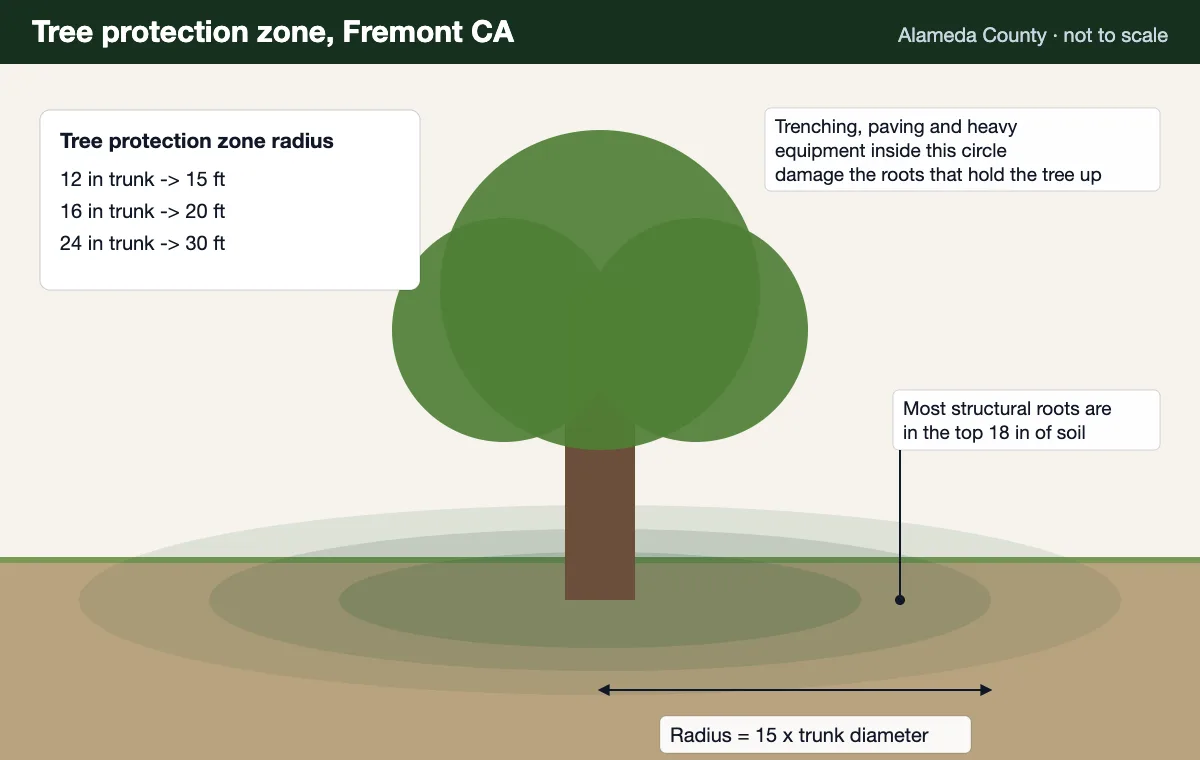
- Severed roots from trenching. A utility, drainage or irrigation run cut through the root plate. Symptoms follow a year or two later, by which time nobody connects the two.
- Grade change. Soil added over a root zone suffocates shallow roots. Soil piled against a trunk keeps the bark permanently wet.
- Compaction. Vehicles and equipment over the root zone during a project. Invisible from the surface and effectively permanent.
- Paving over the root plate. Cuts gas exchange and cuts off the winter rain the tree actually depends on.
- Wrong species, wrong place. A tree needing regular water in a location that gets none, or the reverse. No treatment fixes this.
A contractor with a spray tank has an obvious incentive to find something to spray for. The test of a genuine assessment is whether it ever concludes that nothing should be applied. Moving an irrigation head, pulling soil back off a collar and mulching correctly are cheap or free, and on a large share of Fremont trees they are the entire prescription.
Reading the symptom pattern
Where symptoms appear tells you more than what they look like, because the distribution of the damage points at the mechanism producing it. A photograph of a single brown leaf is close to useless. A photograph of the whole tree showing which parts are affected is genuinely diagnostic.
Uniform thinning across the whole crown
Points at the root system. Water and nutrient supply is limited everywhere at once. Look for irrigation, compaction, severed roots, buried collar.
Dieback starting at branch tips
Points at water movement failing at the far end of the plumbing. Drought stress, root loss, or a vascular problem. Progressive over seasons.
One sided or sectional death
Points at something affecting one part specifically. A damaged root sector on that side, a vascular disease, or on a palm, the one sided frond death characteristic of Fusarium wilt.
Spotting or blight on leaves after wet spring
Usually foliar, usually cosmetic on an established healthy tree. Looks dramatic and is generally the least serious category on this list.
Bleeding or seeping on the lower trunk
Take seriously. On a coast live oak this is the presentation associated with Sudden Oak Death and it appears long before the crown changes.
Fruiting bodies at the base or buttress
A structural question rather than a health one. Indicates decay in load bearing wood. No treatment reverses internal decay.
Two of those six are structural rather than medical, and that distinction decides whether the next conversation is about treatment or about removal. A decaying tree over a driveway is a different problem from a decaying tree at the back of a large lot.
What is treatable, and what is not
A short list of Fremont tree problems genuinely responds to treatment. A longer list does not, and being told which is which up front is the most useful thing an assessment produces.
Not treatable, in the sense of cured:
- Sudden Oak Death on an infected tree. No cure. Phosphonate is preventive on uninfected high value oaks only. Full detail on the Sudden Oak Death page.
- Fusarium wilt of Canary Island date palm. No cure, and it spreads on contaminated pruning equipment, which makes sterilisation the only defence. See palm work.
- Internal decay in structural wood. Nothing reverses it. The response is assessment of what the tree can still hold up.
- A severed or compacted root plate. Mitigable over years, not fixable.
Genuinely improvable:
- Anything caused by the site. Move the water, decompact where possible, mulch correctly, uncover the collar. This is the biggest category and the cheapest.
- Mistletoe. Pruning out infested sections well below the attachment, staged over visits on a heavy infestation. No spray solves it.
- Deadwood and structural defects. Not a disease, but it is what most people are actually worried about when they call. Crown cleaning handles it.
- Some specific pest and pathogen problems, where a product exists that works against the identified organism, applied by someone licensed to apply it.
Applying pesticides for hire in California is regulated and licensed through the California Department of Pesticide Regulation. A C-49 Tree and Palm Contractor licence does not by itself authorise it. If a chemical treatment is being proposed, ask what it is being applied under, alongside the contractor licence and insurance checks on how to hire a tree service.
The Fremont specific picture
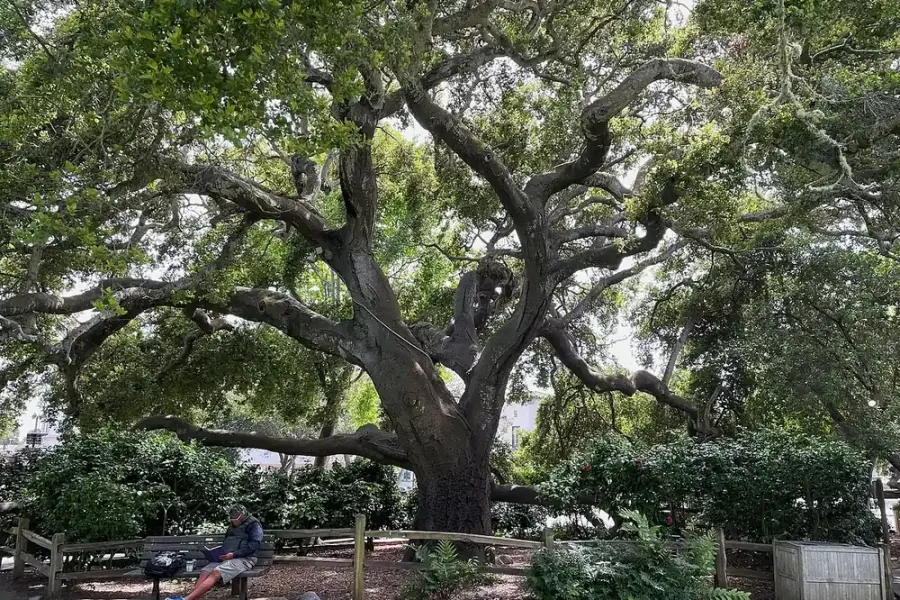
Two pathogens matter more than the rest here: Sudden Oak Death, because coast live oak is Fremont's signature native and the disease is confirmed in Alameda County, and Fusarium wilt, because it is fatal to date palms and is spread by contractors. Everything else is context.
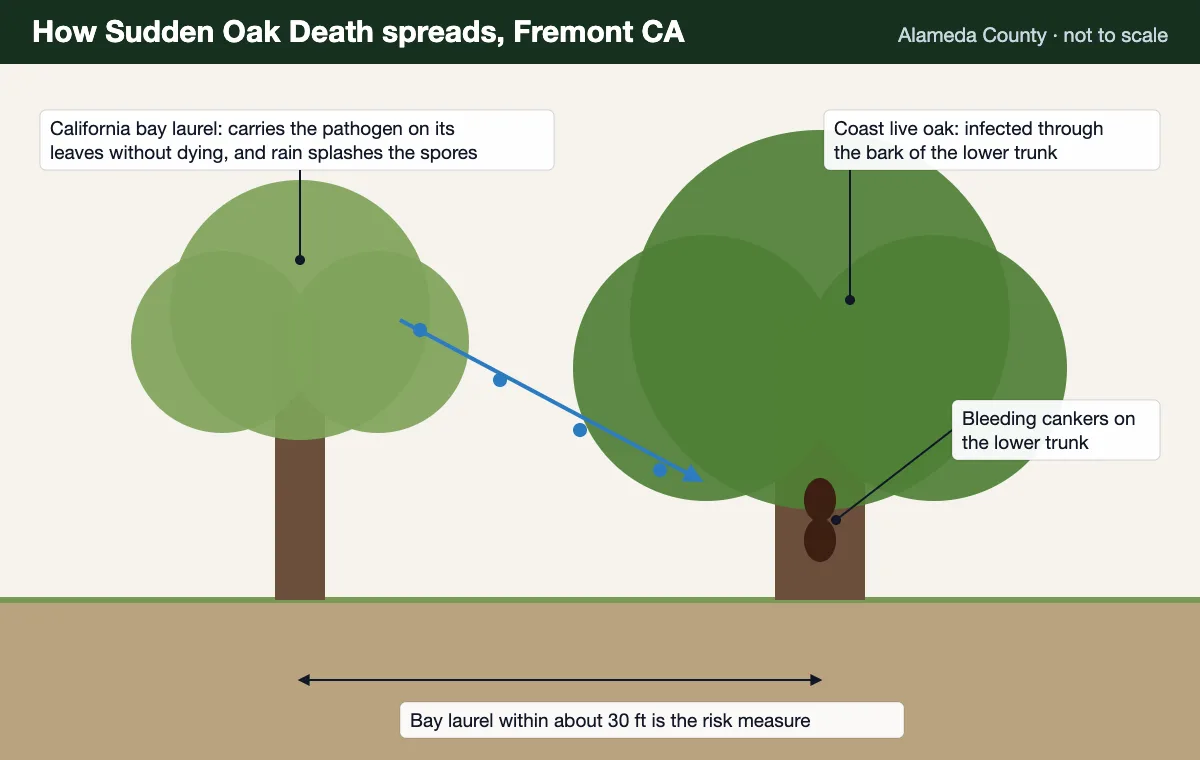
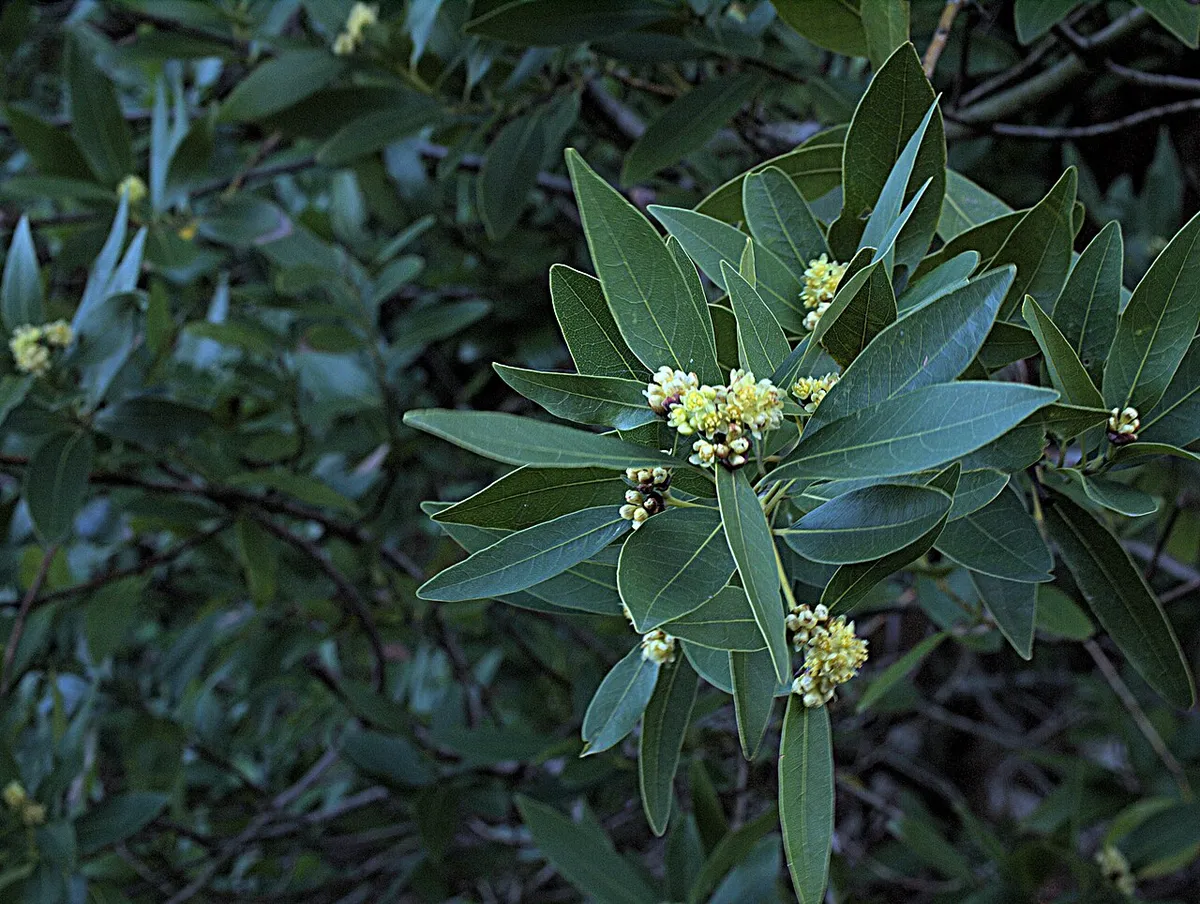
The verified Sudden Oak Death position: Phytophthora ramorum, a funguslike oomycete rather than a true fungus, is confirmed in natural settings in fifteen central and northern coastal California counties including Alameda County, with known county sites at Redwood Regional Park, East Bay Municipal Utility District land, and one hillside in Castro Valley. Hosts killed include coast live oak, black oak, tanoak and Shreve oak. California bay laurel is the key reservoir host, sporulating heavily and infecting nearby oaks without dying itself, which makes bay proximity the strongest single risk factor an oak can have.
That has three practical consequences. Bleeding cankers on an oak's lower trunk are worth a real look rather than a wait and see. Preventive phosphonate on an uninfected high value oak near bay laurel is one of the few genuinely proactive measures available. And debris from an affected oak has movement restrictions, because the pathogen travels in infected leaves, wood and soil, which changes how a removal is handled and priced.
Why Fremont's rainfall pattern drives all of this
Fremont takes 82 percent of its annual rainfall between November and March and almost none between June and September, and that single fact explains both the irrigation problem and the timing of most pathogen activity.
The NOAA 1991 to 2020 normals for the nearest station record annual precipitation of 16.00 inches, with 0.33 inches across June, July, August and September combined, a July normal of zero, and 13.08 inches from November through March.
Three things follow directly:
- Summer irrigation is an unnatural condition. Native trees here are adapted to a four month dry period. Removing that dry period is the single most common self inflicted tree problem in the city.
- Pathogens move in water. That is why pruning wounds are made in dry conditions and why foliar problems follow wet springs.
- Winter saturation is a structural risk, not a health one. A tree weakened by decay that stood through the dry months fails in February when the soil cannot hold its root plate. That is an emergency service subject rather than a treatment one.
How a Fremont tree health assessment runs
Six steps, and the first two are where nearly every answer actually comes from. Note that treatment does not appear until step five, and on many trees it never appears at all.
- 1
Start at the bottom, not at the leaves
Almost every real diagnosis in Fremont is made at the root collar and lower trunk. A careful diagnosis excavates around the collar where needed to see whether it is buried, looks for seeping or bleeding on the bark, checks for fruiting bodies at the base, and probes for soft or hollow wood. Leaf symptoms are the last thing to appear and the least specific thing to read.
- 2
Audit the site before blaming a pathogen
Irrigation heads inside the root zone, a lawn under a native oak, a trench cut for a utility run two summers ago, soil piled against the trunk, paving over the root plate, compaction from a construction project. In Fremont these cause more tree decline than every pathogen combined, and no treatment works while the cause is still running.
- 3
Match the symptom pattern to a mechanism
Where symptoms appear tells you what is happening. Uniform thinning across the whole crown points at the roots. Dieback starting at the branch tips points at water movement. One sided death points at a vascular problem or a damaged root sector. Spotted or blighted leaves in a wet spring is usually foliar and usually far less serious than it looks.
- 4
Confirm before treating where it matters
For the diseases that change what you do with the tree, notably Sudden Oak Death on a coast live oak, a visual field call is a starting point rather than a conclusion. Laboratory confirmation exists for a reason, and the difference between a stressed oak and an infected one changes the debris handling, the neighbouring trees, and whether preventive treatment of nearby oaks is worth doing.
- 5
Fix the site first, then treat if treatment exists
Moving irrigation out of a root zone, mulching correctly, removing soil piled against a collar and stopping traffic over the root plate are free or cheap and they address the actual cause. Only after that is a chemical treatment worth considering, and only where one genuinely exists for the problem identified.
- 6
Re-inspect on a real interval
Trees respond slowly, over seasons rather than weeks, so a treatment decision needs a follow up inspection at a sensible interval to see whether the trajectory changed. Where the answer turns out to be that the tree is not recoverable, that becomes a structural conversation about what is underneath it rather than a health one.
Tree health questions
How do I know if my tree is diseased or just stressed?
Look at the pattern rather than the symptom. Uniform thinning across the entire crown usually points at the root system and its environment, which in Fremont usually means irrigation, compaction or severed roots rather than a pathogen. Symptoms concentrated on one side, or bleeding and seeping on the lower trunk, are far more likely to be a genuine disease and are worth having looked at.
Is there a treatment for Sudden Oak Death?
No, there is no cure. Management is preventive: phosphonate treatment applied to uninfected high value oaks as a protective measure, plus selective removal of infected material. Phosphonate is not a rescue for a tree that is already symptomatic, and any contractor selling it as a cure for an infected oak is misrepresenting what it does.
What is the most common cause of tree decline in Fremont?
Root zone damage, and within that, summer irrigation around native oaks is the leading single cause. Fremont receives about a third of an inch of rain across June through September combined, with a July normal of zero, and coast live oak evolved into exactly that pattern. Keeping the root collar wet through the dry months creates conditions the tree is not adapted to and that soil pathogens are.
Can injecting my tree save it?
Sometimes, for a small number of specific problems, and far less often than the marketing suggests. Injection is a delivery method rather than a cure, so it only helps where a product exists that actually works against the identified problem, and it puts a wound in the tree every time it is used. It is not a general purpose treatment for a tree that is declining, and a diagnosis has to come first.
Does a tree service need a licence to spray my tree?
Applying pesticides for hire in California is a regulated activity licensed through the California Department of Pesticide Regulation, and a C-49 Tree and Palm Contractor licence does not by itself authorise it. If someone is proposing a chemical treatment, ask what they are licensed to apply it under, in the same conversation where you verify the contractor licence and the insurance certificate.
My tree's leaves have spots and are dropping in spring. Is it dying?
Almost certainly not. Leaf spotting and early leaf drop after a wet spring is typically a foliar problem, it looks alarming and it is mostly cosmetic on an otherwise healthy established tree, which pushes a second flush of leaves and carries on. The treatment is usually sanitation and good growing conditions rather than a spray programme, and it becomes a real concern only where it repeats hard year after year on an already stressed tree.
Are the mushrooms at the base of my tree a problem?
Yes, potentially a serious one, and they are worth acting on rather than kicking over. Fungal fruiting bodies at the base or on the buttress roots can indicate decay in structural wood, which is a stability question rather than a health question. There is generally no treatment that reverses internal decay, so the useful response is a structural assessment of what the tree is still capable of holding up.
What is mistletoe doing to my tree and can you treat it?
Broadleaf mistletoe is a parasitic plant that draws water and nutrients from the host branch, and heavy infestation stresses the tree, particularly during drought. There is no spray that solves it. The effective approach is pruning out infested branch sections well below the attachment point, because cutting off only the visible growth leaves the embedded part to regrow. On a heavily infested tree this becomes a staged programme rather than one visit.
Are borers killing my tree?
Usually they are a symptom rather than the cause, because most borers that attack landscape trees are secondary and go after trees already weakened by drought, root damage or poor siting. That means the productive question is what stressed the tree, not what to spray on the borers. Insecticide applied to a tree whose real problem is a severed root plate or summer irrigation at the collar achieves nothing.
Should I fertilise a sick tree?
Usually not, and it can make things worse. A declining tree is rarely short of nutrients, and pushing new growth on a tree with a compromised root system asks it to support foliage it cannot supply with water. Soil improvement, correct mulching and removing whatever is damaging the root zone address the actual constraint. Fertiliser applied without a soil test is a guess.
Can a diseased tree infect my other trees?
It depends entirely on the disease, which is one of the main reasons a diagnosis is worth having. Sudden Oak Death spreads through movement of infected leaves, wood and soil, and California bay laurel acts as a reservoir host that infects nearby oaks without dying itself. Fusarium wilt of date palm moves on contaminated pruning equipment. Many other problems are not meaningfully transmissible at all.
When is removal the right answer instead of treatment?
When the problem is structural rather than physiological, when there is no treatment that works for what the tree has, or when the tree is failing above something you cannot afford to have it land on. Internal decay at the base, a lifting root plate and advanced Sudden Oak Death all fall into the first two categories. A dead or dying tree well away from any target is a different conversation and can often be left standing as habitat.
Related Pages
Photograph the whole tree, not the leaf
Send one shot of the entire tree showing which parts are affected, plus close shots of the lower trunk and root collar on every side. That combination answers most diagnostic questions before anyone visits.
- Free written estimate, no obligation
- Check whether your tree is protected before work starts
- Ask any crew for its CSLB license and certificate of insurance
- Mark storm damage as urgent in your request