Tree removal cost in Fremont, CA
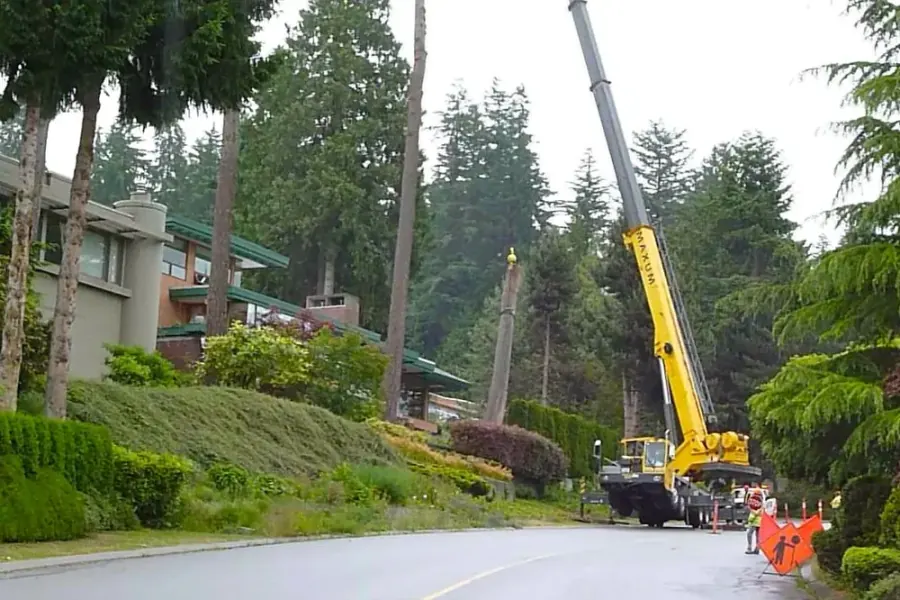
Cost by tree size
Height is the first thing every published price table is organised by, and it maps roughly to a few hundred dollars for a small tree, four figures for a large one. Both retained sources break it down, and they disagree in useful ways.
| Tree size | Published range |
|---|---|
| Small, up to 30 ft | $150 to $400 |
| Medium, 30 to 60 ft | $450 to $700 |
| Large, 60 to 100 ft | $900 to $1,200 |
| Very large, 100 ft plus | $1,300 to $2,000 |
| National average | $435, typical range $400 to $1,100 |
| Absolute min and max recorded | $155 and $2,015 |
Source: Fixr, fixr.com/costs/tree-removal
| Measure | Published figure |
|---|---|
| National average | $630 |
| Typical range | $385 to $1,070 |
| Per foot of height | $10 to $14 per foot |
| Extreme low and high | $150 and $1,935 |
Source: LawnStarter, lawnstarter.com/blog/cost/tree-removal-price/
The per foot figure is the most useful thing on either table for a rough sanity check. At $10 to $14 per foot, a 40 foot tree lands at roughly $400 to $560 before any complication, which is a reasonable starting point for an accessible tree with a clear drop zone. Every complication below adds to it.
Use the house. A single storey roofline in a typical Fremont home is roughly 15 feet and a two storey is roughly 25. A tree that reaches twice the height of a two storey house is around 50 feet. That is accurate enough to place yourself in the right band, and anything more precise is what the site visit is for.
Cost by species, and why oak and eucalyptus are the expensive ones
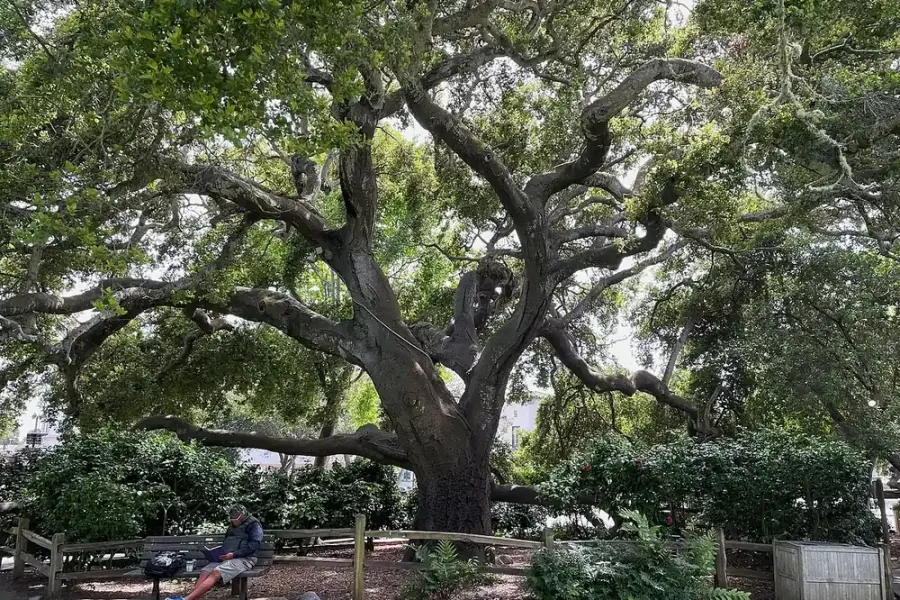
Species can move a removal price more than height does, because density drives section weight, cutting time and debris volume all at once. In Fremont the two that matter are coast live oak and eucalyptus, and they sit at the top of both published tables.
| Species | Published removal range |
|---|---|
| Palm | $250 to $1,200 |
| Pine | $200 to $1,500 |
| Ash | $500 to $1,000 |
| Cedar | $500 to $2,000 |
| Eucalyptus | $700 to $2,200 |
| Sycamore | $700 to $2,500 |
| Oak | $900 to $2,000 |
| Maple | $1,000 to $1,800 |
Source: Fixr, fixr.com/costs/tree-removal
| Species | Published average removal cost |
|---|---|
| Palm | $725 |
| Oak | $775 |
| Pine | $925 |
| Maple | $1,150 |
Source: LawnStarter, lawnstarter.com/blog/cost/tree-removal-price/
Two Fremont specific notes on this table. A mature native oak is exactly the category FMC Chapter 18.215 exists to protect, so the permit pathway and possible replacement planting sit on top of the removal cost. And palm pricing is misleading on a table like this, because a palm has no lateral branches to rig from, so a tall one over a structure jumps straight to the crane band regardless of what the species row says. Details on palm work.
The nine things that actually move a Fremont tree quote
Two quotes for the same tree can differ by hundreds of dollars without either being wrong, because these nine variables are what the price is actually made of. A quote that does not address them is not a quote, it is a guess.
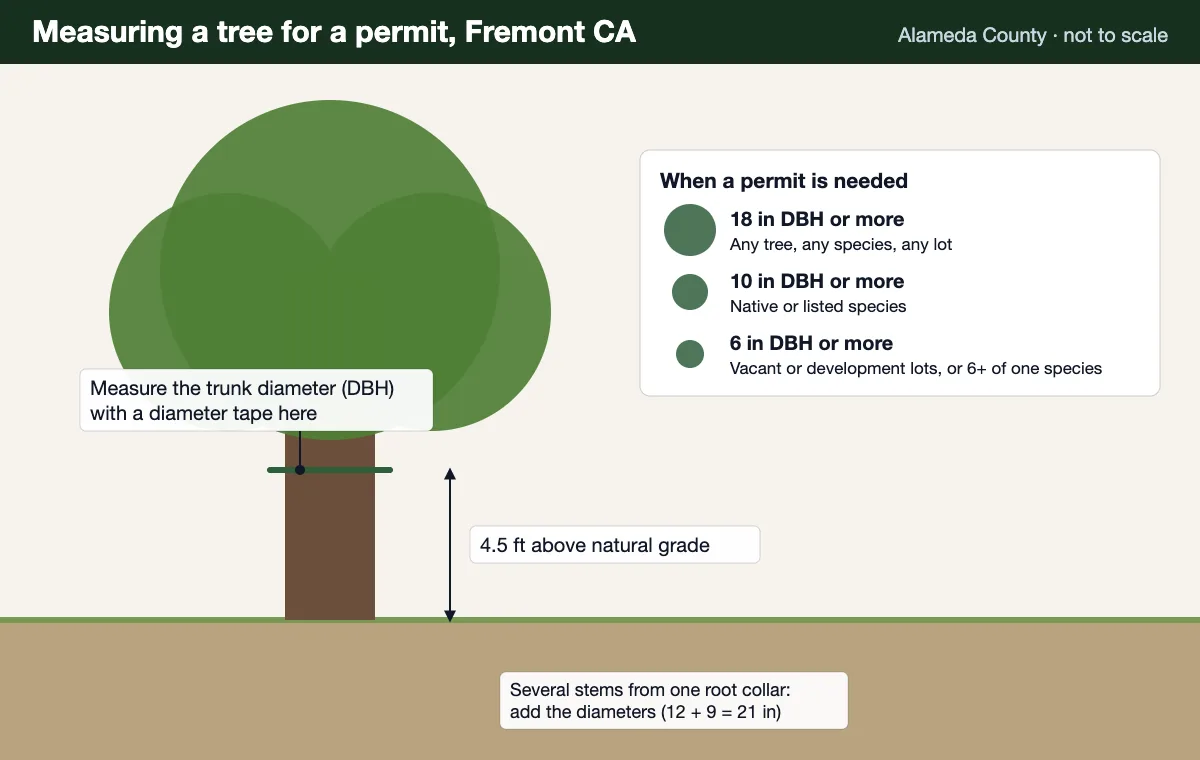
- Height and trunk diameter. Diameter at chest height is the standard measure. It sets the wood volume, which sets the debris.
- Species. Hardwood against softwood, and specifically coast live oak and eucalyptus against palm and pine.
- Proximity to structures. The difference between felling the tree in one piece and dismantling it in forty. This is usually the largest single factor.
- Power line proximity. A different qualification regime entirely. Work near energized conductors is not a general tree service job and routes to the utility first.
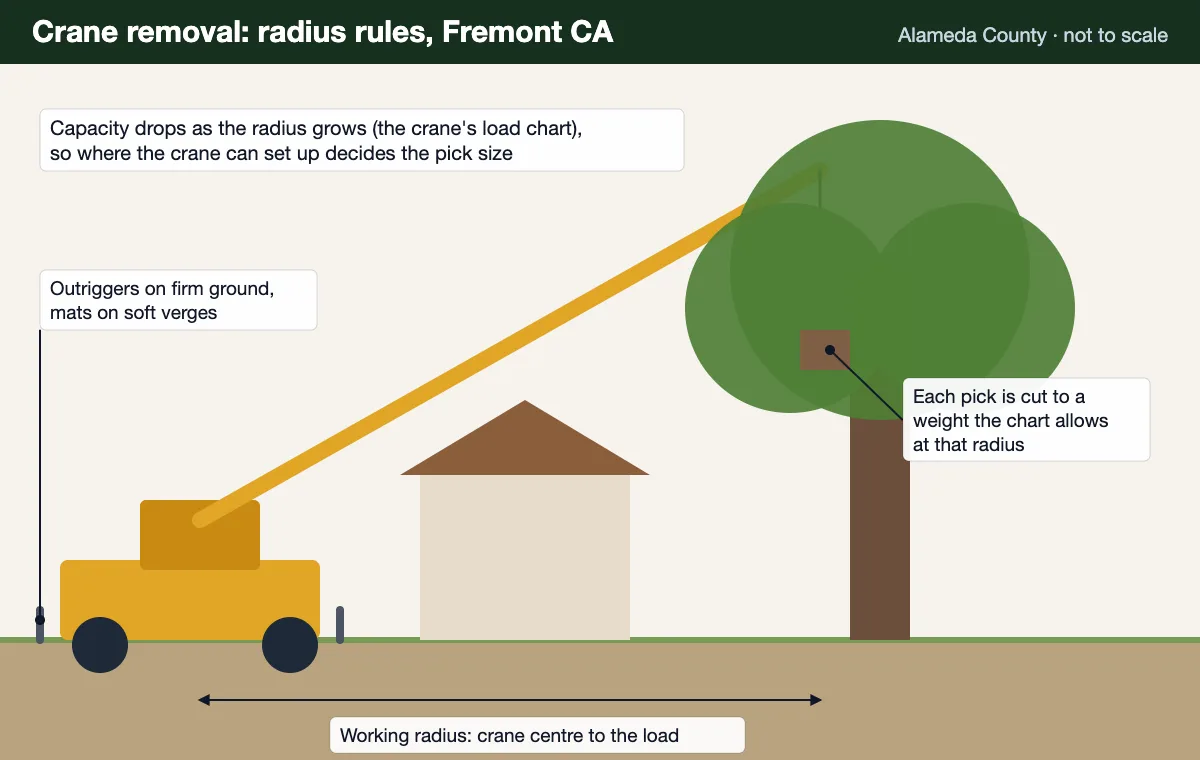
- Access. Can a chipper reach the tree? Can a crane set up in the street and reach it? Is the only route a three foot side gate?
- Debris disposal. Haul away against leaving rounds on site. LawnStarter puts hauling at $50 to $90 and chipping at $65 to $125, and Fixr puts branch chipping at $75 to $125 per hour.
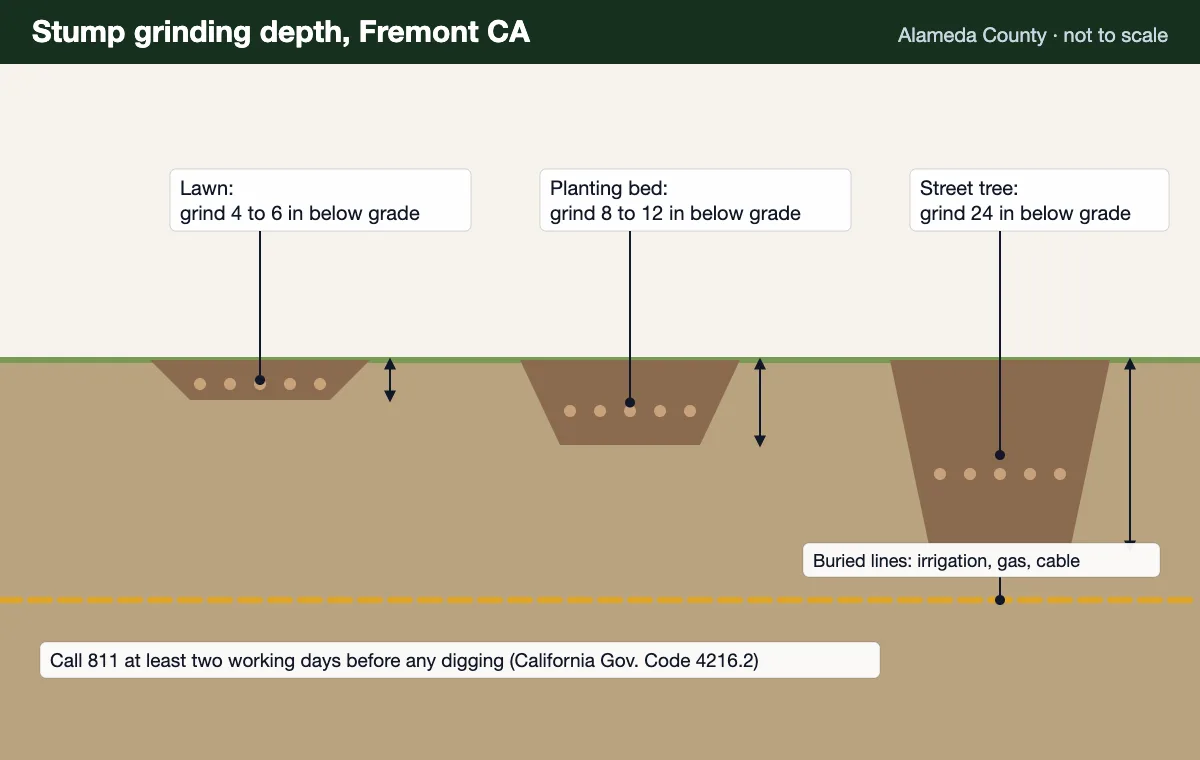
- Stump work. Separate line, priced by stump diameter. See stump grinding cost.
- Emergency or after hours. Fixr puts emergency removal at $450 to $5,000 with an after hours surcharge on top.
- Permit requirement. Time rather than money in most cases, but replacement planting conditions are a real budget item. See tree removal permits.
The add on lines, and the ones that catch people out
The removal price is rarely the whole invoice. Stump work, debris handling and condition related premiums are separate lines and they should all appear in writing before the job.
| Add on or variant | Published range | Source |
|---|---|---|
| Stump grinding | $158 to $450 | LawnStarter |
| Stump grinding or removal, per stump | $100 to $500 | Fixr |
| Full stump excavation | $175 to $516, avg $326 | LawnStarter |
| Debris hauling | $50 to $90 | LawnStarter |
| Debris chipping | $65 to $125 | LawnStarter |
| Branch chipping, hourly | $75 to $125 per hour | Fixr |
| Crane assisted removal, 80 ft plus | $1,500 to $2,500 | Fixr |
| Emergency removal | $450 to $5,000 | Fixr |
| Dead tree removal | $75 to $400 | Fixr |
| Diseased tree removal | $400 to $900 | Fixr |
| Fallen tree removal | $75 to $150 | Fixr |
| Fallen tree removal | $85 to $300 | LawnStarter |
Source: LawnStarter and Fixr, as marked per row
The one that catches people out most often is the stump. An estimate that is silent on it leaves you with a stump, and a stump you did not budget for is a second visit and a second minimum charge. The other is the dead tree line, which looks like a saving at $75 to $400 and can turn into a crane job at $1,500 to $2,500 if the tree is too decayed to climb.
The Bay Area adjustment, stated honestly
No publisher produces a Fremont or Bay Area specific tree removal table, so this page does not pretend one exists. What this page can do is show the adjustment method and let you judge it.
LawnStarter does publish California city figures for trimming, and its San Diego number is $478 to $710 against a national $430 to $640, which is roughly eleven percentabove national. Bay Area labour rates, insurance costs and disposal costs run above San Diego. Fixr separately puts a certified arborist's hourly rate at $87 to $116against $50 to $80 for a general tree trimmer, which is where a qualified crew's cost base shows up.
On that basis, the honest position is that Fremont pricing sits above the national ranges and that a realistic local quote will fall in the upper half of the published national bands, or above them on a difficult job. This site will never print a national average as if it were a Fremont number.
A written estimate should name the method (felling, sectional dismantle, or crane), say what happens to the wood and the brush, price the stump separately or state explicitly that it is excluded, and say who is applying for any permit. If a quote is a single number with no scope attached, the gap between it and a higher quote is not a saving, it is an unanswered question.
For the other two trades: tree trimming cost and stump grinding cost.
How to estimate your own tree before you call
Six steps that take about ten minutes and will put you within the right band, which is enough to tell whether a quote you have been given is reasonable.
- 1
Measure height and trunk diameter
Height sets the band on every published table and trunk diameter at chest height sets the wood volume. You do not need to be exact. Compare the tree against your house: a single storey roofline is roughly 15 feet and a two storey is roughly 25, so a tree that doubles the house is around 50 feet.
- 2
Identify the species
Species can move the price more than height does. Fixr records oak at $900 to $2,000 and eucalyptus at $700 to $2,200 against palm at $250 to $1,200, and both of those hardwoods are common in Fremont. Density, weight per section and how the wood behaves under a saw are the reasons.
- 3
Work out the target list
Write down everything within falling distance: house, garage, fence, neighbour's structures, pool, greenhouse, parked cars, overhead wires. A tree with a clear drop zone is a felling job. A tree with targets on three sides is a sectional dismantle, and that is a different day.
- 4
Check the access route
Can a chipper get to the tree, or does the brush have to be dragged to the street? Is there a side gate, and how wide? Can a crane set up in the road and reach the tree? Access is regularly the single largest difference between two quotes on identical trees.
- 5
Decide what happens to the wood
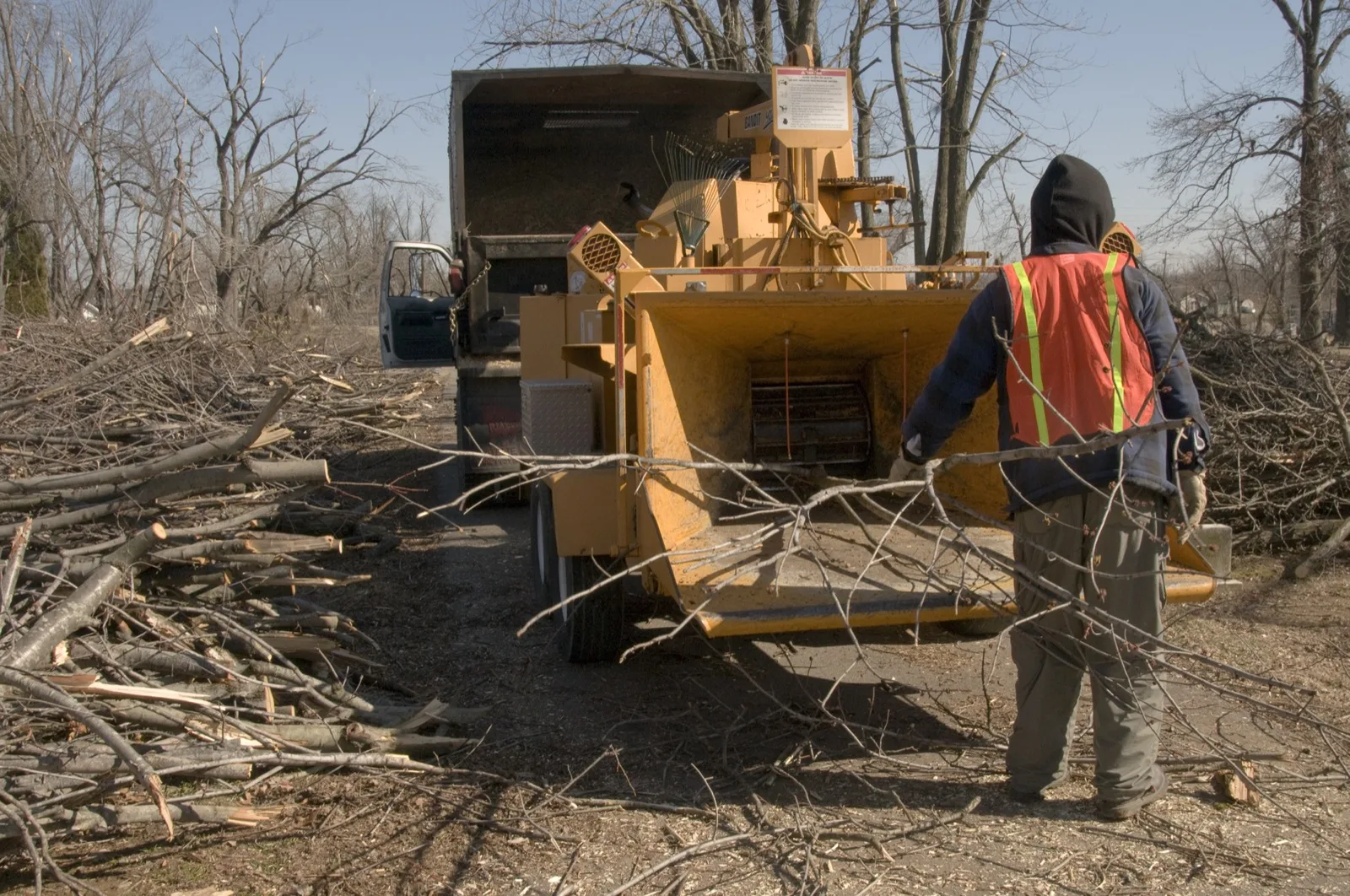
Haul everything away, leave the rounds stacked for firewood, or chip and spread the brush on site. LawnStarter puts debris hauling at $50 to $90 and chipping at $65 to $125, and on a large tree this is a real line rather than a rounding error. Decide it before the quote, not on the day.
- 6
Settle the permit question before you price anything
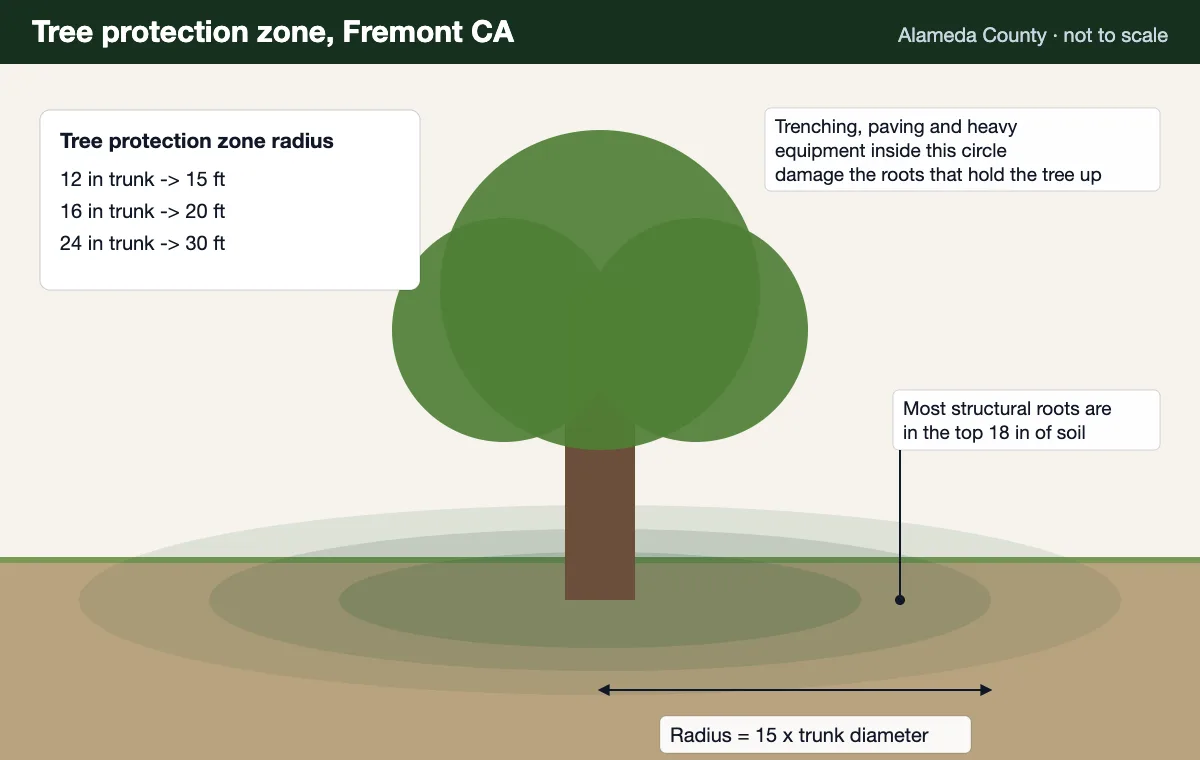
If the tree is protected under FMC Chapter 18.215, the permit pathway and any replacement planting requirement come before the removal quote, not after. If the tree is in the public right of way it is the City's under FMC Chapter 12.30 and the cost question does not arise at all, because the decision is not yours.
Tree removal cost questions
What is the average price to have a tree removed?
The published national averages are $630 from LawnStarter across a $385 to $1,070 range, and $435 from Fixr across a $400 to $1,100 range, but no Fremont homeowner should plan against a national average. Bay Area labour and insurance run above national, and the range within those figures is enormous because a 20 foot ornamental in an open front yard and a 70 foot oak over a roof are the same line item on a price table and completely different jobs.
How much does tree removal cost in Fremont CA?
Expect a small accessible tree under 30 feet to run in the low hundreds, an established tree of 30 to 60 feet to land in the mid hundreds to low four figures, and a large mature oak or eucalyptus near a structure to run well into four figures. Those bands sit above the national tables because Bay Area pricing does, and the position within each band is set by access, targets and what happens to the wood.
Why is oak removal so expensive?
Oak is dense, heavy and usually large, which means more sections, heavier sections, slower cutting and more debris volume for the same apparent tree size. Fixr puts oak removal at $900 to $2,000 nationally and LawnStarter puts the average at $775. In Fremont there is often a second factor, because a mature native oak is exactly the kind of tree FMC Chapter 18.215 protects, so there may be a permit pathway and a replacement planting obligation on top.
Is it cheaper to remove a dead tree?
On paper yes, with Fixr putting dead tree removal at $75 to $400 against $400 to $1,100 for a live removal, because there is no foliage and far less wood weight. In practice a dead tree can cost more, because it may be unsafe to climb, which turns a climbing job into a crane job at $1,500 to $2,500 by Fixr's figures. Condition decides the method, and the method decides the price.
How much does it cost to remove a tree that has already fallen?
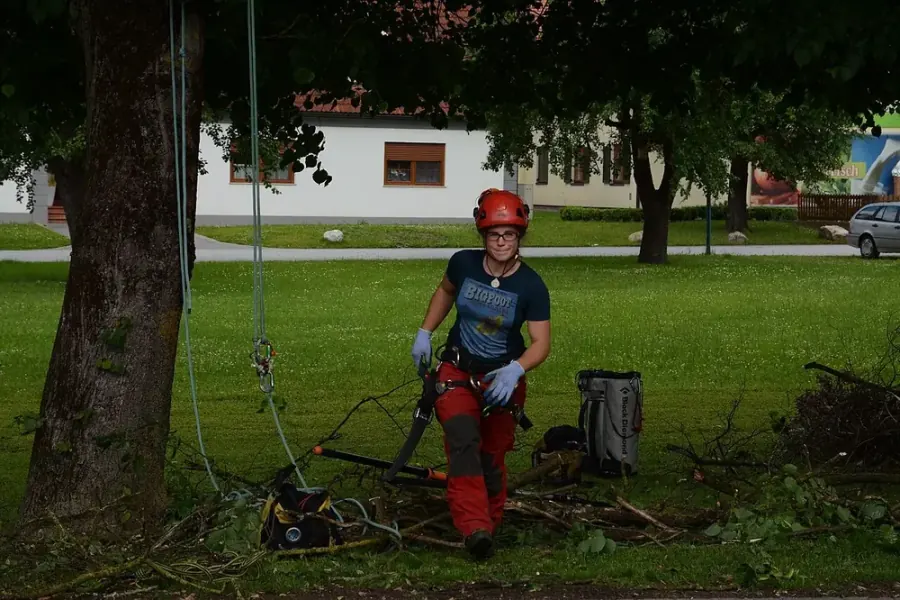
A great deal less than removing a standing tree, with LawnStarter putting fallen tree removal at $85 to $300 and Fixr at $75 to $150, because the hard and dangerous part is already over. The exception is a tree that has fallen onto something, where the cost goes back up sharply, because taking a loaded trunk off a roof is a rigging or crane operation rather than a cleanup.
Does the price include the stump?
No, and you should assume it does not unless the written estimate says otherwise. Stump work is priced separately by stump diameter, typically at $2 to $5 per inch with a minimum around $100, and published ranges are $158 to $450 for grinding from LawnStarter and $100 to $500 per stump from Fixr. An estimate that is silent on the stump is an estimate that leaves you a stump.
Why are two quotes for the same tree hundreds of dollars apart?
Usually one of three things: insurance, scope, or debris. An uninsured contractor has a very large fixed cost that an insured one carries, and that alone can explain the gap. A quote that does not say what happens to the wood is cheaper than one that includes haul away. And a quote that assumes felling is cheaper than one that prices a sectional dismantle, which matters enormously if the tree cannot actually be felled.
Does homeowners insurance cover tree removal?
Policies commonly cover removal where a fallen tree has damaged a covered structure and commonly do not cover removal of a healthy or dead tree that simply stands in your garden, but coverage is decided by your policy rather than by a rule of thumb. Photograph the scene from several angles before anything is cut and speak to your insurer before authorising work beyond making the site safe.
Do I pay more for removal in winter?
Emergency and after hours work carries a premium that Fixr records at $450 to $5,000 for emergency removal with a $50 to $200 or more surcharge on emergency trimming, and Fremont's winter storms generate exactly that kind of call. Planned removal booked in advance is not priced by season, so a tree you already know is failing is considerably cheaper to deal with in October than in February.
How much does crane removal add?
Fixr puts crane assisted removal on trees of 80 feet and above at $1,500 to $2,500, but treat that as a substitution rather than a surcharge. On a tree that would otherwise take two or three days of technical rigging with a full crew, the crane frequently costs less overall, because crew days are the dominant cost in tree work and compressing three into one more than covers the machine.
Can I reduce the cost by doing some of the work myself?
Yes, and the safe way to do it is at the debris end rather than the cutting end. Taking on the brush and the firewood yourself can remove the haul away line entirely, which LawnStarter puts at $50 to $90 for hauling and $65 to $125 for chipping. Clearing the access route and moving vehicles before the crew arrives also saves real time. Cutting anything yourself does not save money on any tree worth quoting.
Does a permit add to the cost?
It costs time more than money, and the time is worth spending. Where a tree is protected under FMC Chapter 18.215 the removal needs to go through the ordinance's pathway, and the City can require replacement planting as a condition, which is a real cost to budget for. What is genuinely expensive is removing a protected tree without going through it, because the ordinance provides for penalties and California Civil Code section 3346 sets treble damages for wrongful injury to trees.
Related Pages
Get a number for your actual tree
Send a photo from the street with the house in frame, a photo from beside the trunk, and a rough height against your roofline. That is enough for a real range rather than a table.
- Free written estimate, no obligation
- Check whether your tree is protected before work starts
- Ask any crew for its CSLB license and certificate of insurance
- Mark storm damage as urgent in your request