Stump grinding in Fremont, CA
What stump grinding costs in Fremont
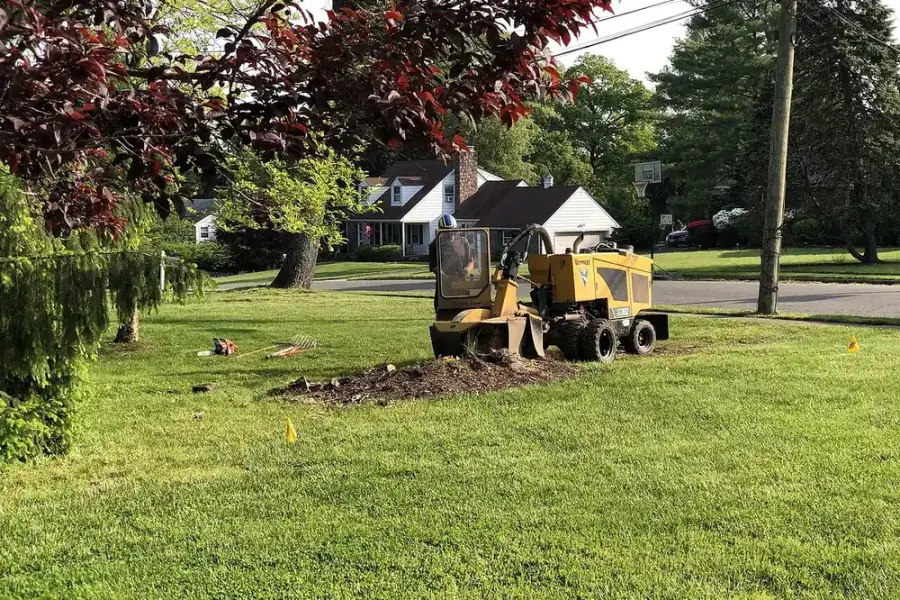
Expect most single residential stumps in Fremont to land between roughly $150 and $500, with the price set by diameter at ground level rather than by how tall the tree was. Access, wood hardness, surface root chasing and debris handling are what move a stump from one end of that band to the other.
The published baselines: LawnStarter puts stump grinding at a national average of $272 per job across a $131 to $438 range, with the common pricing method at $2 to $5 per inch of diameter and a $100 minimum charge. By size, LawnStarter records up to 10 inches at $40 to $75, 10 to 30 inches at $75 to $150, and over 30 inches at $200 to $417. Fixr puts stump grinding or removal at $100 to $500 per stump.
No publisher produces a Fremont specific stump table. LawnStarter's own California city data shows tree work in the state running roughly eleven percent above national, and Bay Area labour and insurance run above the rest of California. Treat the national numbers above as a floor. Add a $50 to $150 hardwood surcharge for coast live oak, and note that the first stump runs around $123 with each additional stump at $37 to $70, because most of the cost of a small stump is getting the machine to your street.
Full breakdown on the Fremont stump grinding cost page, including the hourly figures and the DIY rental comparison.
Grinding or excavation: which one your situation needs
Grind if you want the stump gone from view and the ground usable. Excavate if something structural is going where the stump is, or if a replacement tree has to go in the same hole. Grinding leaves the root plate in the ground to decay over several years. Excavation takes it out and leaves a large hole and considerable soil disturbance.
Grinding
Wheel chews the stump to chips at a chosen depth below grade. Fast, cheaper, minimal disturbance to surrounding soil and nearby roots. Leaves chips and residual root in the ground. LawnStarter range $158 to $450.
Excavation
Stump and main root plate dug out whole. Leaves a large open hole needing imported fill. Heavy machine access required. Necessary under footings, paving and new planting holes. LawnStarter range $175 to $516, average $326.
The case that catches Fremont homeowners out is mitigation planting. If the tree you removed was protected under FMC Chapter 18.215, the City can require a replacement tree on the property. A ground stump backfilled with its own chips is not a planting hole. Decide the replacement location before the grinder arrives, and if it has to be the same spot, budget for excavation instead.
How deep the grind has to go, and the Fremont street tree rule
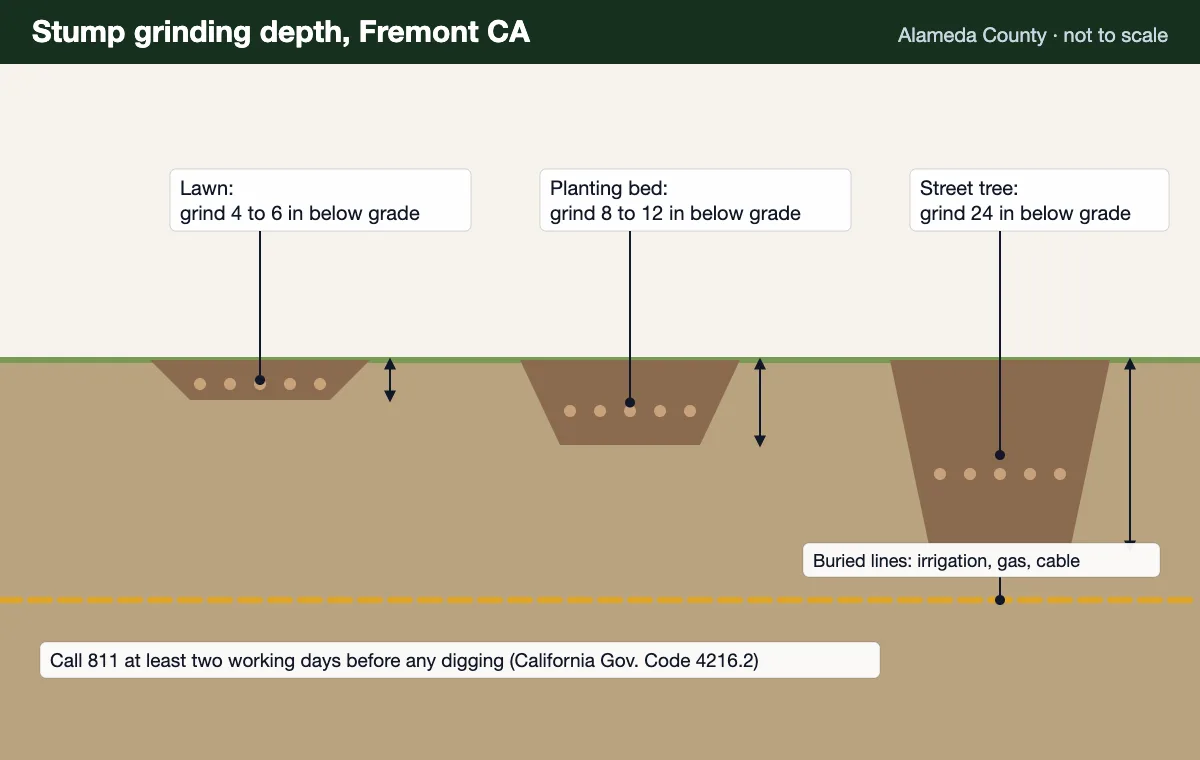
Depth follows purpose: four to six inches below grade for turf, eight to twelve for a planting bed, and 24 inches below grade if the tree was a Fremont street tree. There is no universal correct depth, and paying for depth you do not need is the most common way to overspend on a stump.
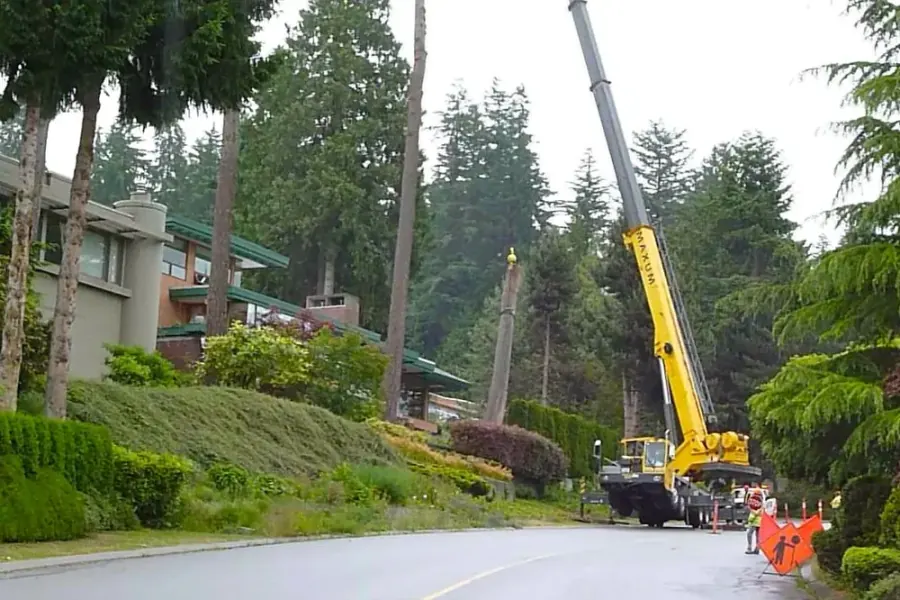
Where a tree in the Fremont public right of way is removed, the stump must be ground to 24 inches below grade or removed entirely. Street tree work as a whole requires City authorisation under FMC Chapter 12.30 before anyone touches it. If you are not certain whether the tree between your sidewalk and the kerb is yours, read is it my tree or the City's first.
For private trees, work backwards from what the ground has to do afterwards:
- Lawn going back over it. Four to six inches below grade. Turf roots are shallow and topsoil over ground chip will carry grass.
- Planting bed or shrubs. Eight to twelve inches, and expect to remove chip and import soil rather than backfilling with arisings, because decaying wood chip locks up nitrogen that the new planting needs.
- Paving, patio or a shed pad. Grinding is usually the wrong tool. The residual root plate will decay and settle under whatever you build, so excavate.
- Replacement tree in the same position. Excavate. A root ball needs soil, not a void full of chip.
Surface roots, and why oaks make stumps bigger than they look
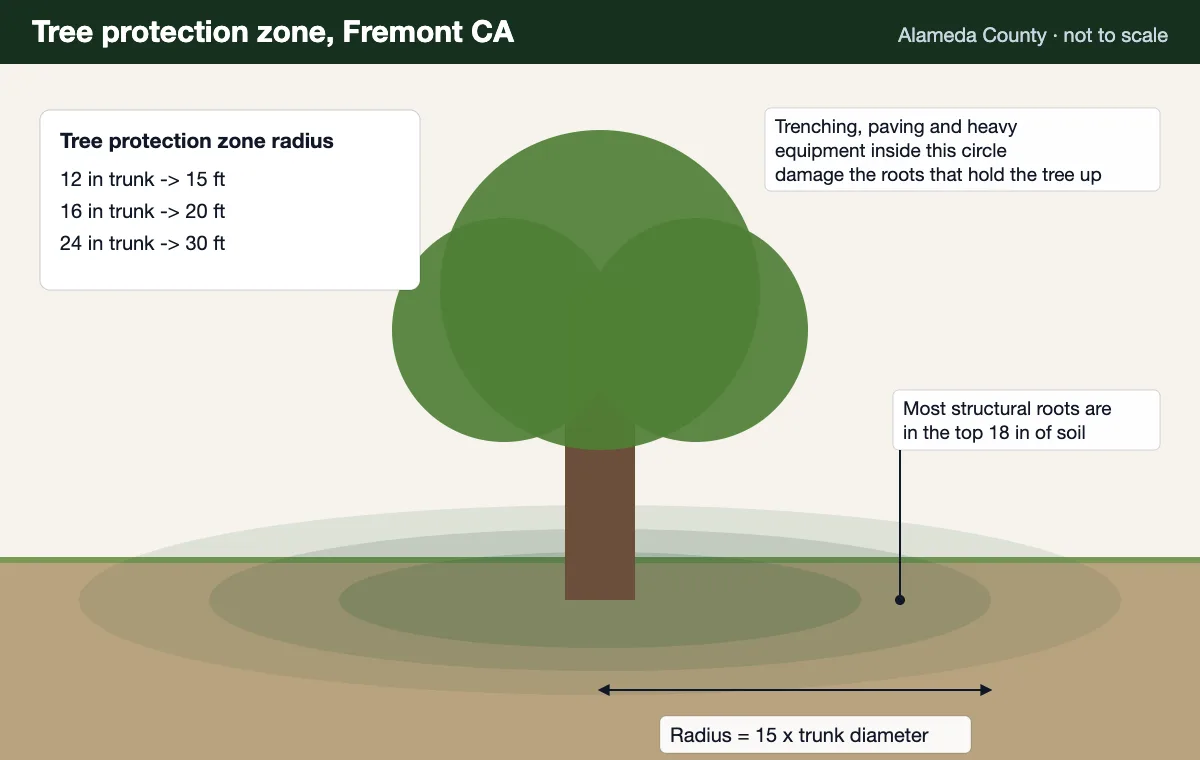
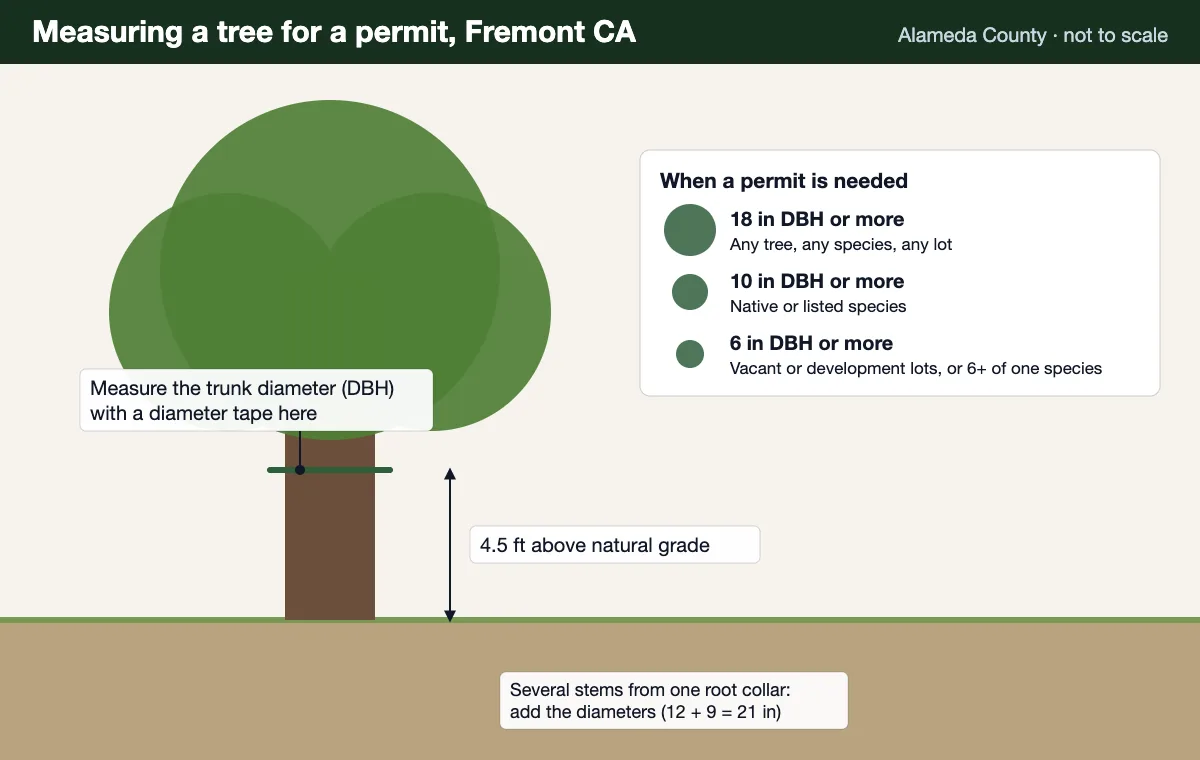
The stump you are pricing is measured across the widest point at ground level, which on a coast live oak is often half again the diameter of the trunk you remember. Oaks build a broad buttressed flare where the trunk meets the soil, and they carry a lot of structural root in the top eighteen inches. That is what the wheel has to work through.
Surface roots matter for three separate reasons on a Fremont lot. They lift paths and driveway edges and will keep doing so for a year or two after the tree is gone. They are a trip hazard in a lawn once the covering grass thins. And where they run under a fence line into a neighbour's property, chasing them out is no longer simply your decision. See California neighbour tree law before anyone grinds across a boundary.
LawnStarter puts dedicated root removal at $103 to $198 per hour. On many residential jobs the major roots running toward hardscape are ground as part of the stump price, with a separate quote only where there is a significant run to chase.
What happens to the chips, and the settling nobody warns you about
Grinding a stump produces substantially more chip volume than the hole it creates, because the wheel aerates the wood as it cuts. Backfilling with the arisings is the cheapest outcome and leaves a mound that settles over several months as the chip decomposes. Hauling the chips away and importing clean soil costs more and leaves a finished surface on day one.
Three practical points worth agreeing in writing before the machine starts:
- The mound is deliberate. A backfilled grind hole left flush on the day becomes a depression within a year. Mounding it lets it settle level.
- Chip is mulch, not soil. It is excellent spread on beds away from stems, and poor as a growing medium. Do not seed directly into it.
- Oak debris has a movement question. Where an oak came down because of Sudden Oak Death, infected wood and soil should not be moved out of the affected coastal area. That constrains disposal, and it is one of the reasons to say what killed the tree before the stump is quoted.
Alongside the stump, the rest of the debris question is covered under tree removal, where haul away versus leaving rounds on site is usually the larger line item.
How a Fremont stump grinding job runs
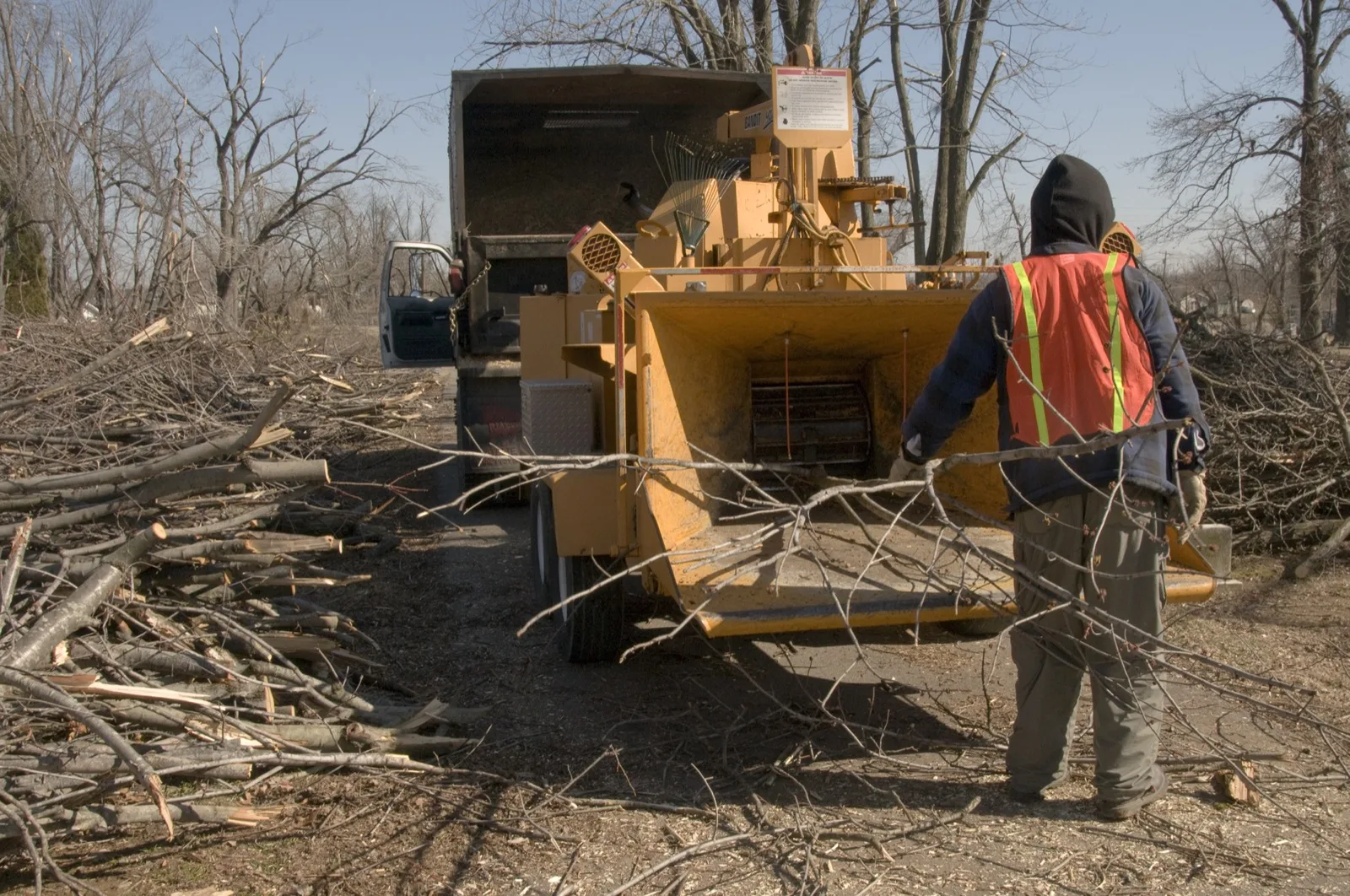
Six steps. Two of them happen before the wheel turns, and they are the two that decide whether the job goes cleanly.
- 1
Measure the stump and check what is under it
Grinding is priced by diameter measured across the widest point at ground level, not by the diameter of the tree that used to stand there. Before anything spins, locate irrigation lines, low voltage lighting, septic and utility laterals, and call in a utility mark where the stump sits near a service run. A grinder wheel does not care what it meets.
- 2
Agree the depth and the purpose
Depth is a decision, not a default. Four to six inches below grade is enough to put lawn back over it, eight to twelve inches suits a planting bed, and anything structural or a replanted tree in the same hole needs more or needs excavation instead. Fremont street trees are the exception with a fixed rule, covered below.
- 3
Clear the collar and expose the flare
Soil, gravel and mulch get pulled back from the stump first. Grinding through embedded grit is how carbide teeth get destroyed, and a stump ground with the flare still buried leaves hard roots just under the surface that surprise the next person who digs there.
- 4
Grind in passes, not in one bite
The wheel sweeps side to side, taking a few inches per pass and working down. Taking too much at once stalls the machine and throws chips further than the guards handle. On a tight Fremont side yard the work area should be screened because chips travel, and a neighbour's car parked on the other side of a fence is well within range.
- 5
Chase the surface roots that matter
Major surface roots running toward a path, a driveway or a planting area get ground out as part of the job where access allows. This is where grinding earns its keep on a coast live oak, which puts a lot of structural root within the top eighteen inches of soil.
- 6
Backfill or haul, then leave it level
Grinding produces far more volume than the hole it makes, because the chips are aerated wood. The hole is either backfilled with the arisings and mounded slightly to allow for settling, or the crew hauls the chips away and brings in soil, depending on what you plan to put there. Agree this before the job, because it changes the price.
Stump grinding questions
How much does it cost to grind a stump?
Published national figures put stump grinding at $131 to $438 per stump with an average around $272 according to LawnStarter, and $100 to $500 per stump according to Fixr, and Bay Area pricing sits in the upper half of those bands. The usual pricing method is $2 to $5 per inch of stump diameter with a minimum charge around $100, so a 20 inch stump lands near $40 to $100 of wheel time before access, hardwood surcharge and haul away.
What is the difference between stump grinding and stump removal?
Grinding chews the stump into chips down to a chosen depth below grade and leaves the root system in the ground to decay, while removal means excavating the stump and its main root plate out of the ground entirely. Grinding is faster, cheaper and far less disruptive to the surrounding soil. LawnStarter puts full stump excavation at $175 to $516 with an average of $326, against $158 to $450 for grinding.
How deep does a stump need to be ground?
Four to six inches below grade is enough for turf, eight to twelve inches suits a planting bed, and Fremont street trees have a fixed legal requirement of 24 inches below grade or full removal. Deeper is not automatically better because every extra inch is machine time, and the wheel has to work in a wider cone to reach it.
Can I plant a new tree where the old stump was?
Not in the same hole after a standard grind, because what is left is a volume of wood chips and residual root that will rob nitrogen as it decays and will not support a root ball. Either plant the replacement a few feet to the side, or have the stump excavated rather than ground so the hole can be backfilled with soil. This matters in Fremont because FMC 18.215 mitigation planting can require a replacement tree on the same property.
How long does stump grinding take?
A single accessible stump under 20 inches is typically under an hour on site, and a large multi stem hardwood with poor access can take most of a day. The variables are diameter, wood hardness, how much surface root has to be chased, and whether the machine can be driven to the stump or has to be walked through a side gate. LawnStarter puts hourly grinding labour at $125 to $200.
Does stump grinding kill the roots?
It stops the tree regrowing in almost all cases, but it does not remove the root system, which stays in the ground and decays over several years. A few species will still push suckers from remaining root after grinding, with fast suckering ornamentals and some eucalyptus among the worst offenders, in which case the suckers need cutting or treating as they appear.
Why do hardwood stumps cost more to grind?
Hardwood is denser, so it takes more passes, more time and more wear on carbide teeth than a softwood of the same diameter. LawnStarter records a hardwood surcharge of $50 to $150 per stump. In Fremont the practical case is coast live oak, which is both dense and prone to a wide buttressed flare, so the stump you are pricing is usually larger across than the trunk was.
Do I need a permit to grind a stump in Fremont?
For a private tree already lawfully removed from your own property, grinding the stump is not a separate permit event. For a tree in the public right of way the whole job including the stump falls under FMC Chapter 12.30 and requires City authorisation, and FMC 12.30.070 requires the stump be ground to 24 inches below grade or removed entirely. If the tree itself was protected under FMC 18.215, the permit for its removal is the thing that mattered and it needed to exist before the tree came down.
What happens to the wood chips?
You choose, and it changes the price. Backfilling the hole with the arisings is included on most jobs and is the cheapest outcome, but grinding produces noticeably more chip volume than the hole it makes so expect a mound that settles over a few months. Hauling the chips off and bringing in clean soil is an extra, priced by volume.
Can I rent a stump grinder and do it myself?
You can, at $178 to $364 per day with a national average around $260 according to LawnStarter, but the economics rarely work for one stump and the machine is genuinely dangerous. A walk behind grinder throws debris hard, kicks back when the wheel catches, and will hit an unmarked irrigation or utility line without slowing down. For one residential stump the rental plus your day is usually close to the quoted price of having it done.
Is grinding multiple stumps cheaper per stump?
Yes, because most of the cost of a small stump is getting the machine to your property rather than the grinding itself. LawnStarter records a first stump around $123 with each additional stump at $37 to $70. If you have a row of removals, book them as one visit.
Will grinding damage my driveway or fence?
It should not, but the risk is real and it is about access rather than the grinding. A self propelled grinder has to reach the stump, and on a typical Fremont lot that means through a side gate, across a lawn or over a driveway edge. Gate width, ground bearing and turning room should be checked before quoting, and where a machine cannot reach, the honest answer is hand excavation at a different price rather than forcing it.
Related Pages
Send a photo with something for scale
A tape measure or a shoe next to the stump shows the diameter, and a shot of the route from the street shows whether the machine can reach it. That is enough for a firm number.
- Free written estimate, no obligation
- Check whether your tree is protected before work starts
- Ask any crew for its CSLB license and certificate of insurance
- Mark storm damage as urgent in your request